How to Return to Normal Exercise After Several Travel Days
Resume regular exercise after travel by starting with small, manageable movements instead of forcing your pre-trip intensity right away.
https://primetempr.com/blog/how-to-return-to-normal-exercise-after-several-travel-days
After several days of travel, sitting in transit, and carrying luggage, returning straight to high-intensity workouts often leads to unnecessary fatigue or frustration. Many frequent travelers and commuters expect their bodies to perform at the exact same level on day one back as they did before the trip. When fatigue or reduced endurance sets in, it is easy to treat a missed exercise streak as a failure rather than a normal break in routine.
Understanding why travel disrupts your movement rhythm helps set realistic expectations. Long hours in confined spaces, changes in sleep schedules, and carrying heavy bags place distinct demands on the body. Instead of attempting to lift the exact same weights or run the exact same pace immediately upon return, scaling back allows your body to adjust without excessive strain.
Why travel disrupts your movement rhythm
Returning to exercise often feels difficult after travel days because the combination of prolonged sitting, disrupted rest, and physical cargo handling creates cumulative fatigue. When you return home, your schedule is often packed with catching up on work, household chores, or family responsibilities. Attempting to jump back into a rigorous routine without a transition period frequently results in burnout or sore muscles that derail your consistency for the rest of the week.
Recognizing that any amount of physical activity is better than none provides a healthier framework for your return. All activity counts, and muscle strengthening benefits everyone, whether you complete a full session or a brief movement break.
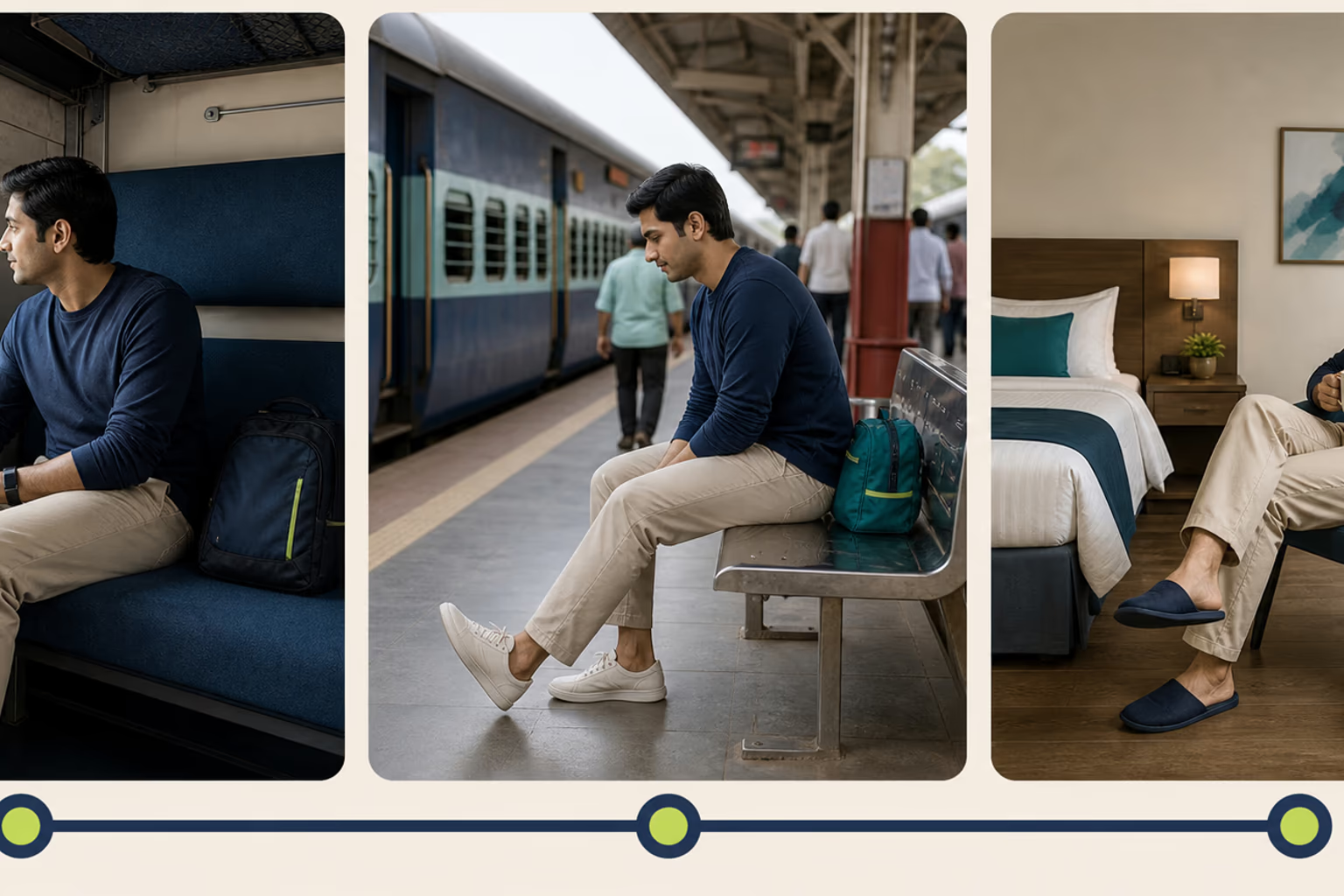
The minimum version: start with small activity
A safe minimum version of movement on day one back involves scaling back your session duration or intensity by half. Focus on basic walking, gentle mobility work, or light stretching instead of maximum effort. This minimum version acts as a bridge between travel inactivity and your usual regimen.
For a practical starting point, try this simple post-travel movement approach:
- Take a 15-minute neighborhood walk to encourage gentle circulation without high impact.
- Perform a few minutes of uncomplicated joint mobility, such as shoulder rolls and gentle spinal twists.
- Stop well before you feel fatigued, keeping the focus entirely on ease rather than output.
Prime Tempr helps travelers save online trainers and portable practices that can continue across cities while keeping general movement guidance separate from medical care. General movement guidance does not replace personalized medical advice for travel-related physical discomfort. If you experience persistent pain or travel-related physical issues, consult a qualified healthcare professional.
Building back to normal weekly guidelines
How do I rebuild back up to 150 to 300 minutes of weekly activity without overexerting? Over the course of three to four days, you can gradually increase your duration and intensity. Adults can work toward 150 to 300 weekly minutes of moderate aerobic activity and muscle strengthening on at least two days.
The following breakdown illustrates how to progress safely across your first week back:
| Day Post-Travel | Recommended Activity Focus | Intensity Level | Duration |
|---|---|---|---|
| Day 1 | Short neighborhood walk, light mobility | Low | 15 to 20 minutes |
| Day 2 | Moderate walk or introductory bodyweight movements | Low to Moderate | 20 to 30 minutes |
| Days 3 to 4 | Return to standard aerobic activity or light strength work | Moderate | 30 to 45 minutes |
| Days 5 to 7 | Resume regular weekly targets | Moderate to Vigorous | Standard duration |
This gradual progression accepts slower initial progress in exchange for avoiding post-travel strain and burnout.
Choosing your next step with professional support
It is appropriate to contact a professional trainer for travel-friendly support if your travel schedule is frequent and unpredictable, as relying on willpower alone often leads to an inconsistent routine. Working with a qualified trainer can provide structure tailored to hotel rooms, tight schedules, and changing time zones.
You can Find travel-friendly practice support to connect with professionals who understand the constraints of commuting and travel. Additionally, you can Browse yoga programmes or explore Movement for Commutes and Travel to find routines that fit into your lifestyle without requiring elaborate equipment.
Post-Travel Return-to-Movement checklist
Use this checklist to guide your first week back to regular physical activity:
- Acknowledge that any amount of physical activity is better than none.
- Start with a short walk or light mobility session instead of maximum intensity.
- Keep expectations realistic about strength and endurance after days of sitting.
- Save a portable practice or online trainer for consistency across cities.
- Explore professional guidance if you need structured support.
Sources
- Physical activity (opens in a new tab), World Health Organization.
- Top 10 Things to Know About the Physical Activity Guidelines (opens in a new tab), Office of Disease Prevention and Health Promotion.
Just walk
YouTubePlaying connects to YouTube, which may process usage data.