How to Protect Personal Practice Time in a Multigenerational Home
Protect personal practice time in a shared home using micro-blocks and realistic minimum versions that respect caregiving loads.
https://primetempr.com/blog/how-to-protect-personal-practice-time-in-a-multigenerational
Protecting personal practice in a shared home does not require locking a door for an hour; it requires micro-blocks, shared household rhythms, and realistic minimum versions that respect your caregiving load. Caregivers in bustling multigenerational households often struggle to find uninterrupted time or quiet space for personal practice without neglecting family duties or feeling guilty. Waiting for an impossible one-hour block of complete silence before starting is a common failure mode that leaves many people doing nothing at all.
Any amount of physical activity is better than none, all activity counts, and muscle strengthening benefits everyone. Recognizing that movement can happen in fragmented minutes changes how you approach daily care work. Prime Tempr helps caregivers compare online and local trainers who can offer flexible schedules, family-aware pacing, and guided alternatives when generic routines do not fit.
The reality of movement in a shared household
Multigenerational homes are vibrant, busy, and constantly active. Shared living spaces mean background noise and occasional interruptions are guaranteed. Acknowledging this reality helps you drop the expectation of a pristine, silent studio environment. When caregiving duties overlap with your desire to move, the friction usually comes from trying to force an ideal schedule onto a shared space.
Instead of treating family presence as an obstacle, look for natural lulls in the household rhythm. Early mornings before the kitchen wakes up, mid-afternoon quiet spells, or the minutes right after dinner can provide small windows. The goal is not to isolate yourself from your household, but to carve out a modest boundary that honors your well-being alongside your responsibilities.
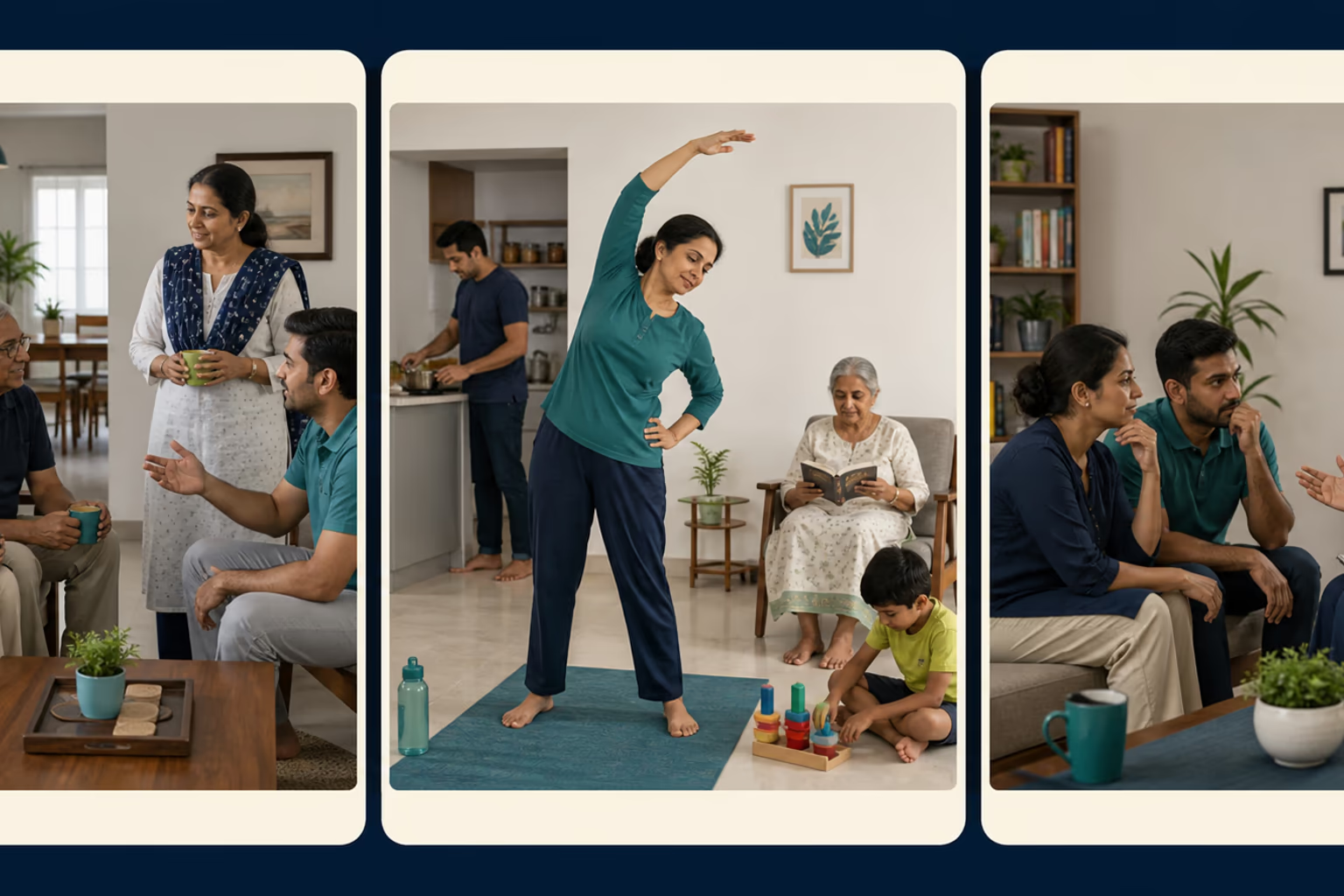
Building a minimum version that survives interruptions
When the ideal 30-minute session is impossible, drop down to a 5-minute minimum version or a standing kitchen routine, and resume normal scheduling the next day without guilt. Adults can work toward 150 to 300 weekly minutes of moderate aerobic activity and muscle strengthening on at least two days, but that volume does not need to arrive in a single unbroken block.
Micro-blocks lack the deep immersion of a dedicated studio class, but they fit real family life sustainably. If your morning gets derailed by household demands, a short sequence of breathing and gentle mobility keeps your practice alive.
The Caregiver's practice protection checklist
To help establish sustainable boundaries without causing household friction, use this practical checklist:
- Identify one 10-to-15 minute low-interruption window in your daily household routine.
- Agree on a simple signal with family members when you need a brief quiet block.
- Choose a minimum version, such as 5 minutes of breathing or light mobility, for high-load days.
- Explore flexible online or local guidance to match your actual schedule rather than a rigid ideal.
When practicing in shared spaces, keep your setup simple. A rolled-up mat in the corner of a living room or bedroom removes friction and lets you begin immediately when a window opens.
Communicating boundaries and sharing rhythms
Finding space for movement also involves communication. Family members are often supportive once they understand that a brief pause helps you stay steady and patient through the day. Agreeing on a simple visual cue, such as placing your mat in a specific spot or letting others know you are taking ten minutes of quiet time, prevents misunderstandings.
If your planned practice time gets completely derailed by family needs, treat the interruption as a normal part of caregiving rather than a total failure. Reset your expectations, handle what needs attention, and return to your movement when the house settles.
Choosing flexible guidance when routines break down
Static advice often assumes a lifestyle of complete autonomy. When your schedule is shaped by children, elders, and shared meals, generic routines can feel impossible to maintain. This is where personalized support makes a tangible difference. You can Find family-aware guidance to connect with professionals who understand domestic constraints.
Exploring structured approaches through Movement for Families and Caregivers or reading about Splitting Movement Time Without Guilt: A Caregiver's Guide provides additional frameworks for building a sustainable habit. By letting go of rigid streaks and embracing flexible pacing, movement becomes a supportive part of your daily life rather than another source of pressure.
Follow-along reflection
Use the prompts below to review the idea in context, without turning it into a diagnosis or a fixed rule.
The Caregiver's practice protection checklist
- Choose a minimum version (such as 5 minutes of breathing or light mobility) for high-load days.
Trade-offs to keep in view
- Micro-blocks lack the deep immersion of a dedicated studio class but fit real family life sustainably.
Questions to carry forward
- How do I carve out time when my home is constantly active?
- What is the minimum effective dose of movement when I am interrupted every few minutes?
- How do I communicate my need for practice space without causing household friction?
- How can I use online or local trainers to structure flexible routines?
- What should I do when my planned practice time gets completely derailed by family needs?
Sources
Watch alongside this guide
Just walk
This short walking overview offers an easy shared-activity reference. Family members can choose their own pace, route and participation without pressure.
The YouTube player stays unloaded until you choose to watch. Loading it connects to YouTube and may allow that service to process usage data.