How to Plan Recovery After a More Active Family Day
Plan safe recovery after a busy family day with gentle movement, proper hydration, and realistic pacing to preserve everyday independence.
https://primetempr.com/blog/how-to-plan-recovery-after-a-more-active-family-day
After an unusually busy family gathering, outing, or festival involving more walking or standing than usual, older adults and their families often feel stiffness or fatigue without knowing how to pace the recovery days safely. When you return from a long day of hosting relatives, navigating crowded spaces, or walking through a temple or park, the body often registers the sudden increase in load as temporary stiffness, joint fatigue, or general tiredness.
Understanding why this happens helps prevent unnecessary alarm. Older adults benefit from a weekly mix of aerobic, muscle-strengthening and balance activity matched to their abilities, but a sudden spike in activity beyond that baseline tests your current physical limits. Recognizing that this fatigue is a normal response to extra effort allows you to plan recovery without stopping all movement entirely or pushing through sharp pain.
Understanding post-activity fatigue
Why does a busier-than-usual family day cause unusual stiffness or fatigue? When daily routines involve moderate indoor movement or short neighbourhood walks, a sudden shift to hours of standing, continuous conversation, or uneven terrain places novel demands on muscles and joints. This temporary tiredness is not an injury by itself, but it does signal that your body needs a deliberate transition back to baseline.
A common failure mode is stopping all movement entirely out of fear of reinjury or more fatigue. Complete bed rest often increases stiffness and makes the next attempt at moving feel even heavier. Another pitfall is treating recovery as a rigid formula rather than listening to daily fluctuations in energy. Balancing social participation with physical limits means sometimes declining or shortening outings, but it also means understanding that gentle recovery movements preserve long-term independence better than total inactivity.
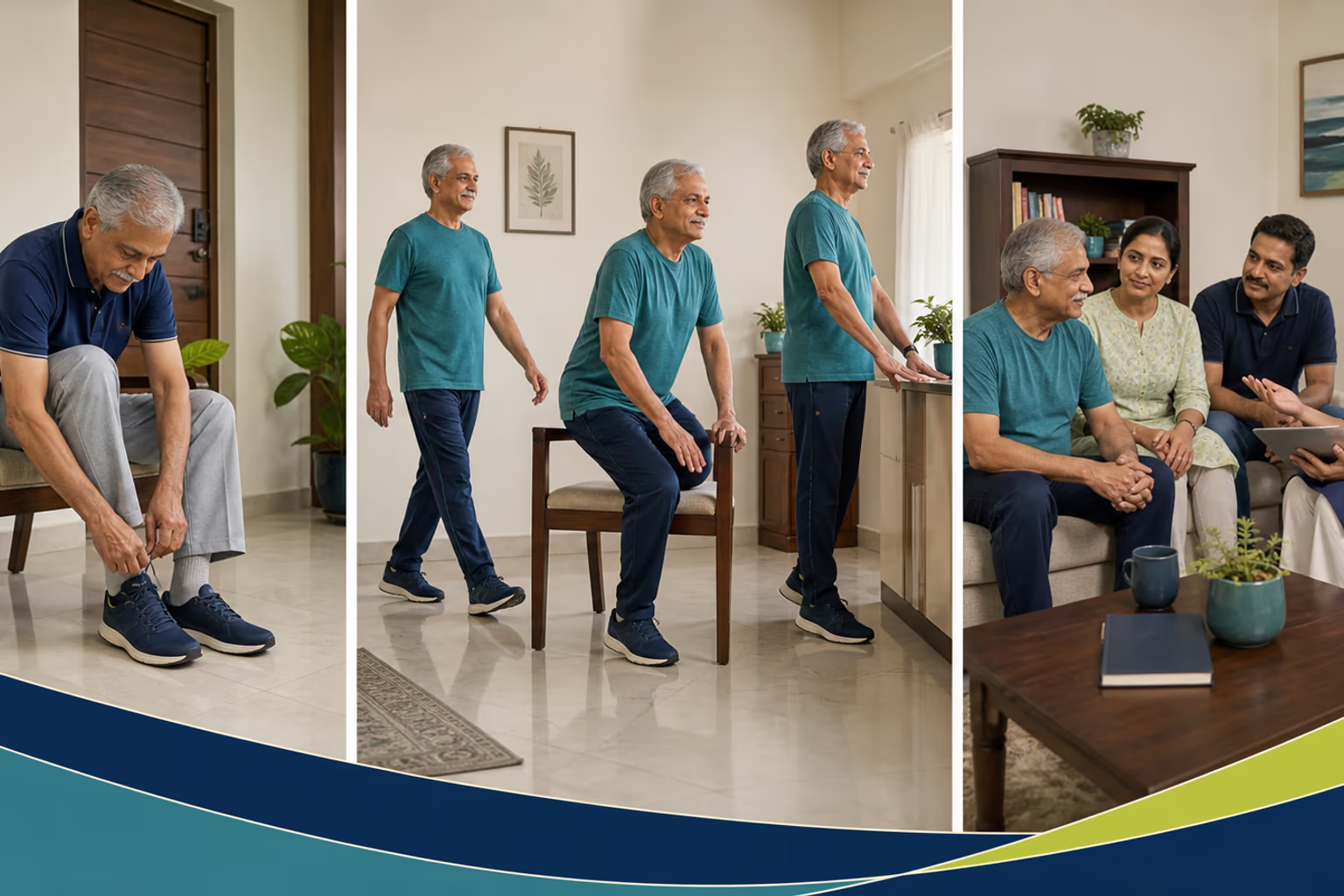
The minimum, normal, and structured recovery versions
Planning recovery after a big family outing does not require complicated equipment or exhausting routines. You can scale your approach based on how your body feels the next morning.
- The Minimum Version: Focus on hydration, familiar meals, and gentle seated breathing or brief, supported standing breaks around the home. If fatigue is high, let the day be about resting in a comfortable chair while keeping circulation active through simple ankle circles and shoulder rolls.
- The Normal Version: Add short, gentle walking intervals inside your home or hallway, interspersed with stable seated mobility exercises. Keep the duration modest, stopping well before you feel depleted.
- The Structured Version: If standard pacing does not relieve lingering fatigue, or if you want to rebuild confidence after an outing, you can introduce guided support. Yoga styles and demands vary, and qualified instruction with appropriate modification can reduce avoidable risk. Prime Tempr profiles help families compare age-inclusive trainers, class pace, accessibility experience and online options before choosing responsive support.
If standard gentle pacing and rest do not relieve lingering fatigue or if new, sharp discomfort arises, consult a qualified healthcare provider or work with an age-inclusive trainer to reassess activity intensity.
Post-Family day recovery checklist
Use this practical checklist to guide your decisions the day after a busy outing:
- Acknowledge the extra activity level from the family day without judgment.
- Prioritize regular hydration and simple, familiar meals.
- Incorporate short, gentle walking intervals or seated mobility rather than complete bed rest.
- Check in with stable household support if balance feels temporarily fatigued.
- Review trainer profiles or age-inclusive classes if you need structured guidance for future pacing.
When you need outside help to navigate your recovery or maintain your strength, exploring resources like Find an age-inclusive trainer or reading about Supporting Active Aging at Home can provide clear, ability-led options. You can also explore A Supported Morning Movement Routine for Older Adults at Home for practical ideas on keeping daily movement safe and accessible.
Follow-along reflection
Use the prompts below to review the idea in context, without turning it into a diagnosis or a fixed rule.
Trade-offs to keep in view
- Balancing social participation with physical limits means sometimes declining or shortening outings.
- Gentle recovery movements take time and patience compared to complete inactivity, but preserve long-term independence.
Questions to carry forward
- What is the difference between normal post-activity soreness and signs that need professional attention?
- How can families structure the day after a big outing without stopping all movement?
- When should an older adult seek qualified instruction or guidance for recovery?
- How do age-inclusive trainers help tailor post-activity pacing?
Sources
Watch alongside this guide
A 15-minute workout for older adults
This National Institute on Aging routine demonstrates manageable strength and balance pacing. Use stable support and seek assessment for new or concerning changes.
The YouTube player stays unloaded until you choose to watch. Loading it connects to YouTube and may allow that service to process usage data.