How to Offer Yoga Options Without Overwhelming a Class
Keep mixed-level yoga classes calm by establishing a single baseline pose and offering structured, purposeful choices.
https://primetempr.com/blog/how-to-offer-yoga-options-without-overwhelming-a-class
Mixed-level yoga rooms often stall when teachers offer too many variations, cues, and prop setups at once. When practitioners face three different paths for every single pose, momentum breaks, and students freeze in indecision rather than moving.
Offering meaningful yoga variations without cognitive overload requires simplifying your base instruction, naming a default path first, and anchoring options to clear biomechanical intents rather than endless choices.
Understanding the root of decision fatigue in group movement helps you refine your delivery and keep the room grounded.
Why Endless Variations Overwhelm Mixed-Level Rooms
When you give a room four different ways to enter a lunge or three choices for arm placement, you shift the cognitive load from physical exploration to mental sorting. Students stop feeling their bodies and start scanning the room to see what everyone else is doing.
Yoga styles and demands vary, and qualified teaching and suitable modifications matter for safety, but more choices do not automatically mean better inclusion. In fact, an excess of alternatives often creates anxiety for newer attendees who worry about choosing the wrong option, while stalling advanced practitioners who want a steady rhythm.
If students freeze or look confused during variation delivery, strip the sequence back to a single accessible base shape, hold space for quiet practice, and streamline your verbal cues for the next round. Simplifying choices means some advanced students may feel under-challenged if you do not offer one clean, structured progression rather than scattered options. Keeping class framing concise requires upfront preparation and letting go of the urge to address every possible body type in every single breath.
Establish One Clear Baseline Before Adding Options
The most effective way to maintain room flow is to anchor every movement family in one neutral, universally accessible starting shape. Do not start your explanation with the modifications.
Name the primary expression or the most neutral version first. Give the room a moment to settle into that shape together. Once the baseline is established and feet or hands find their spatial orientation, you can layer in adjustments.
This establishes a shared physical reference point. If a practitioner needs to stay with the baseline, they already belong in the room. They do not need to hunt for where the sequence starts.
Keep Options to Two Purposeful Paths
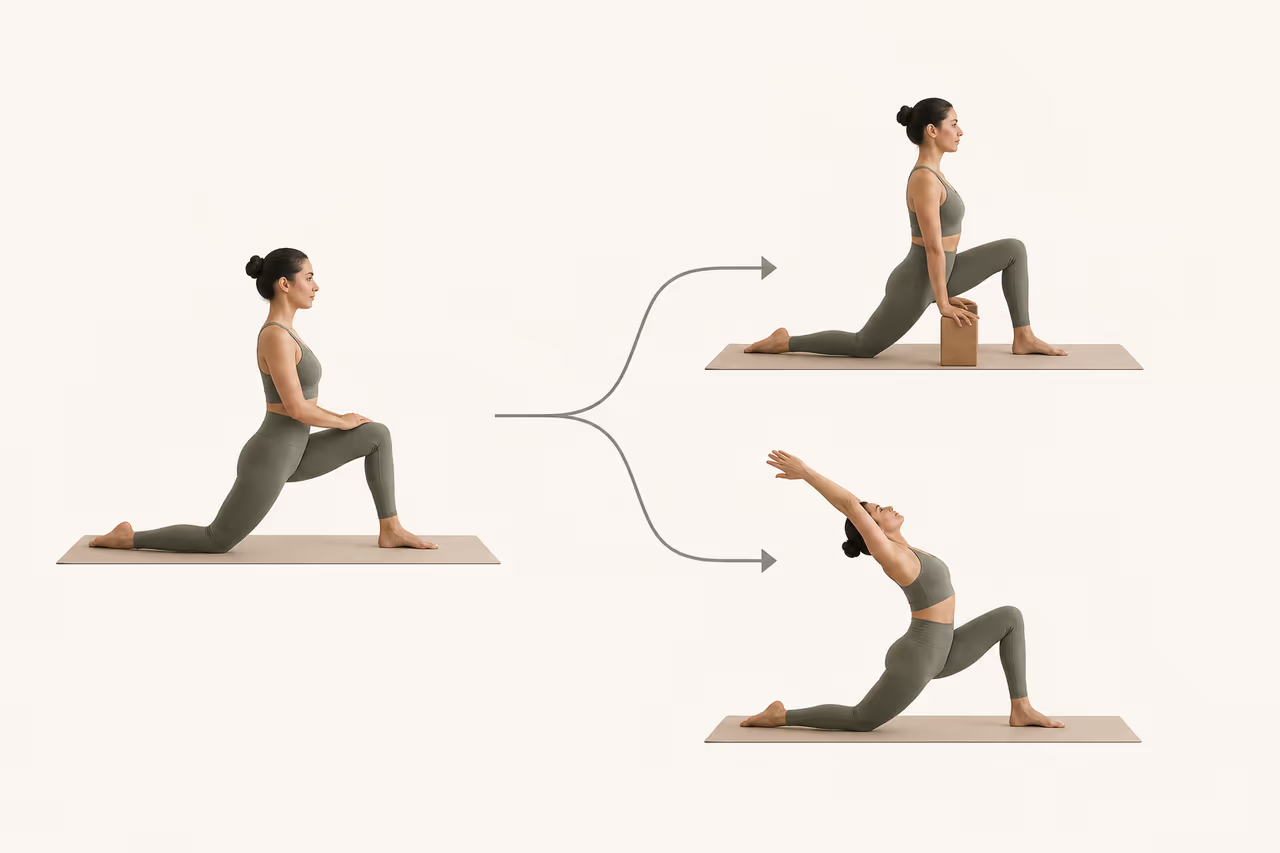
Instead of offering a sprawling menu of alternatives, limit your variations to a strict binary framework. Provide one foundational support and one deeper expression.
[ Baseline Shape ]
      ├── Foundational Support (Props, reduced range, stability focus)
      └── Deeper Expression (Expanded leverage, load, or range)
The foundational support should use props or reduced range of motion to make the shape more stable or accessible. The deeper expression should add challenge through leverage or range without altering the core geometry of the pose.
By capping your choices at two, you respect the attention span of the room and keep the transition times short. Students can quickly identify where they fit on that spectrum without losing the thread of the practice.
Respecting Your Scope of Practice in Varied Classes
Managing diverse physical needs in a single class can easily tempt a teacher into acting as a physical therapist or diagnostician. However, yoga teachers should teach within their training, experience and competence and refer students to qualified professionals when needs fall outside that scope.
When a student presents with complex pain, acute injury, or rehabilitation needs that go beyond standard movement modifications, your role is not to invent a custom pose on the spot. Acknowledge their situation with empathy, offer a broad conservative baseline, and direct them toward licensed allied health professionals outside your scope of practice. Clear boundaries protect both the student and your professional integrity.
The Calm Options Framework for Class Planning
Use this practical checklist when designing your next sequence to keep instructions clean and focused.
- Select one central physical outcome or pose family per sequence.
- Establish the standard, neutral baseline shape before offering any alternative.
- Limit yourself to a maximum of two purposeful variations (one foundational support, one deeper expression).
- Use clear, spatial cues rather than long anatomical lectures when presenting options.
- Direct students seeking specialized rehabilitation or therapeutic guidance to qualified allied health professionals outside your scope.
Building a Clearer Student Journey Beyond the Room
Classroom clarity often starts long before students step onto their mats. When teachers present clear, structured offers during class, it mirrors the way they communicate professional boundaries and offerings online.
Platforms like Prime Tempr give teachers a storefront, free practice library and discovery profile where clear offers and responsible teaching information can become a coherent student journey. When your class descriptions, scheduling, and scope of practice align with how you actually teach inside the room, students arrive with realistic expectations and a readiness to move.
Explore more strategies for leading effective classes in Teaching Yoga Well or review structural planning steps in How to Plan a Yoga Class Around One Clear Outcome.
Sources
Watch alongside this guide
An inclusive guide to yoga and meditation
This inclusive introduction gives teachers a concrete example of choice, clarity, and sensory-aware presentation. Source: Autism BC. This optional video is context, not evidence or personal instruction.
The YouTube player stays unloaded until you choose to watch. Loading it connects to YouTube and may allow that service to process usage data.