How to Plan a Yoga Class Around One Clear Outcome
Design focused yoga sequences around one specific functional goal to improve student retention, movement clarity, and teaching confidence.
https://primetempr.com/blog/how-to-plan-a-yoga-class-around-one-clear-outcome
Yoga classes often become disjointed thematic medleys. A single 60-minute session might mix wrist stretches, core holds, deep hip openers, and abstract philosophy. This fragmentation leaves students confused about what the practice actually delivered and makes it difficult for teachers to measure whether their sequencing achieved any concrete goal.
Planning a yoga class around one single, measurable anatomical or functional outcome makes the practice safer, easier to teach, and radically clearer for students to integrate. When you strip away competing objectives, both you and your students can focus entirely on how the body moves, adapts, and responds during that session.
For further exploration on developing your methodology, read our guide on Teaching Yoga Well.
Why Multi-Themed Classes Create Confusion
When a class attempts to address shoulder mobility, core stability, hamstring length, and spinal twists all at once, students experience cognitive and physical overload. The body never settles into a sustained pattern of neuromuscular learning. Instead of exploring a movement deeply, students bounce from one superficial shape to the next.
This lack of focus also increases the risk of fatigue-related strain. Styles and demands vary widely, and qualified teaching paired with suitable modifications matter for safety. When a class lacks a central anchor, it becomes harder for teachers to offer meaningful regressions or progressions that suit mixed-ability groups.
Choosing Your Class Focus Within Professional Scope
Selecting a single outcome begins with identifying one primary functional or anatomical focus, such as thoracic rotation or hip stability, rather than chasing an advanced peak pose like a forearm stand or a deep backbend. Peak poses often dictate a sequence backward, forcing bodies into shapes they may not be prepared for. Functional outcomes, by contrast, prioritize how joints and muscle groups work together safely.
Yoga teachers should teach within their training, experience and competence and refer students to qualified professionals when needs fall outside that scope. Grounding your class plan in clear, accessible movement goals helps you stay strictly within your professional boundary while honoring student safety guidelines. For more details on maintaining professional boundaries, see How to Stay Within a Yoga Teacher Scope of Practice.
Structuring the Sequence Around the Goal
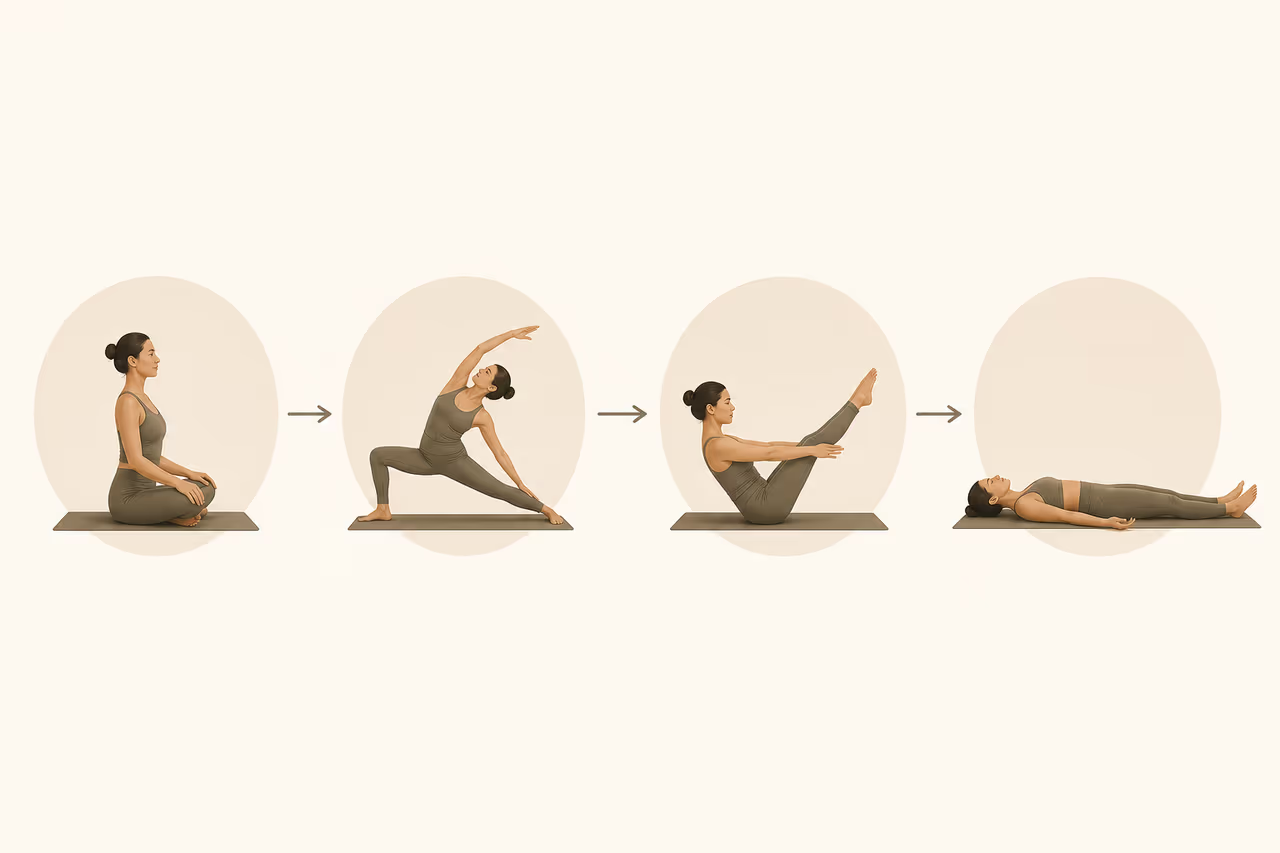
A coherent class arc follows a logical progression from arrival to integration, ensuring every movement serves the primary outcome. When a class plan feels too crowded, strip away the secondary peak poses and focus entirely on preparing the body for one foundational movement pattern.
| Class Phase | Purpose | Example Focus (Thoracic Rotation) |
|---|---|---|
| Arrival & Centering | Establish breath awareness and settle attention | Notice the natural rotation of the upper spine through seated breath |
| Warm-up | Prime the specific joints involved | Gentle seated twists and cat-cow variations |
| Core Focus | Explore the primary movement pattern with load or stability | Side-lying thread-the-needle or supported lunges with torso turns |
| Integration | Return the nervous system to baseline | Restorative supine twist with supported props |
Choosing one clear outcome means letting down students or letting go of favorite sequences or postures that do not serve that specific session's goal. This restraint is what turns a random assortment of stretches into a true learning experience. If you find yourself offering too many complex variations, review strategies in How to Offer Yoga Options Without Overwhelming a Class.
Single-Class Planning Checklist
Use this decision guide to structure your next session around a single, coherent objective.
- Select one primary functional or anatomical focus (for example, thoracic rotation or stable ankle mechanics).
- Draft a warm-up that directly primes the specific joints and tissues involved in that focus.
- Choose a central movement or resting state that embodies the outcome without requiring extreme flexibility.
- Review modifications to ensure both beginners and experienced students are supported safely throughout the sequence.
- Publish your class or program so attendees know exactly what to expect before stepping onto the mat.
Connecting Single Classes to a Broader Student Journey
Coherent class planning does not stop at the edge of the mat. When you design sessions around clear outcomes, students begin to understand their own physical progression over weeks and months rather than viewing each class as an isolated event.
Prime Tempr gives teachers a storefront, free practice library and discovery profile where clear offers and responsible teaching information can become a coherent student journey. By publishing focused class plans and specialized series on your discovery profile, you help practitioners find the exact guidance they need, turning individual sessions into a reliable path for long-term growth.
Sources
- Yoga Alliance. Scope of Practice (opens in a new tab)
- National Center for Complementary and Integrative Health (NCCIH). Yoga: Effectiveness and Safety (opens in a new tab)
Watch alongside this guide
An inclusive guide to yoga and meditation
This inclusive introduction gives teachers a concrete example of choice, clarity, and sensory-aware presentation. Source: Autism BC. This optional video is context, not evidence or personal instruction.
The YouTube player stays unloaded until you choose to watch. Loading it connects to YouTube and may allow that service to process usage data.