How to Notice Whether a Family Movement Habit Is Helping Everyone
Evaluate your shared household movement, spot hidden friction, and choose sustainable practices without guilt or strict fitness streaks.
https://primetempr.com/blog/how-to-notice-whether-a-family-movement-habit-is-helping-eve
A shared family movement habit genuinely helps when it respects different energy levels, avoids turning into an obligation, and accommodates caregiving realities without guilt. Caregivers often adopt shared family movement habits like walks, group routines, or chores treated as exercise without knowing if it actually supports everyone or quietly creates friction, exhaustion, or guilt. When time is scarce and homes balance desk jobs, public transport, changing weather, and care duties, movement should relieve pressure rather than add another task to the list.
Recognizing whether a routine works requires looking past strict schedules or uninterrupted exercise streaks. Any amount of physical activity is better than none, all activity counts, and muscle strengthening benefits everyone. Yet, translating public health targets into a shared household routine involves distinct human trade-offs. Not every family member wants to move at the same time or pace. Flexible, unstructured movement yields slower visible fitness metrics than a strict bootcamp, but it sustains household harmony.
Recognizing the signs of a healthy family routine
A supportive movement habit feels easeful, voluntary, and adaptable. In a busy home managing familiar meals, changing weather, and shifting caregiving duties, a healthy habit leaves room for tired days. Adults can work toward 150 to 300 weekly minutes of moderate aerobic activity and muscle strengthening on at least two days, but that guideline belongs to the individual rather than the entire household as a mandatory group drill.
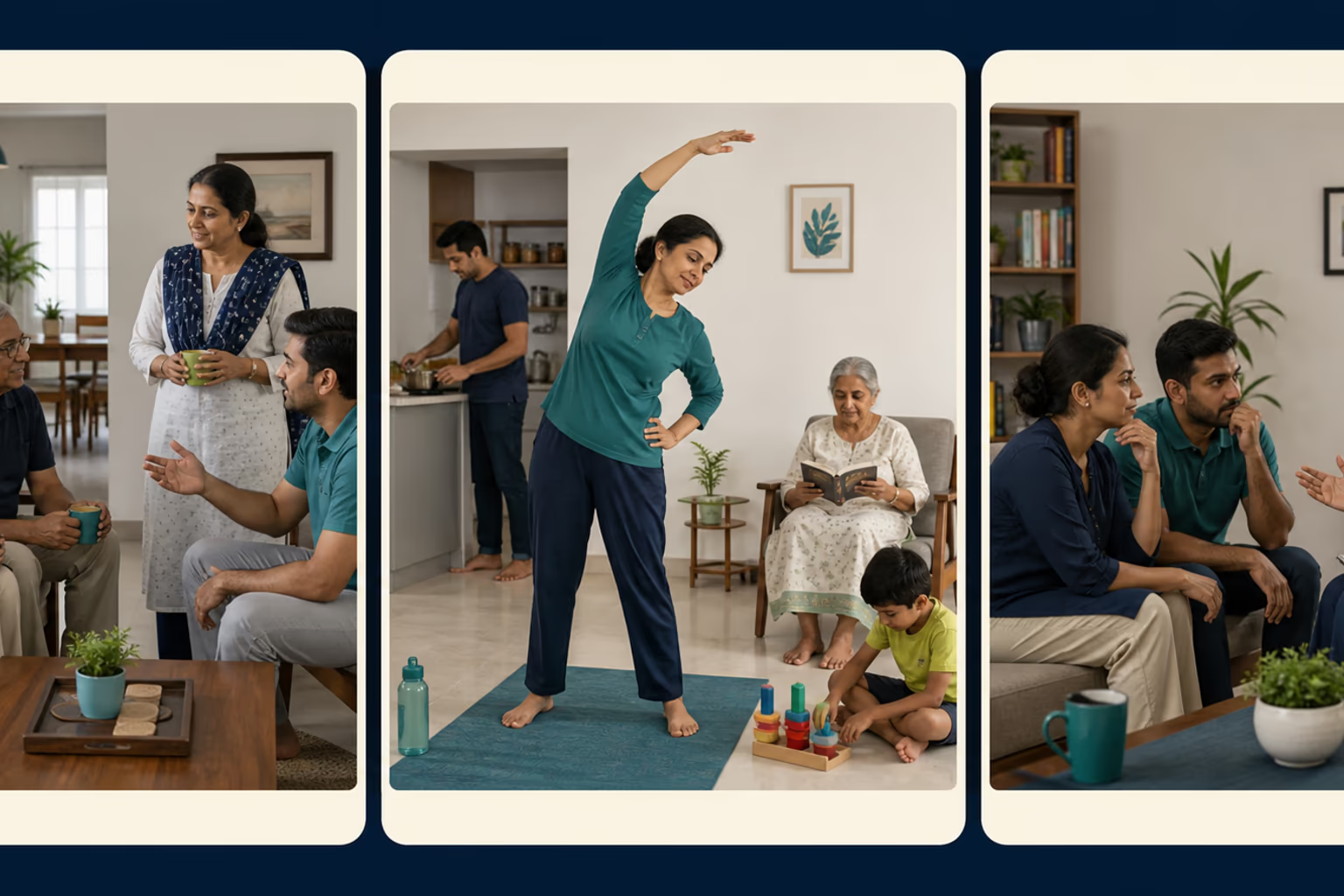
When a habit works well, older adults, children, and working adults participate because it feels good in their bodies, not because someone enforces an attendance rule. Conversations during or after the activity remain relaxed. If someone chooses to sit out an evening walk to rest, the rest of the household accepts that choice without passive-aggressive remarks or disappointment.
Warning signs that a habit is causing friction
Movement routines frequently curdle into obligations when they mirror a rigid fitness class with attendance rules and performance metrics. Warning signs include quiet resentment from younger or older family members, noticeable fatigue that lingers into the next day, or a single caregiver acting as an unwilling taskmaster or coach.
If children drag their feet with audible sighs, or if an older relative joins out of social pressure despite joint discomfort, the habit no longer fulfills its purpose. Assuming a strict streak equals health progress is a common trap. When a missed walk triggers household guilt or arguments about discipline, the activity stops being physical care and turns into a source of stress.
Balancing different speeds and energy levels
Multigenerational households and homes with varied schedules face an immediate logistical puzzle. A brisk evening walk that energizes a desk worker might exhaust a family member who spent hours standing on public transport or managing household chores.
Treating movement as a monolith fails in these environments. Instead of forcing everyone into lockstep, acknowledge that different bodies need different inputs. A child might burn energy through spontaneous play, an older adult might benefit from gentle indoor stretching, and a working parent might prefer a short solo stroll to decompress after work. Diversifying how movement happens in the home prevents burnout and respects individual limits.
The family movement check-in checklist
Use this structured checklist to evaluate whether your current household routine supports everyone fairly.
- Check if everyone participates voluntarily without pressure or guilt.
- Confirm that movement fits comfortably around care duties and resting schedules.
- Observe whether older adults or children finish the habit feeling energized rather than depleted.
- Ensure no single family member acts as an unwilling coach or taskmaster.
The minimum, normal, and guided next steps
When a family routine feels strained, recovering balance requires stepping back before trying a harder fix.
The recovery path involves pausing the shared routine for a week, dropping all productivity targets, letting each family member move independently or rest, and restarting with a voluntary minimum version.
Minimum version
Drop all group walks or scheduled routines for seven days. Let each person move entirely on their own terms, whether that means a five-minute stretch in the living room or simply resting.
Normal version
Reintroduce casual, optional movement anchored to existing rhythms, such as a short post-meal stroll where participation is explicitly optional and individual rest is celebrated.
Guided next steps
When generic household routines consistently clash with differing physical needs, external perspective helps. Prime Tempr helps caregivers compare online and local trainers who can offer flexible schedules, family-aware pacing and guided alternatives when generic routines do not fit. You can explore options through resources dedicated to Movement for Families and Caregivers, learn practical ways to coordinate without friction in How to Move Together Without Turning Family Time into a Class, or Find family-aware guidance to match your household pace.
Sources
- Physical activity (opens in a new tab), World Health Organization
- Top 10 Things to Know About the Physical Activity Guidelines (opens in a new tab), Office of Disease Prevention and Health Promotion
Watch alongside this guide
Just walk
This short walking overview offers an easy shared-activity reference. Family members can choose their own pace, route and participation without pressure.
The YouTube player stays unloaded until you choose to watch. Loading it connects to YouTube and may allow that service to process usage data.