How to Move Together Without Turning Family Time into a Class
Share movement with family members through casual, optional activities instead of forced drills, strict coaching, and unrealistic routines.
https://primetempr.com/blog/how-to-move-together-without-turning-family-time-into-a-clas
Trying to involve family members in movement often backfires when it feels like a forced drill, a strict class, or a chore that creates resistance instead of connection. Shared family movement works best when it resembles casual participation rather than a structured class, respecting each person's boundaries, energy, and consent.
When one person appoints themselves as the instructor, household movement quickly turns into policing posture, counting repetitions, and managing resistance. Recognizing why these plans fail helps caregivers step back from rigid expectations and find sustainable ways to stay active around care work.
Why family exercise plans fail
Family movement breaks down when it mimics a fitness class rather than shared life. In many households, well-meaning parents attempt to schedule rigid workout times, enforce uniform participation, or correct the posture and form of children and older relatives. This dynamic introduces pressure into spaces that are meant for rest and connection.
Another failure mode is treating missed sessions as a personal failure of family discipline. Schedules shift, children get tired, and older adults face unpredictable energy levels. Expecting the same intensity or enthusiasm from every member across different generations ignores daily realities. When movement feels like an obligation with a strict pass or fail grade, family members naturally pull away.
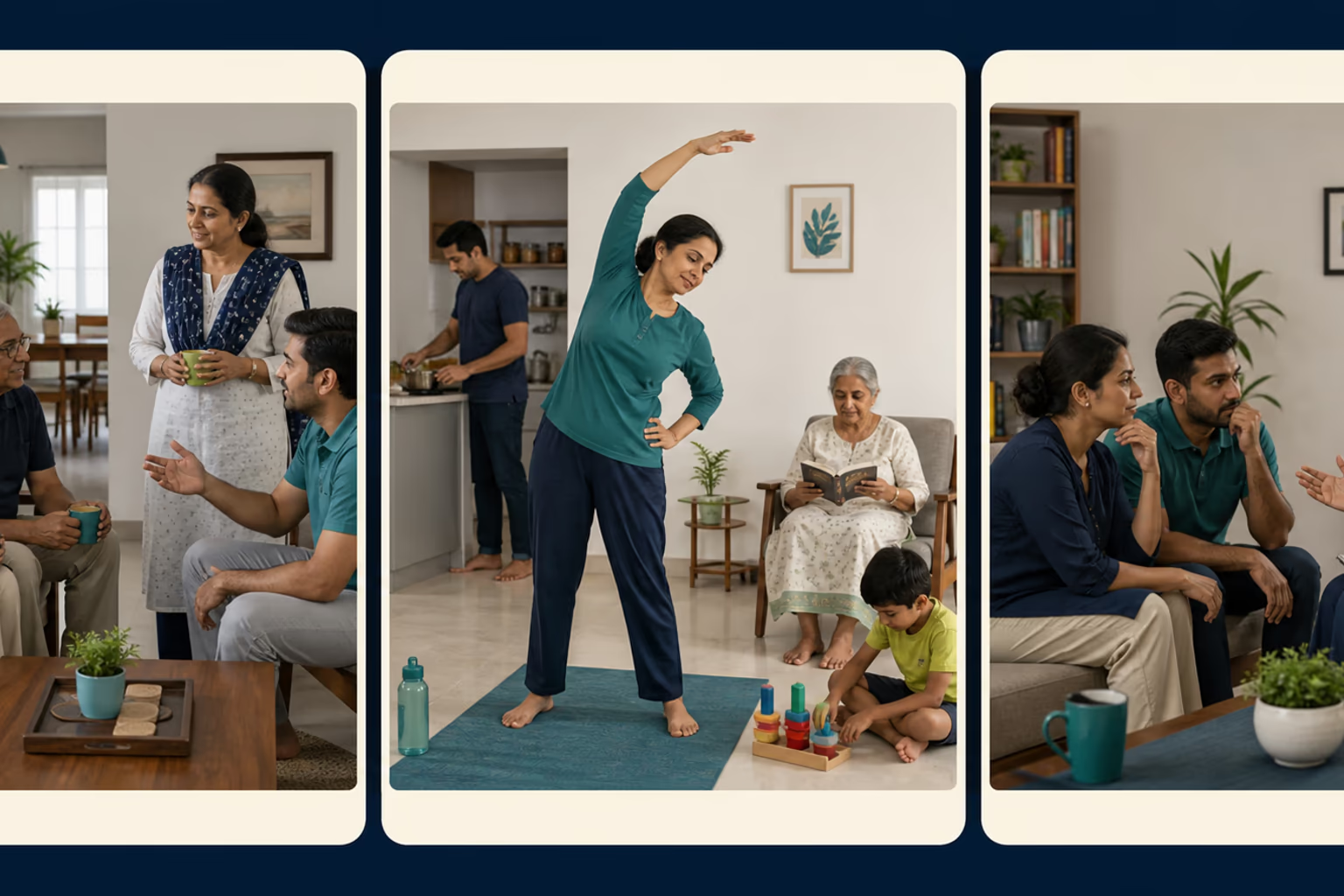
The minimum, normal, and shared versions
Physical activity does not require an unbroken hour of dedicated exercise to be valuable. According to institutional guidance from public health agencies, any amount of physical activity is better than none, all activity counts, and muscle strengthening benefits everyone. Adults can work toward 150 to 300 weekly minutes of moderate aerobic activity and muscle strengthening on at least two days.
To make this fit beside care work and multigenerational households, consider three practical tiers of movement:
- The Minimum Version: A brief, unstructured moment of movement, such as standing up to stretch while boiling tea, walking to the local shop together, or taking three minutes of floor time to reach overhead. No mats, special clothing, or timers required.
- The Normal Version: A predictable daily habit that remains flexible, such as a ten-minute evening walk around the neighborhood where anyone can join, talk, or turn back early.
- The Shared Version: Casual weekend tasks that involve physical exertion, such as gardening, cleaning up a shared space, or playing an active game where participation is entirely optional.
Any activity counts toward your weekly goals, even if it is broken into ten-minute segments throughout the day. For parents who face constant interruptions, structured support can help. Review strategies for chaotic schedules by reading our A Movement Plan for Parents Who Are Interrupted Every Few Minutes.
Boundaries and consent in shared activity
Keeping family movement harmonious requires strict boundaries around how people treat each other's bodies and choices.
- Drop the coaching role: Never correct a family member's form, posture, or speed during shared time unless they explicitly ask for instruction.
- Honor opt-out rights: Allow any family member to sit on the couch while others walk or stretch. Consent must include the freedom to decline without negotiation, questioning, or guilt.
- Accept uneven energy: One person might want a brisk walk while another prefers a slow stroll. Pacing separately while sharing the same physical space preserves connection without forcing uniformity.
The no-class family movement checklist
Use this decision guide to keep shared activity relaxed, voluntary, and free from the pressure of a formal class.
- Let family members choose: Allow everyone to decide whether to join without negotiation, peer pressure, or guilt.
- Keep activities open-ended: Opt for simple actions like an evening walk, carrying groceries together, or gentle stretching while talking.
- Remove all coaching: Eliminate counting repetitions, timing sets, and performance corrections from family time entirely.
- Allow immediate stopping: Ensure anyone can pause, sit down, or opt out at any moment without penalty.
- Explore external guidance: Prime Tempr helps caregivers compare online and local trainers who can offer flexible schedules, family-aware pacing and guided alternatives when generic routines do not fit.
If you decide that household members need personalized progression or professional instruction, Find family-aware guidance to match each person's unique schedule and comfort level rather than forcing everyone into the same rigid mold.
Follow-along reflection
Use the prompts below to review the idea in context, without turning it into a diagnosis or a fixed rule.
The no-class family movement checklist
- Let family members choose whether to join without negotiation or guilt.
- Keep activities open-ended, such as a short evening walk or light stretching while talking.
- Remove all coaching, counting, and performance corrections from family time.
- Allow anyone to stop or sit out at any moment.
- Compare online or local trainers if you need structured guidance for individuals rather than forced group drills.
Trade-offs to keep in view
- Casual movement lacks the structured progression of a formal class.
- Not every family member will want to join at the same time or pace.
If this approach does not fit
Lower the bar immediately: drop the concept of a routine or a class, let individuals opt out without penalty, and focus on simple shared walks or unstructured active time.
Questions to carry forward
- Why do family movement routines usually feel like a chore or a class?
- How can we share physical activity without appointing one person as the instructor?
- What does a minimum version of shared movement look like in a busy household?
- How do we handle different energy levels and ages across generations?
- When is it better to skip shared time and do individual movement instead?
Sources
- Physical Activity Fact Sheet (opens in a new tab), World Health Organization.
- Top 10 Things to Know About the Physical Activity Guidelines (opens in a new tab), Office of Disease Prevention and Health Promotion.
Watch alongside this guide
Just walk
This short walking overview offers an easy shared-activity reference. Family members can choose their own pace, route and participation without pressure.
The YouTube player stays unloaded until you choose to watch. Loading it connects to YouTube and may allow that service to process usage data.