How to Move Safely in a Cold Home This Winter
Learn to adapt your morning movement to cold, unheated spaces with a gentle, joint-focused warm-up routine.
https://primetempr.com/blog/how-to-move-safely-in-a-cold-home-this-winter
When the temperature drops and your home lacks central heating, the prospect of a morning movement routine can feel daunting. The goal of a winter morning warm-up is not to reach a high heart rate immediately, but to safely transition your body from the stillness of sleep to the activity of the day. Effective movement in a cold environment requires a sequence that prioritizes joint mobility and gradual warmth rather than intense exertion.
Start with safety
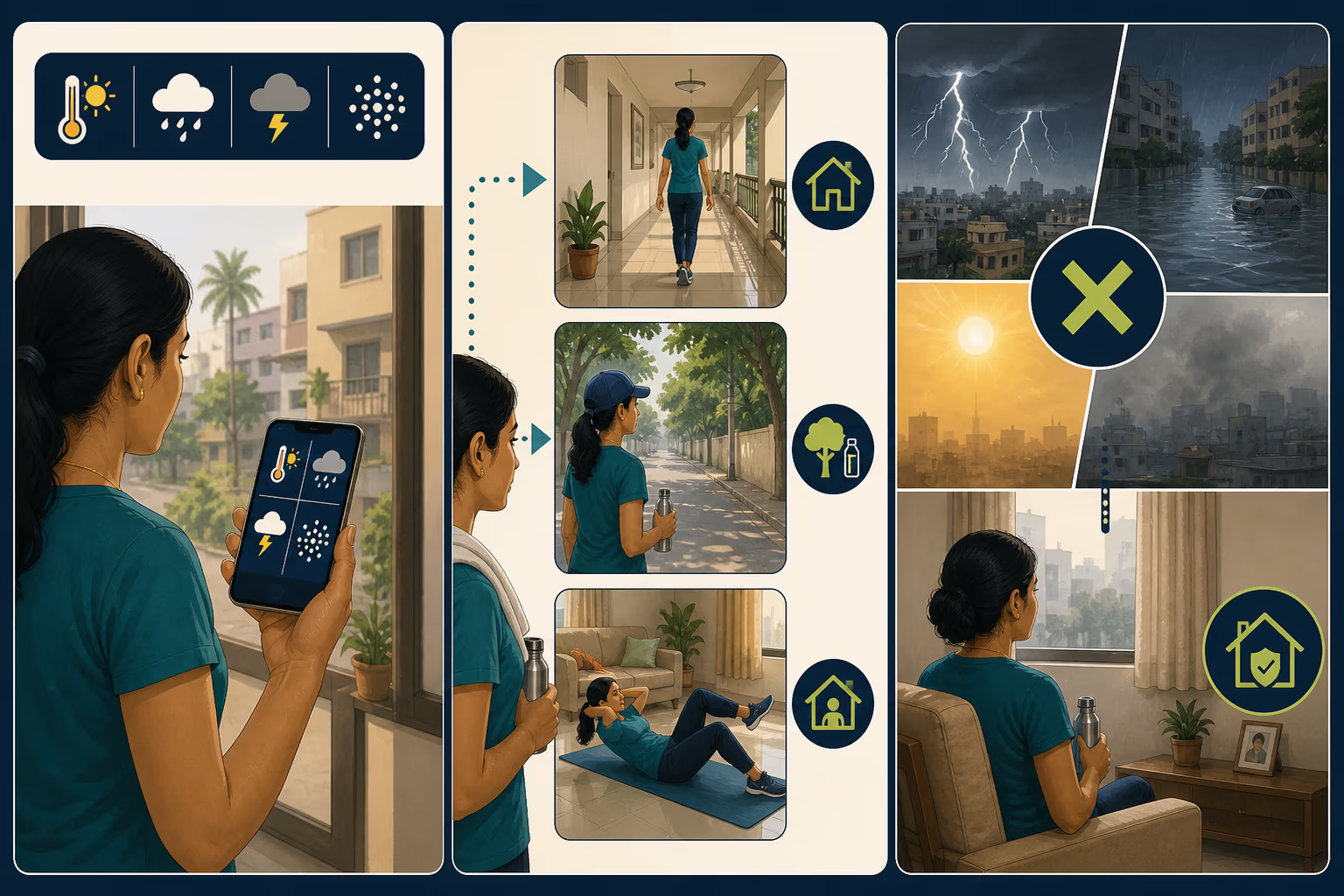
Before you begin any movement, check your local conditions. Public-safety guidance for cold waves and seasonal hazards should be checked via official sources like the NDMA. If there is a severe cold-wave alert or if air quality is poor, it is safer to prioritize rest or indoor activities that do not require deep, rapid breathing.
Physical activity can be adapted to any setting, ability, or weather condition, and any amount of movement is better than none. If the weather is extreme, you do not need to force a full practice. Acknowledging these limits is not a failure; it is a necessary part of a sustainable routine.
The minimum version
In a cold room, your muscles and joints may feel stiff. Attempting a high-intensity workout while your body is cold is a common failure mode that can lead to unnecessary strain. Instead, focus on gentle joint rotations to generate internal heat.
Your 10-Minute Cold-Home Warm-Up
This sequence is designed to be performed in a small space, such as a bedroom or a corner of a living area.
- Environmental Check (1 minute): Review local air quality and cold-wave alerts via official sources.
- Seated Neck and Shoulder Rolls (3 minutes): Sit comfortably on a chair or a folded blanket. Slowly roll your neck in gentle circles, then shrug your shoulders up toward your ears and release them down. This relieves tension accumulated during sleep.
- Joint Rotations (4 minutes): While seated or standing, perform slow, rhythmic rotations for your wrists, ankles, and knees. These small movements increase synovial fluid in the joints, helping you feel more fluid and less restricted.
- Controlled Breathing (2 minutes): Spend the final minutes on slow, controlled breathing. Focus on steady inhales and exhales to regulate your body temperature and calm your nervous system.
If this feels too difficult or unsafe on a particular day, shift to the simplest version of these movements or prioritize rest until conditions improve.
Adapting to your space
Many homes are shared, multigenerational, or simply tight on floor space. You do not need a dedicated studio or a large mat to move effectively. The routine above can be done entirely while seated on a chair or the edge of your bed.
The trade-off for a gentle warm-up is that it may not provide the same cardiovascular intensity as a full, vigorous workout. However, the primary objective in a cold home is to maintain consistency without injury. By accepting that some days require less movement than others, you avoid the cycle of frustration that often leads to abandoning a practice entirely.
If you find yourself struggling to maintain your routine due to the environment, remember that movement is meant to serve your daily life, not add stress to it. If the cold is too intense, skip the movement and focus on warmth,a hot drink or an extra layer of clothing is a perfectly valid way to start your morning.
Finding local support
Consistency is often easier when you have guidance that understands your specific constraints. Prime Tempr helps readers find nearby and online trainers whose schedules, spaces and practice formats fit local climate and seasonal routines. Whether you are looking for a teacher who understands the limitations of a small, unheated room or someone who can help you adjust your practice to match the changing seasons, connecting with a professional can provide the structure you need.
You can Find yoga near you to see if there are local classes that align with your morning schedule. For more context on how to integrate your practice with the rhythm of the year, read more about Indian Seasons, Festivals and Movement.
Remember, the goal is not a perfect streak of high-intensity exercise. The goal is to find a way to move that feels sustainable, safe, and respectful of your environment.
Follow-along reflection
Use the prompts below to review the idea in context, without turning it into a diagnosis or a fixed rule.
Your 10-Minute cold-home warm-up
- Check local air quality and cold-wave alerts via official sources.
- Perform 3 minutes of seated neck and shoulder rolls.
- Complete 4 minutes of gentle, rhythmic joint rotations (wrists, ankles, knees).
- Spend 3 minutes on slow, controlled breathing to regulate body temperature.
- Choose one local trainer or program to support your long-term routine.
Trade-offs to keep in view
- A gentle warm-up may not provide the same cardiovascular intensity as a full workout.
- Adapting to the environment means accepting that some days require less movement than others.
If this approach does not fit
If the planned movement feels unsafe or too difficult, shift to simple joint rotations or breath-focused movement, or prioritize rest until conditions improve.
Questions to carry forward
- How can I warm up safely in a cold room?
- What are the risks of exercising in cold weather?
- How do I adapt my routine to small, shared living spaces?
- When should I skip movement due to weather or air quality?
Watch alongside this guide
Just walk
This short walking overview is a visual reminder that useful activity can stay simple. Apply the article's local weather, air-quality and public-safety checks first.
The YouTube player stays unloaded until you choose to watch. Loading it connects to YouTube and may allow that service to process usage data.