How to Move More When Your Manager Schedules Every Hour
Change position, stand, and move during back-to-back meeting days without turning your workday into an exhausting fitness project.
https://primetempr.com/blog/how-to-move-more-when-your-manager-schedules-every-hour
When your calendar leaves no gaps between hourly meetings, you cannot schedule workouts; you must change position inside the meeting structure itself. Back-to-back virtual or in-person meetings leave zero gaps between hours, making traditional workout breaks or long walks impossible. Office and remote workers often face demanding screen-heavy days where finding a spare thirty-minute block feels entirely out of reach. Waiting for an open thirty-minute block that never arrives on a heavy meeting day is a common trap that leads to complete inactivity. Attempting elaborate stretches or exercises on camera can draw unwanted attention, while treating a missed movement hour as a failed day often causes people to give up entirely.
Understanding how to move more when your manager schedules every hour requires looking at practical trade-offs and limits. Micro-movements and position shifts do not replace a full fitness session or structured workout routine. Changing position on camera requires careful positioning so it remains subtle and unobtrusive. All physical activity counts, any amount is better than none, and adults should limit sedentary time. A workstation should support neutral, comfortable positions, but even a good setup should allow regular changes of position.
The reality of the hourly calendar
Packed schedules create a specific friction for desk-based professionals. When every sixty-minute block contains a video call or a room booking, the traditional advice of taking a brisk walk or attending a midday class falls apart. The failure mode here is all-or-nothing thinking. If you believe that movement only counts when it involves changing into athletic gear and sweating for forty-five minutes, an hourly calendar guarantees a zero-movement day.
To break this pattern, accept that your movement during heavy workdays will be fragmented, subtle, and brief. All physical activity counts, and any amount is better than none. Instead of trying to carve out a massive block of time, focus on breaking up static posture within the existing boundaries of your workday.
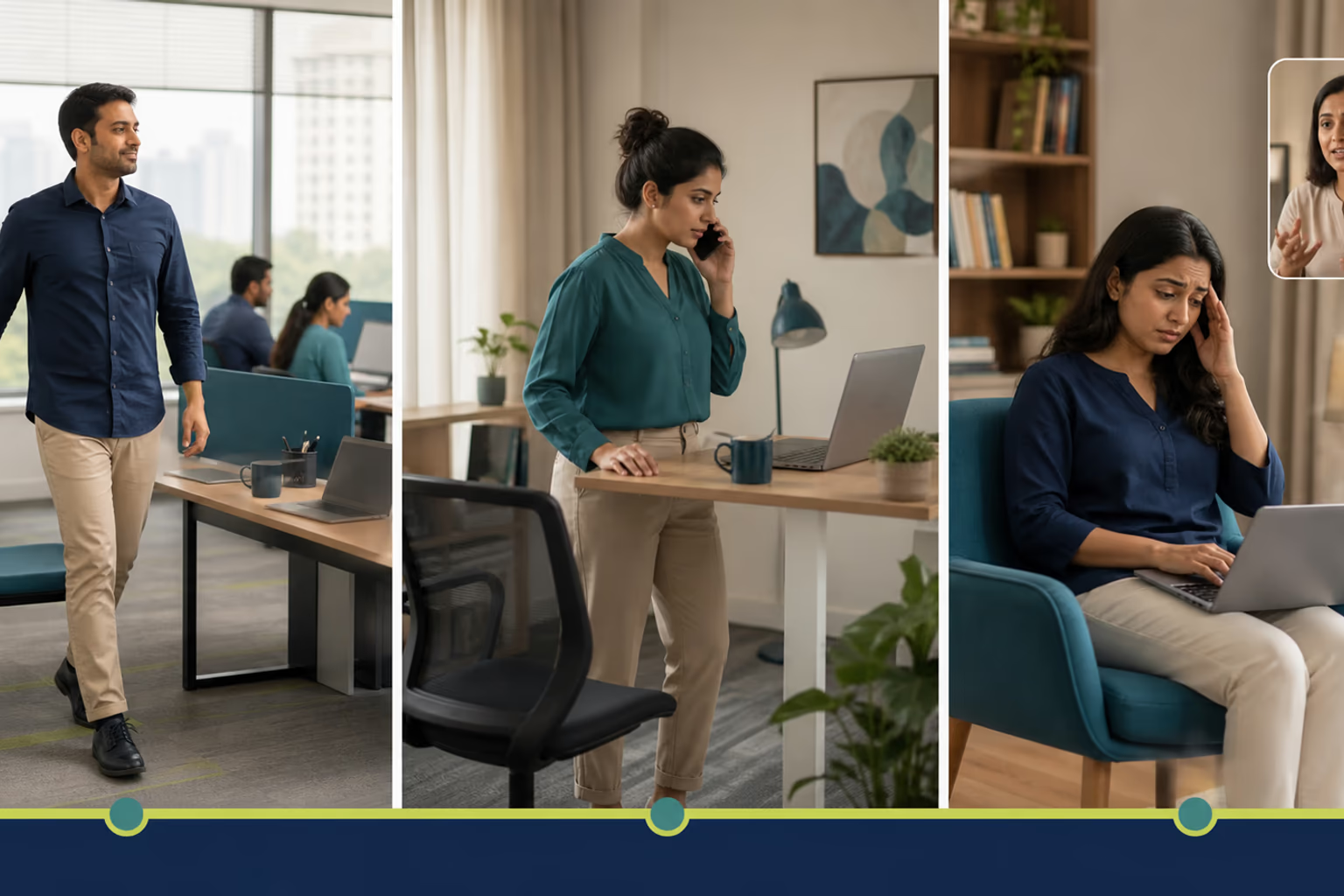
The minimum version: in-call position shifts
How do you change position when you are trapped on back-to-back video calls? You make micro-adjustments that require no extra time and draw no unwanted attention from colleagues.
Even the best ergonomic chair and monitor arrangement cannot eliminate the fatigue of staying in one shape for hours. A workstation should support neutral, comfortable positions, but even a good setup should allow regular changes of position. During listening-only segments of a video call, you can subtly shift your weight, adjust your seat height, or alter your arm placement on the desk. If your camera is on, these small adjustments look like normal professional engagement rather than a workout.
The goal during the minimum version is simply to interrupt static muscular holding. Drop your shoulders away from your ears, roll your wrists, and change how your legs cross or rest on the floor. These small acts reduce the physical toll of continuous sitting without requiring you to leave the screen.
The normal version: the minute between meetings
What is the minimum version of movement when every hour is booked, and how do you handle the micro-gap between one call ending and the next beginning?
If a meeting ends at 10:00 and your next call starts at 10:00, you have a transition problem. While true gaps are rare, most virtual meetings end fifty-five minutes past the hour, leaving a thirty to sixty-second window before the next audio connection opens.
Treat this micro-gap as an absolute boundary. Stand up immediately as the previous call concludes. Reach your arms overhead, stretch your spine, or take three slow breaths while standing tall beside your desk. This fifty-second transition prevents the accumulation of hours spent in a slumped seated posture. If you miss this window and the next meeting starts instantly, shift immediately to a standing posture during your next listening-only call or take a 60-second reset immediately after the hour ends.
The Back-to-Back meeting movement checklist
Use this checklist to introduce realistic movement into a packed schedule without disrupting your professional responsibilities.
- Shift your weight or stand up during the first two minutes of any listening-only call.
- Adjust your chair height or seat angle at the top of the hour to force a fresh position.
- Take a 30-second standing stretch during the gap as one meeting ends and the next window opens.
- Keep shoulders relaxed and wrists loose while typing through dense spreadsheet hours.
- Use local class structures or personal trainers when you need consistent outside accountability.
When implementing this checklist, keep safety and limits in mind. Do not force movements that cause joint strain, and step back if standing makes you dizzy or uncomfortable after prolonged sitting. If your work involves severe physical limitations or chronic pain, static guidance is not enough, and you should consult a qualified healthcare professional before altering your physical routines. Prime Tempr helps desk-based readers compare trainers, short practices and nearby classes when self-directed movement breaks need more structure or personal observation. You can find practical movement support to explore trainer-led options that fit demanding schedules.
When self-directed breaks need more structure
Relying entirely on self-directed micro-breaks has limits. If you find that your workday posture leads to persistent stiffness, or if you consistently skip your fifty-second transitions because of mounting work pressure, solo discipline may not be enough.
Moving from solitary desk shifts to structured guidance can provide the external rhythm you need. Whether that means joining a nearby evening class to decompress or working with a professional trainer who understands sedentary recovery, external support changes how you relate to your physical body outside of work hours. For related strategies on managing desk-bound days, review our guide on movement for desk-job days and learn how to change position during calls without losing focus.
Keep learning
Ready for the next step? How to Change Position During Calls Without Losing Focus.
Sources
- Computer Workstations (opens in a new tab) - Occupational Safety and Health Administration
- Physical Activity (opens in a new tab) - World Health Organization
Watch alongside this guide
Five movements you can do at your desk
This concise Mayo Clinic demonstration gives readers a visual menu for changing position during a workday. Use only comfortable options and stop for pain, dizziness, numbness or unusual symptoms.
The YouTube player stays unloaded until you choose to watch. Loading it connects to YouTube and may allow that service to process usage data.