How to Manage a Yoga Mat When You Travel Light
Pack light without abandoning your practice by learning to manage travel mats, hotel floors, and portable movement routines.
https://primetempr.com/blog/how-to-manage-a-yoga-mat-when-you-travel-light
Carrying a full-size yoga mat ruins light travel, but skipping practice entirely leaves your body stiff and fatigued after hours of sitting and carrying luggage. The core problem is simple: standard studio mats add awkward bulk and weight to carry-on bags, yet improvising practice on unfamiliar hotel floors or hard tiles without traction is uncomfortable.
The most practical approach involves choosing between a minimal travel mat alternative, hotel floor adjustments, or a portable trainer routine that requires zero heavy equipment. Any amount of physical activity is better than none, all activity counts, and muscle strengthening benefits everyone. Rather than abandoning movement because your favorite studio gear is sitting at home, you can adapt your routine to fit your luggage limits.
Why is a standard Yoga mat impractical for light travel?
Standard yoga mats are bulky, rigid, and awkward to strap onto a compact backpack or slide into an overhead compartment. They occupy valuable volume that you could use for clothing or electronics.
When you navigate train stations, airports, and city streets, an oversized roll strapped to your bag catches on doorways and adds unnecessary physical strain. Trying to force a heavy rubber mat into a light travel setup defeats the purpose of travelling light. Yet leaving it behind often leads to a second problem: trying to stretch on slippery hotel floors without any traction.
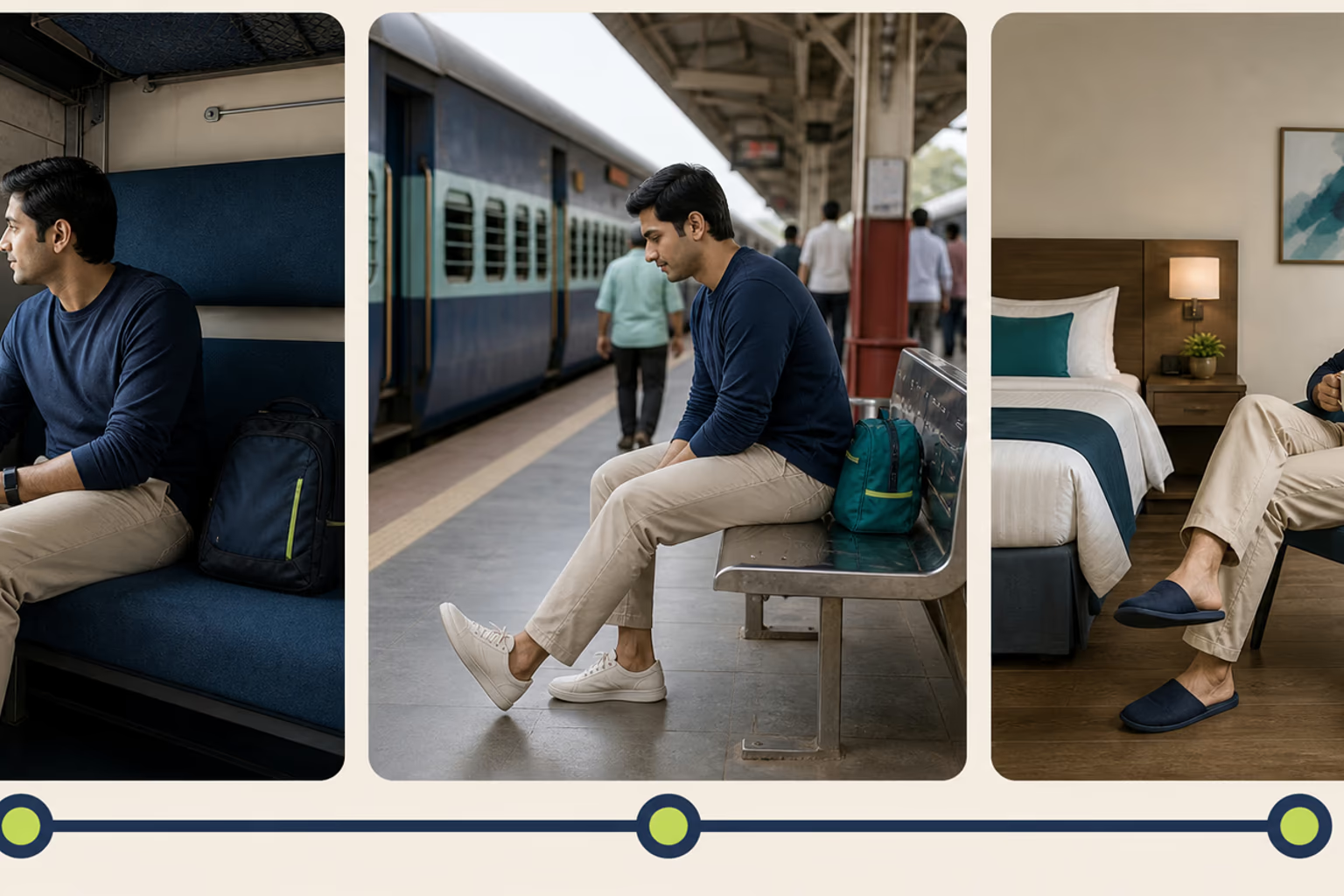
Three ways to handle practice gear on light trips
Managing practice gear on the road requires balancing comfort against luggage weight. You can choose from three distinct setups depending on how much space you have.
| Option | Pros | Cons | Best For |
|---|---|---|---|
| Standard Rolled Mat | Maximum cushioning and familiar grip | Extremely bulky, heavy, unfit for light luggage | Long car trips or dedicated yoga retreats |
| Foldable Travel Mat | Thin, packs flat inside a backpack, washable | Minimal cushioning, requires stable flooring | Frequent flyers and light urban commuters |
| Hotel Towel or Bare Floor | Zero extra gear or weight to pack | Slippery, zero knee cushioning, cold hard surface | Minimalist packers and short overnight stays |
The minimum version relies entirely on a clean hotel towel or carpeted room friction, keeping your bag completely free of mat weight. The normal version uses a thin, foldable travel mat that slips flat against the back panel of a commuter backpack. Adults can work toward 150 to 300 weekly minutes of moderate aerobic activity and muscle strengthening on at least two days, even when moving between cities.
Making room spaces and hotel floors work
When you cannot pack a thick studio mat, your practice must adapt to the physical realities of your temporary room. Hotel carpets can feel scratchy or harbor hidden dust, while tile floors are cold and unforgiving on bare knees.
Drop floor-sliding postures and wide lunges that require high-friction rubber. Instead, focus on standing balances, seated stretches, and wall-supported movements. If your knees ache on hard hotel tiles, fold a bath towel twice and place it underneath your joints for cushioning. Keep movement sessions short and consistent rather than chasing perfect studio setups or complicated sequences that demand a sprawling floor area.
You can explore resources like Movement for Commutes and Travel to discover how small adjustments keep habits alive on the road.
Light travel mat decision checklist
Use this decision guide to determine your setup before your next trip:
- Assess trip length and baggage limits before deciding on a mat or matless routine.
- Choose between packing a lightweight foldable travel towel or relying on carpeted room friction.
- Save an online portable practice or trainer to guide your movement in small spaces.
- Keep movement sessions short and consistent rather than chasing perfect studio setups.
When static guidance is not enough, or if travel fatigue turns into sharp joint pain, pause your movement routine and consult a qualified healthcare professional. General movement guidance must remain separate from medical care. If you want structured support that adapts to your itinerary, Prime Tempr helps travellers save online trainers and portable practices that can continue across cities while keeping general movement guidance separate from medical care. You can Find travel-friendly practice support to maintain consistency without adding heavy gear to your luggage.
Read more about practical packing strategies in How to Pack One Small Movement Prop That You Will Actually Use and prepare for your destination with A Hotel Room Workout After a Full Day of Travel: Practical Steps.
Keep learning
Ready for the next step? How to Pack One Small Movement Prop That You Will Actually Use.
Sources
- World Health Organization, Physical activity, https://www.who.int/news-room/fact-sheets/detail/physical-activity (opens in a new tab)
- Office of Disease Prevention and Health Promotion, Top 10 Things to Know About the Physical Activity Guidelines, https://odphp.health.gov/our-work/nutrition-physical-activity/physical-activity-guidelines/current-guidelines/top-10-things-know (opens in a new tab)
- Physical activity (opens in a new tab)
- Top 10 Things to Know About the Physical Activity Guidelines (opens in a new tab)
Watch alongside this guide
Just walk
This American Heart Association overview supports the article's practical focus on ordinary walking. It is context, not a personalized travel or medical plan.
The YouTube player stays unloaded until you choose to watch. Loading it connects to YouTube and may allow that service to process usage data.