How to Make Stairs Part of Daily Life Without Using Them as a Test
Shift home stairs from a stressful fitness test to steady, calm daily movement through practical pacing, clear habits, and simple safety checks.
https://primetempr.com/blog/how-to-make-stairs-part-of-daily-life-without-using-them-as-
Stairs often feel like a daily fitness test or a source of anxiety rather than a routine architectural feature of the home. When every ascent or descent carries the psychological weight of a performance review, simple home navigation becomes exhausting. Stairs belong in daily life as a functional environment rather than a pass-fail fitness test, supported by steady pacing, environmental checks, and optional guidance.
Why stairs become a fitness test
The pressure usually starts when stairs are viewed as a measure of physical decline or vigor. If a person rushes up a flight to prove something to themselves or family members, the body tenses, breathing quickens, and balance suffers. This high-intensity mindset turns ordinary architecture into an obstacle course.
Yoga styles and demands vary, and a similar principle applies here: qualified instruction and appropriate modification can reduce avoidable risk. When movement is treated as a test rather than an everyday functional act, people tend to push through fatigue or minor joint discomfort instead of pausing. Recognizing this mental trap is the first step toward reclaiming calm movement at home.
Building a low-pressure approach to stairs
Integrating stairs into daily patterns without pressure starts by separating transit from training. You do not need to tackle multiple flights at a brisk pace to maintain independence.
The minimum version of this approach involves taking a single, unhurried ascent or descent when you feel rested, using the handrail naturally. The normal version expands this into mindful daily navigation, spacing out trips across the day rather than lumping them together when tired.
Modifying routines around stairs takes patience and may require rearranging daily household paths. For example, keeping frequently used items on your main floor reduces unnecessary trips when energy is low. Stair practice builds functional lower-body strength, but it requires caution and is not appropriate for every day or every physical state. If fatigue or joint stiffness is present, scale back to ground-level movement or chair-based strength routines.
Supporting lower-body strength and balance
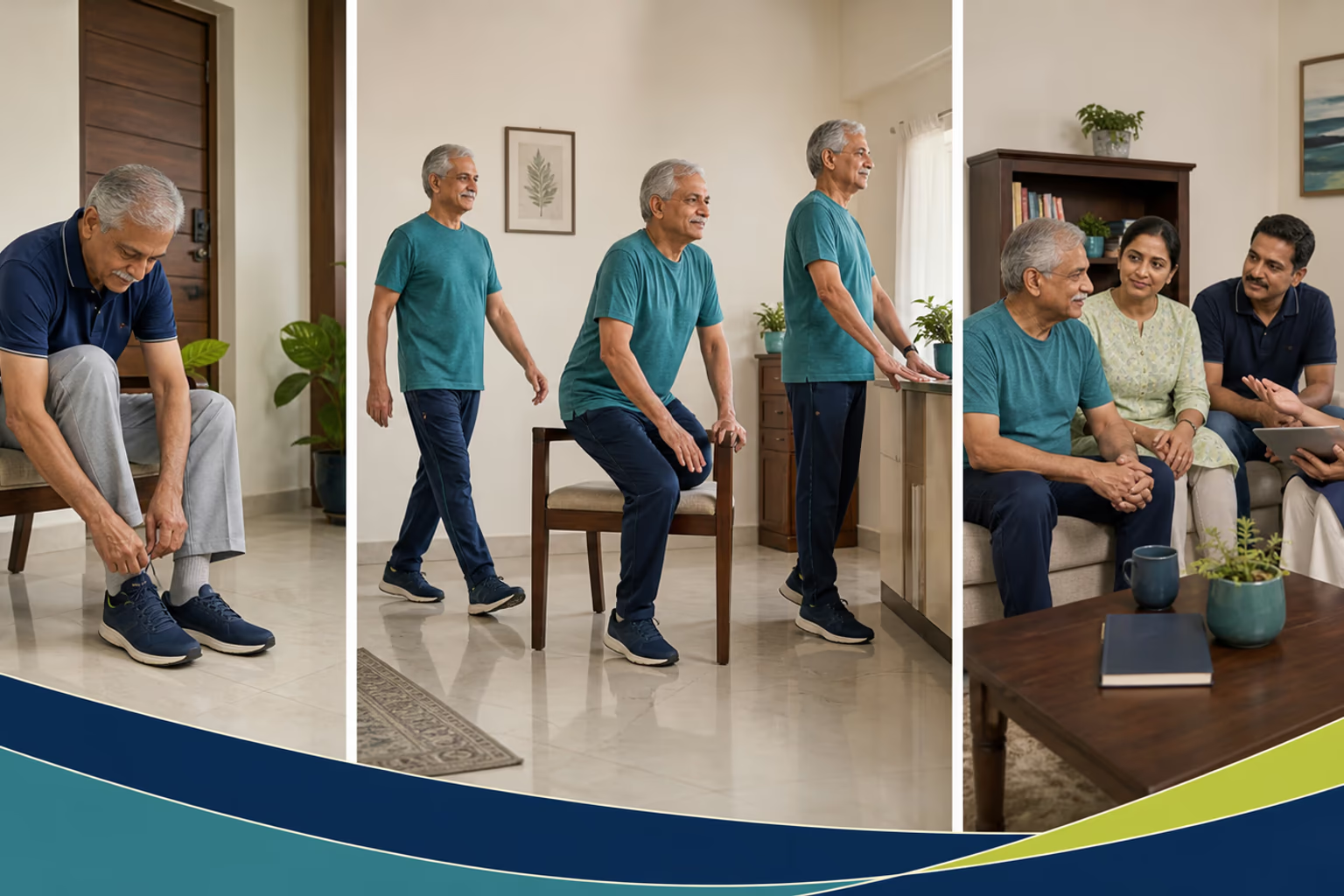
Stair confidence relies on broader physical capacity. Older adults benefit from a weekly mix of aerobic, muscle-strengthening, and balance activity matched to their abilities. These supportive habits build the stability needed for everyday environments without requiring grueling workouts.
Because yoga styles and demands vary, qualified instruction and appropriate modification can reduce avoidable risk. Working with a knowledgeable instructor helps ensure that strength and balance exercises match your actual day-to-day needs. You can explore options through resources like Supporting Active Aging at Home or review structured routines such as A Simple Weekly Plan That Combines Walking, Strength, and Balance.
When to seek professional guidance
Sometimes home strategies need an objective eye. If stair navigation consistently causes sharp pain, dizziness, or lingering instability, consult a healthcare provider or an appropriate movement specialist.
Prime Tempr profiles help families compare age-inclusive trainers, class pace, accessibility experience, and online options before choosing responsive support. You can browse qualified professionals directly by visiting the page to find an age-inclusive trainer. Professional guidance helps identify whether environmental adjustments, physical therapy, or targeted strength work will make the biggest difference for your household.
Your daily stair and movement integration check
Use this practical checklist to keep stair navigation grounded, safe, and free from unnecessary pressure.
- Check that stairways have clear lighting and secure handrails.
- Practice one purposeful, unhurried ascent or descent when feeling rested.
- Combine stair pacing with a weekly mix of balance and lower-body strength activity.
- Consult an age-inclusive trainer or healthcare provider if balance or joint comfort changes.
Follow-along reflection
Use the prompts below to review the idea in context, without turning it into a diagnosis or a fixed rule.
If this approach does not fit
Pause, use stable household handrails or support, and scale back to ground-level movement or chair-based strength routines if stairs feel overwhelming today.
Questions to carry forward
- Why do stairs feel like a test rather than everyday movement?
- How can older adults integrate stair navigation safely without pressure?
- What home or environmental factors make stairs more manageable?
- When should a family seek professional guidance or a trainer's assessment?
Sources
- Yoga: Effectiveness and Safety (opens in a new tab), National Center for Complementary and Integrative Health
- Older Adult Activity: An Overview (opens in a new tab), Centers for Disease Control and Prevention
Watch alongside this guide
A 15-minute workout for older adults
This National Institute on Aging routine demonstrates manageable strength and balance pacing. Use stable support and seek assessment for new or concerning changes.
The YouTube player stays unloaded until you choose to watch. Loading it connects to YouTube and may allow that service to process usage data.