How to Make Carrying Shopping Bags Feel More Manageable
Make everyday grocery trips easier by balancing your loads, adjusting your grip, and building steady baseline strength.
https://primetempr.com/blog/how-to-make-carrying-shopping-bags-feel-more-manageable
Carrying heavy or awkward shopping bags feels draining because it taxes the hands, forearms, and shoulders during everyday routines like public transport trips or walks from the market. When you load groceries unevenly or grip handles too rigidly, fatigue sets in quickly. Making this daily task manageable does not require special gym equipment or bodybuilding routines. Instead, it relies on steady baseline strength, grip awareness, and balanced loading that fit seamlessly into your schedule.
Why shopping bags feel so tiring
Shopping bags often create sudden physical tension because of how loads are distributed against gravity. When you hold a heavy bag in one hand, your torso leans to compensate, placing stress on the spine, shoulder girdle, and forearm muscles. Common failure modes include loading bags unevenly and straining one side of the body, gripping handles too rigidly without engaging the upper back, or attempting too much weight too quickly.
If you experience hand or forearm fatigue, the recovery path is straightforward. Reduce the load immediately, split items into two balanced bags, or rest for a few minutes before continuing your journey. Understanding these physical demands helps you approach daily errands with less frustration and better posture.
Immediate adjustments for better balance
You can make immediate changes to reduce strain the next time you pick up groceries or market bags. Small postural shifts change how leverage affects your joints.
- Distribute weight evenly: Split heavy items across two bags rather than overloading a single hand.
- Hold close to the center: Keep bag handles close to your body to reduce the leverage strain on your lower back and shoulders.
- Keep shoulders relaxed: Avoid shrugging your shoulders toward your ears as you walk. Drop them down and breathe steadily.
Simple home practice improves everyday comfort, but it is not a substitute for professional clinical rehabilitation or heavy athletic training. Balanced carrying takes mindfulness and extra packing time, which is worth considering when you are in a rush.
Building baseline strength for daily tasks
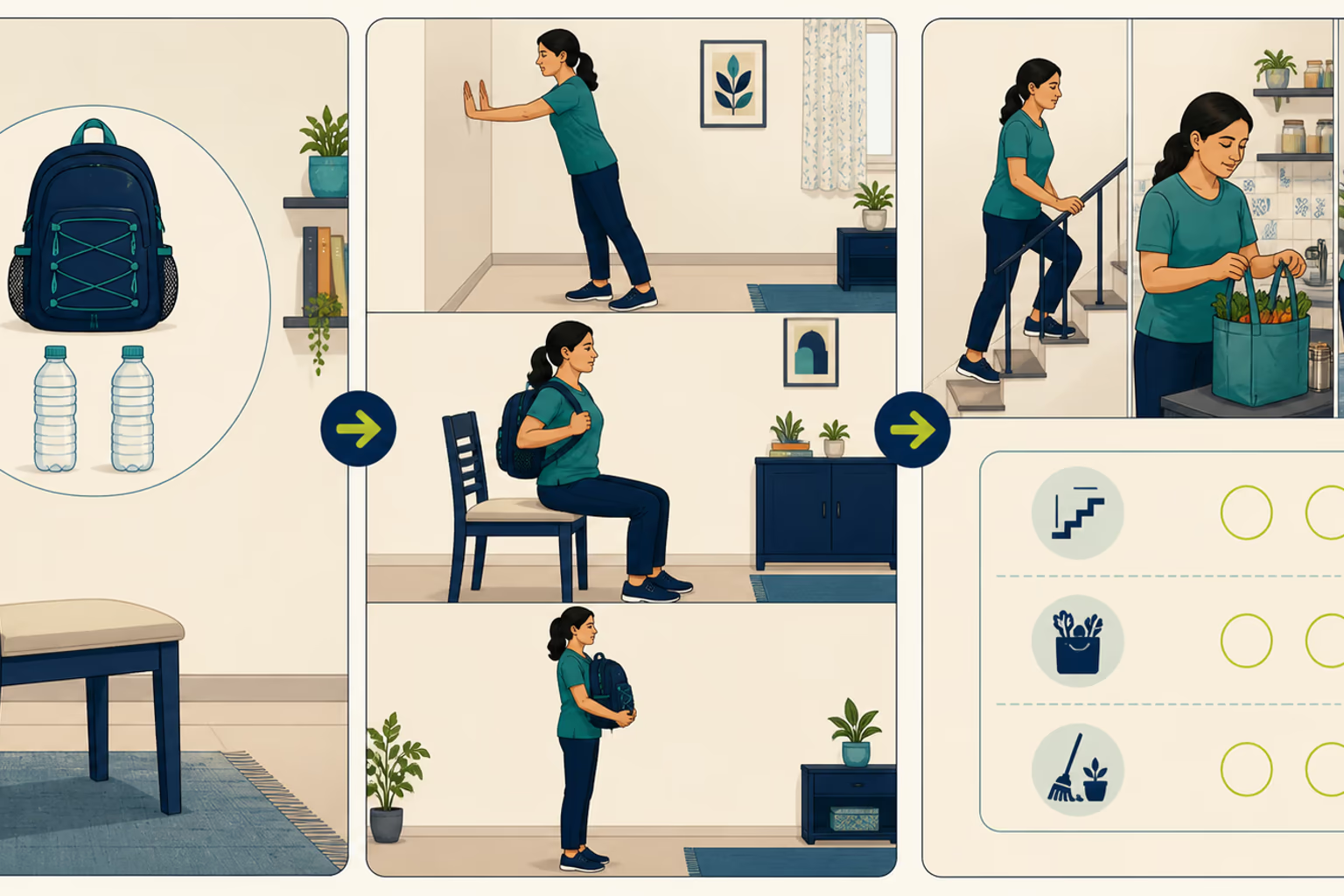
Carrying groceries comfortably over time requires more than temporary postural adjustments. Developing a reliable physical foundation supports everyday independence. Any amount of physical activity is better than none, all activity counts, and muscle strengthening benefits everyone.
Adults can work toward 150 to 300 weekly minutes of moderate aerobic activity and muscle strengthening on at least two days. Integrating these habits helps your body handle daily loads without undue fatigue. You can explore Exercises That Support Carrying Groceries, Luggage, and Children to see how simple movements translate to real life, or read How to Build Grip Strength for Jars, Bags, and Daily Carrying for targeted hand endurance tips.
Shopping bag comfort checklist
Use this checklist to evaluate your routine and make carrying daily loads more sustainable:
- Distribute weight evenly across two bags rather than loading one side.
- Hold bag handles close to your body to reduce leverage strain.
- Keep shoulders relaxed and breathe steadily while walking.
- Incorporate muscle strengthening into your weekly routine on at least two days.
- Consider consulting a professional trainer for personalized guidance.
Choosing your next step
Turning general everyday goals into a sustainable practice often benefits from external insight. Prime Tempr helps readers compare strength, yoga and mobility trainers who can turn general everyday goals into an appropriately progressed practice. You can Build useful strength with guidance to find professionals who understand local routines, desk jobs, and realistic time pressures without gym intimidation.
Follow-along reflection
Use the prompts below to review the idea in context, without turning it into a diagnosis or a fixed rule.
Trade-offs to keep in view
- Simple home practice improves everyday comfort but is not a substitute for professional clinical rehabilitation or heavy athletic training.
- Balanced carrying takes mindfulness and extra packing time.
If this approach does not fit
Reduce the load immediately, split items into two balanced bags, or rest for a few minutes before continuing.
Questions to carry forward
- Why do shopping bags feel so exhausting to carry even for short distances?
- What simple adjustments can make carrying bags feel more manageable immediately?
- How can basic muscle strengthening support daily carrying tasks?
- What are the trade-offs of relying solely on home carries versus structured guidance?
Sources
- Physical activity (opens in a new tab), World Health Organization
- Top 10 Things to Know About the Physical Activity Guidelines (opens in a new tab), Office of Disease Prevention and Health Promotion
Watch alongside this guide
Functional training explained
This ACE Fitness overview adds visual context for linking strength practice to everyday tasks while the article provides the more specific home progression.
The YouTube player stays unloaded until you choose to watch. Loading it connects to YouTube and may allow that service to process usage data.