How to Build Grip Strength for Jars, Bags, and Daily Carrying
Build practical hand and forearm strength for opening stubborn jars and carrying daily bags without expensive equipment.
https://primetempr.com/blog/how-to-build-grip-strength-for-jars-bags-and-daily-carrying
Struggling to open a stubborn pickle jar or hauling heavy grocery bags up a flight of stairs highlights how much daily independence relies on hand and forearm strength. Many adults face hand fatigue during routine chores not because of a lack of effort, but because modern desk jobs and sedentary habits rarely challenge the small muscles of the hands and wrists. Improving grip strength for daily tasks does not require specialized gym equipment or heavy bodybuilding routines. Instead, consistent, scalable muscle-strengthening activity integrated into regular routines provides the foundation for everyday independence.
Why everyday grip and carrying strength matter
Hand fatigue and weak forearms affect basic tasks like carrying luggage, managing heavy shopping bags, or twisting open tight jar lids. Any amount of physical activity is better than none, all activity counts, and muscle strengthening benefits everyone. When hands and arms lack regular conditioning, simple tasks cause localized strain. Building functional strength supports these everyday movements smoothly, reducing discomfort and maintaining personal independence at home and on the commute.
The minimum version: getting started with daily movement
Starting a grip-strengthening habit requires zero specialized hand grippers or heavy weights. Begin with the physical activity guidelines you can apply inside a compact apartment or a busy schedule. Any amount of physical activity is better than none, and all activity counts. You can start by simply paying attention to how you lift household objects, ensuring your fingers wrap securely around handles, and taking short, deliberate holds of stable items during your morning routine.
The normal version: integrating muscle strengthening into your week
To build sustainable capacity for heavier tasks like carrying groceries or shifting furniture, adults can work toward 150 to 300 weekly minutes of moderate aerobic activity and muscle strengthening on at least two days.
| Phase | Weekly Target | Focus Area | Example Action |
|---|---|---|---|
| Minimum | Any amount | Awareness | Secure finger placement on everyday objects |
| Normal | 2 days per week | Muscle strengthening | Controlled carries and holds using household items |
| Progressed | Structured routine | Trainer-led progression | Customized strength or mobility integration |
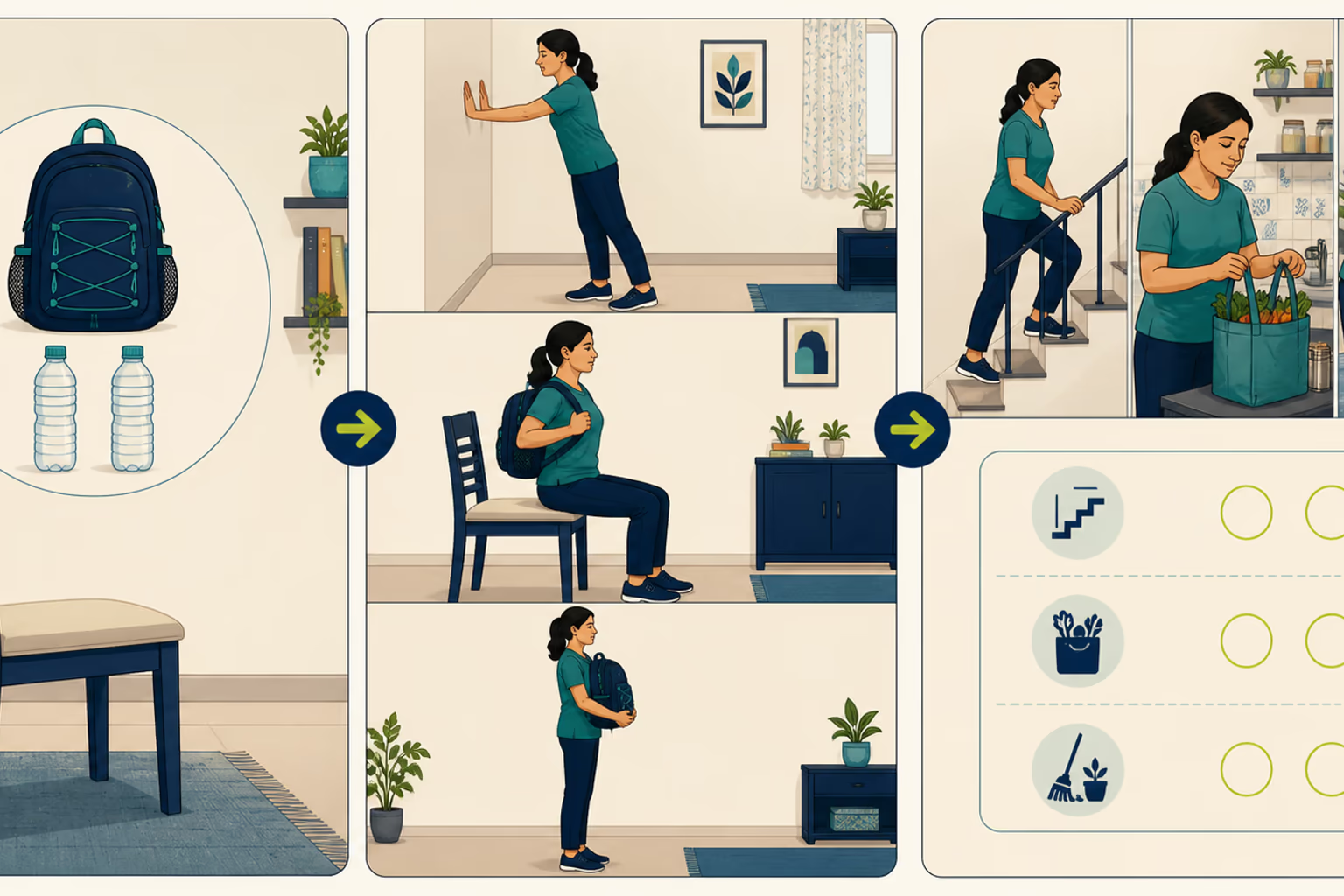
Muscle-strengthening activities do not need to look like a traditional gym workout. You can perform controlled holds or carries with ordinary household items like handled shopping bags or stable containers. Practicing these movements twice a week builds the necessary forearm endurance without requiring intimidating weights or complicated machinery.
Trade-Offs, limits, and recovery
General grip and carrying strength exercises improve everyday capability, but they do not replace comprehensive physical activity or medical treatment for joint conditions. Progress is gradual, and home practices require consistency over weeks rather than instant changes.
If a hand or forearm feels strained or tired, scale back the intensity, reduce the load, prioritize rest days, and focus on steady, moderate muscle-strengthening actions. Overdoing high-intensity forearm exercises can cause localized strain or wrist fatigue, so listening to physical feedback remains essential.
Everyday grip and carrying practice plan
Use this practical checklist to guide your weekly routine:
- Acknowledge that any amount of physical activity or muscle strengthening is better than none and all activity counts.
- Incorporate muscle-strengthening activities into at least two days of your weekly routine.
- Practice controlled holds or carries with ordinary household items like handled bags or stable containers.
- Consult qualified trainers to tailor a progression if you need personalized support.
Your next step with guidance
When static home routines or self-guided checklists reach their limit, working directly with a professional can help refine your form and prevent plateaus. Prime Tempr helps readers compare strength, yoga and mobility trainers who can turn general everyday goals into an appropriately progressed practice. Explore options to Build useful strength with guidance or read more about Exercises That Support Carrying Groceries, Luggage, and Children.
Follow-along reflection
Use the prompts below to review the idea in context, without turning it into a diagnosis or a fixed rule.
Trade-offs to keep in view
- Progress is gradual; home practices require consistency over weeks rather than instant changes.
Questions to carry forward
- Why does grip strength matter for everyday tasks like carrying bags and opening jars?
- How does regular muscle strengthening support daily functional capacity?
- What is the minimum effective dose of activity to start building functional hand and arm strength?
- How can everyday routines in a compact home accommodate grip and carrying strength work?
- When should a reader seek guidance from a qualified professional or trainer?
Sources
- Physical activity (opens in a new tab), World Health Organization
- Top 10 Things to Know About the Physical Activity Guidelines (opens in a new tab), Office of Disease Prevention and Health Promotion
Watch alongside this guide
Functional training explained
This ACE Fitness overview adds visual context for linking strength practice to everyday tasks while the article provides the more specific home progression.
The YouTube player stays unloaded until you choose to watch. Loading it connects to YouTube and may allow that service to process usage data.