How to Join an Older Adult in Movement Without Supervising Every Move
Support daily movement through respectful parallel practice instead of hovering, protecting personal autonomy while maintaining shared household routines.
https://primetempr.com/blog/how-to-join-an-older-adult-in-movement-without-supervising-e
Supporting an older adult's physical activity at home often creates an awkward family dynamic. Family members frequently swing between hovering over every movement and stepping back entirely, which undermines autonomy and creates friction. When adult children or younger household members watch intently, offer unsolicited form corrections, or turn a simple stretch into a medical test, the older adult feels scrutinized rather than supported.
This tension usually stems from a genuine desire to prevent injury, but constant oversight turns routine movement into a performance. The key to resolving this dynamic is shifting away from direct supervision and moving toward shared, parallel participation. When family members participate alongside an older adult rather than standing over them as inspectors, movement returns to its natural place in daily life.
Parallel practice vs. Direct oversight
Direct supervision relies on one person acting as a monitor while the other performs. This creates an immediate power imbalance. The person moving feels watched, while the observer feels responsible for every minor wobble or adjustment.
Parallel practice changes this structure entirely. Instead of standing close and watching intently, family members perform their own movement routine side by side or in the same room at the same time. This approach respects personal boundaries while maintaining a shared household rhythm.
According to public health guidance, older adults benefit from a weekly mix of aerobic, muscle-strengthening, and balance activity matched to their abilities. When family members join in through parallel routines, they model healthy habits without dictating how the older adult should move. If one person works on balance poses while another focuses on seated stretches, both engage in personal practice without interference.
Shifting from oversight to parallel participation reduces performance anxiety and builds natural consistency in multigenerational homes.
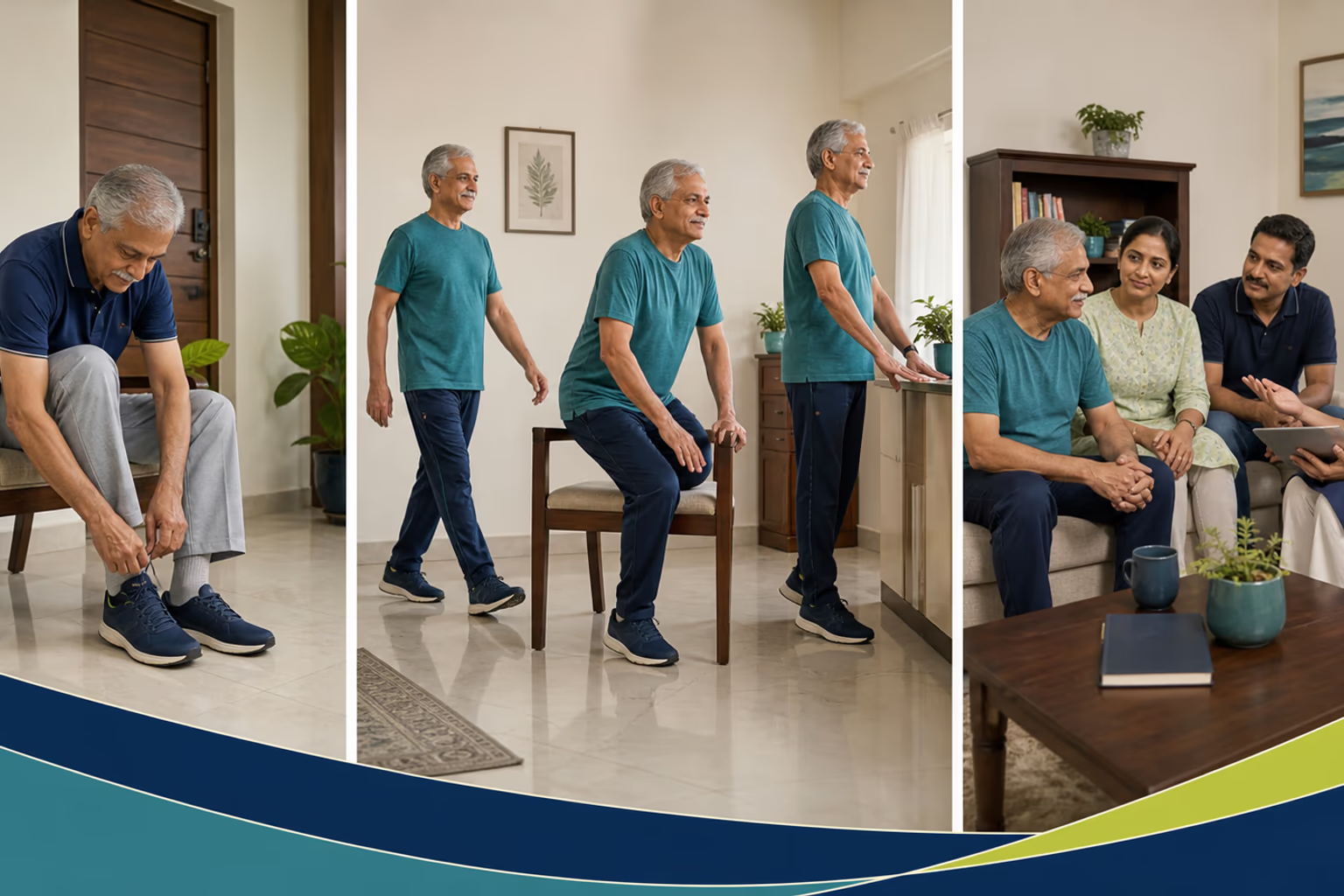
Using external guidance to reduce family friction
Family members are rarely neutral coaches. Emotional history, living in close quarters, and changing roles within the household make it difficult to offer feedback without it feeling like nagging. Introducing external guidance helps relieve this pressure.
Yoga styles and demands vary significantly, and qualified instruction with appropriate modification can reduce avoidable risk. Working with an age-inclusive trainer or joining a structured class allows the older adult to receive objective feedback from an outside professional. This removes the family from the role of referee.
When a professional handles pacing, modifications, and safety checks, family members participate as peers. You no longer need to worry about whether a knee is bent at the correct angle or whether a stretch is held long enough. You can focus on your own practice and let the instructor handle the guidance. Prime Tempr profiles help families compare age-inclusive trainers, class pace, accessibility experience, and online options before choosing responsive support.
Navigating trade-offs and limits
Stepping back from direct supervision requires accepting trade-offs. When you stop hovering, you accept a lower degree of immediate control over form and execution. The older adult may move slower, skip certain steps, or choose a variation you would not recommend.
Similarly, shared pacing requires compromise on when and how activities take place. Multigenerational households have competing schedules, noise levels, and space constraints. Finding a common time for movement means aligning routines rather than imposing a strict schedule.
Accepting these compromises is essential for long-term consistency. Constant nagging leads to friction and withdrawal from physical activity altogether. Respecting autonomy while maintaining a supportive environment creates sustainable habits.
Shared movement boundaries checklist
Use this practical checklist to establish respectful boundaries and shared movement routines at home:
- Agree on a regular time for parallel or shared movement rather than ad-hoc corrections during the day.
- Use stable household support or qualified instruction for new exercises instead of family hand-holding.
- Observe from a distance without offering unsolicited form corrections during activity.
- Review comfort levels weekly and adjust the plan based on the older adult's feedback.
When establishing these routines, ensure the physical environment has clear space and stable chairs or walls for balance support. Keep sessions realistic, starting with ten to fifteen minutes of gentle movement, and stop immediately if there is sharp pain, dizziness, or unusual discomfort. If home strategies are not enough to address mobility concerns or persistent stiffness, consult a qualified healthcare provider or physical therapist for tailored evaluation.
To explore professional guidance suited to your household, you can find an age-inclusive trainer or read more practical insights on how to encourage an older parent to move without nagging and supporting active aging at home.
Keep learning
Ready for the next step? How to Encourage an Older Parent to Move Without Nagging.
Sources
Watch alongside this guide
A 15-minute workout for older adults
This National Institute on Aging routine demonstrates manageable strength and balance pacing. Use stable support and seek assessment for new or concerning changes.
The YouTube player stays unloaded until you choose to watch. Loading it connects to YouTube and may allow that service to process usage data.