How to Invite a Family Member to Walk Without Pressure
Invite a family member to walk without guilt or friction using open phrasing and flexible pacing for daily household movement.
https://primetempr.com/blog/how-to-invite-a-family-member-to-walk-without-pressure
Inviting a family member to walk works best when framed as an open-ended invitation rather than a health obligation or shared chore. Traditional exercise invitations often trigger resistance, obligation, or arguments about pace and schedules because they arrive disguised as lifestyle lectures or strict medical assignments. In busy multigenerational households where care work and desk jobs already consume the day, adding another rule creates friction rather than wellness. Any amount of physical activity is better than none, all activity counts, and muscle strengthening benefits everyone, but none of these facts make a mandatory family march feel welcoming.
Why family exercise invitations backfire
When you tell a family member they need to hit a certain step count or complete a specific loop for their health, you unintentionally position yourself as an authority figure grading their daily habits. This dynamic invites immediate pushback. Household members often feel judged for their rest time or overwhelmed by the prospect of an unbroken schedule they cannot control.
Another failure mode is treating different walking speeds as a problem to be corrected rather than a natural variation in energy. If one person strides quickly while another prefers a slow amble, forcing them into lockstep turns the outing into a source of frustration. Walking together may require compromising on speed, distance, or timing. Not every family member will want to join, and forcing participation destroys the goal of low-pressure movement. Recognizing these trade-offs early keeps expectations realistic.
The minimum version: asking without obligations
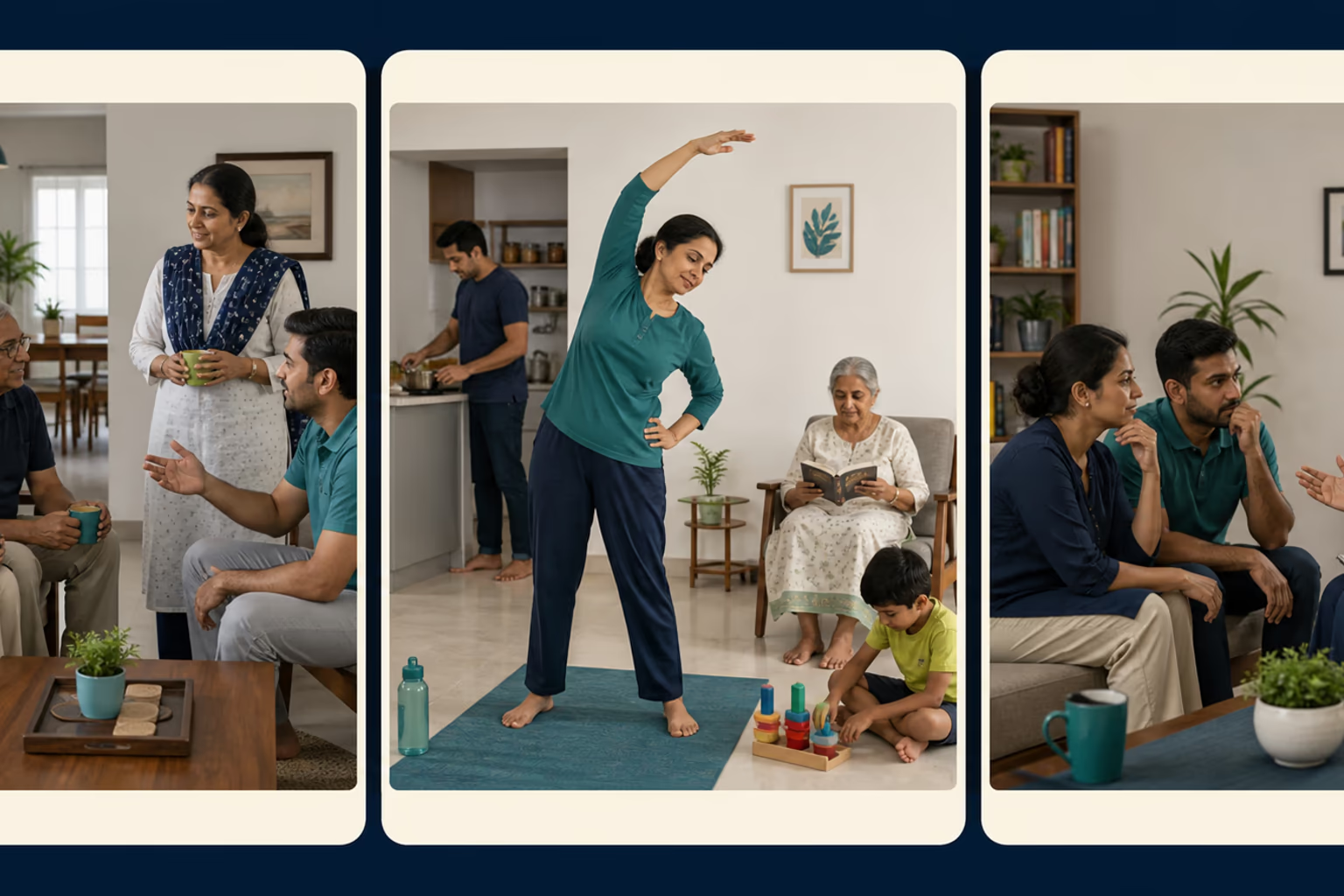
To invite someone without pressure, drop the language of fitness goals and frame the outing around a simple, neutral purpose. Ask if they want to accompany you on a routine errand, or suggest stepping outside for fresh air without locking into a fixed distance.
Provide a clear exit strategy so the other person knows they can decline without guilt. A casual question like heading down to the corner shop or checking the evening breeze gives them a graceful way to say no or to join for just five minutes before turning back. Adults can work toward 150 to 300 weekly minutes of moderate aerobic activity and muscle strengthening on at least two days, but that guideline belongs in your own personal planning, not in your opening invitation to a tired relative.
Managing different speeds and energy levels
Once you are both outside, let go of timing targets. If your companion walks slowly, match their pace without offering unsolicited commentary or checking your watch. When energy levels differ significantly within a household, trying to synchronize every outing leads to resentment.
Instead, view the walk as a shared moment rather than a workout session. If a family member declines or the shared routine stalls, shift immediately to a solo walk or explore external family-aware guidance without resentment. When generic routines do not fit your household constraints, Prime Tempr helps caregivers compare online and local trainers who can offer flexible schedules, family-aware pacing and guided alternatives.
Low-Pressure walk invitation checklist
Use this checklist to keep shared movement relaxed and sustainable:
- Frame the invitation around fresh air or a specific errand rather than exercise.
- Offer a clear out so the family member knows they can decline without guilt.
- Keep the initial route short and flexible.
- Match the pace of the slower walker without commentary.
- Decide on a solo fallback option if plans change.
When to walk alone or seek professional guidance
There are times when shared walking simply does not work for your household schedule or dynamics. If repeated attempts result in friction, stop trying to coordinate joint sessions. Solo movement is entirely valid and protects your own well-being. If you need support tailoring physical activity around caregiving duties or specific joint considerations, find family-aware guidance to explore structured options that respect your time. Check out our resources on Movement for Families and Caregivers or read more about creating A Family Walk That Works for Different Speeds and Energy Levels.
Follow-along reflection
Use the prompts below to review the idea in context, without turning it into a diagnosis or a fixed rule.
Questions to carry forward
- Why do traditional exercise invitations often cause family resistance?
- How can you frame a walk so it feels voluntary rather than mandatory?
- What is the minimum viable version of a shared family walk?
- How do you handle different paces and energy levels without frustration?
- When is a solo walk or professional guidance a better fit than pushing a family member?
Sources
- Physical activity (opens in a new tab), World Health Organization
- Top 10 Things to Know About the Physical Activity Guidelines (opens in a new tab), Office of Disease Prevention and Health Promotion
Watch alongside this guide
Just walk
This short walking overview offers an easy shared-activity reference. Family members can choose their own pace, route and participation without pressure.
The YouTube player stays unloaded until you choose to watch. Loading it connects to YouTube and may allow that service to process usage data.