How to Exercise When the Living Room Is Only Free for Ten Minutes
Use a ten-minute living room window for quiet, equipment-light movement that respects household routines and keeps pathways clear.
https://primetempr.com/blog/how-to-exercise-when-the-living-room-is-only-free-for-ten-mi
When the living room is only available for ten minutes before family members need the space or foot traffic picks up, long workouts become impossible. Instead of abandoning movement entirely, you can use that short window effectively. Any amount of physical activity is better than none, all activity counts, and muscle strengthening benefits everyone.
Living in a shared or compact home brings familiar constraints. Desk jobs, multigenerational routines, changing household schedules, and limited floor space leave little room for elaborate setups. Treating ten minutes as too short to matter is a common trap, but short bouts of movement help maintain consistency without causing friction with neighbours or household members.
The reality of a ten-minute living room window
What can you actually achieve in a ten-minute window in a shared living room? While ten minutes is insufficient for a full comprehensive strength routine on its own, it keeps habits alive and contributes to weekly activity. Adults can work toward 150 to 300 weekly minutes of moderate aerobic activity and muscle strengthening on at least two days. A ten-minute session acts as a building block toward these broader goals.
The main failure mode to avoid is wasting your limited time moving heavy furniture or arguing over floor space. Shared spaces mean you must accept noise limits and floor constraints rather than sprawling out.
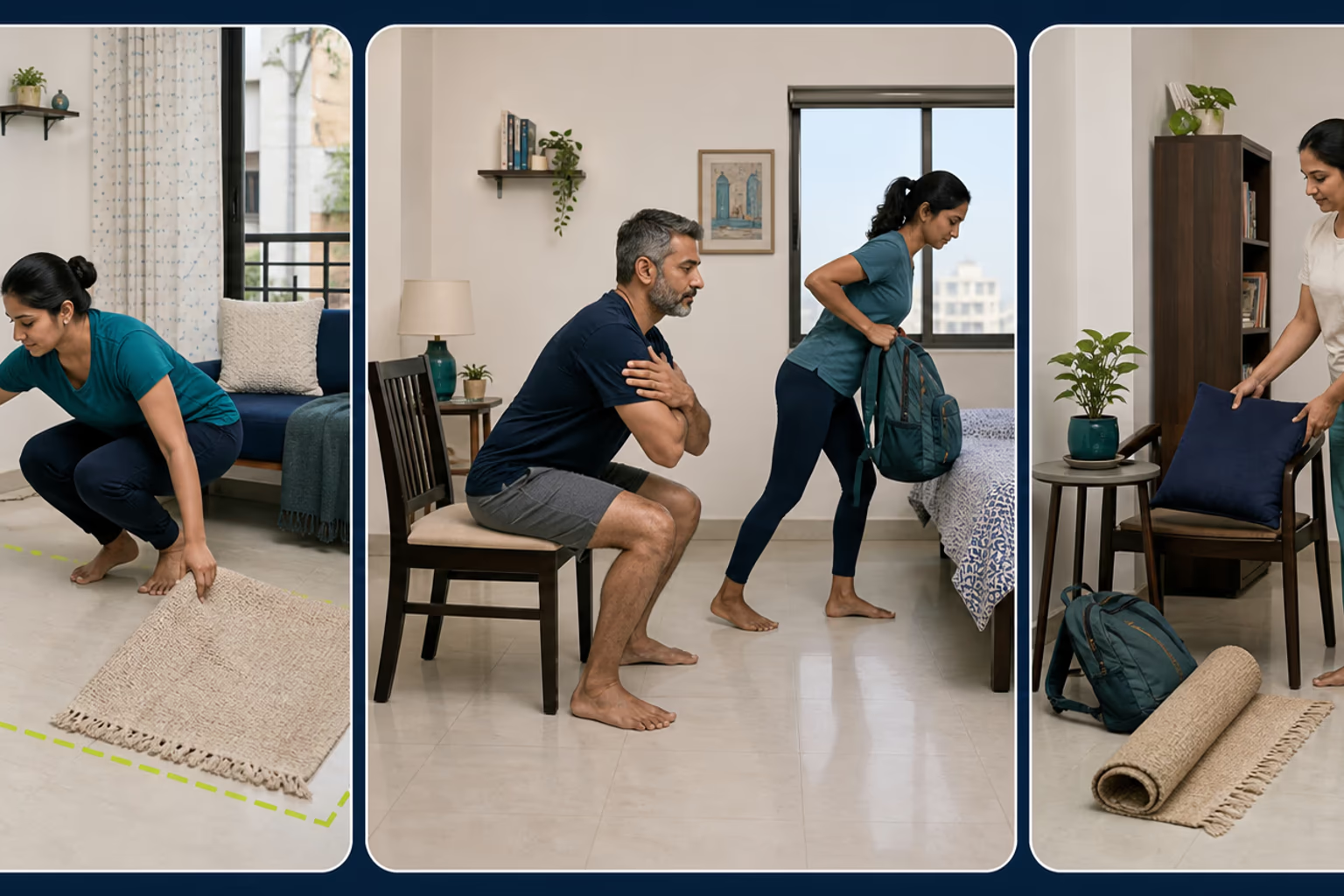
Designing your ten-minute floor plan
You do not need to rearrange the room or set up heavy props. The most practical approach relies on a single mat-sized footprint. Roll out your mat in a spot that leaves walkways clear for other household members.
Keep your setup prop-light. If you use blocks or straps, keep them stacked neatly beside the mat rather than scattered across the floor. This eliminates clutter and makes the transition into and out of the space seamless.
A low-noise, equipment-light movement routine
To keep peace with downstairs neighbours and family members, choose low-impact movements that avoid jumping, heavy footfalls, or sudden drops. Focus on steady, controlled transitions.
Structure a practical ten-minute session using the following approach:
- Minimum Version: Spend two minutes on slow, steady breathing to settle your focus, followed by six minutes of gentle mobility or supported bodyweight holds, ending with two minutes of seated calm.
- Normal Version: Spend one minute clearing your immediate mat space, seven minutes of continuous moderate movement like steady squats, lunges, or controlled floor stretches, and two minutes resetting the area.
If the ten-minute window is interrupted or unavailable, shift to a bedside or standing alternative, or scale down to a simple breathing or mobility sequence.
Honest trade-offs and when to stop
Short sessions require honest trade-offs. You will not achieve an exhaustive training stimulus in ten minutes, and you must respect household boundaries regarding noise and space.
Stop immediately if you experience sharp pain, dizziness, or breathlessness that does not settle with rest. Static guidance is not enough if you are managing a new injury or require individual medical clearance. When you are ready to expand your practice beyond solo ten-minute windows, Prime Tempr helps home exercisers find trainers who offer online sessions, prop-light programmes and realistic modifications for the space they actually have.
The ten-minute living room movement plan
Use this structured practice plan to make the most of your brief window without clutter or conflict.
| Phase | Action | Time |
|---|---|---|
| Setup | Unroll your mat or clear a single mat-sized footprint without moving heavy furniture. | 1 minute |
| Movement | Select a quiet, low-impact sequence that avoids jumping or loud footfalls, performing steady moderate aerobic or muscle-strengthening movements. | 7 minutes |
| Reset | Spend the final moments on calm breathing and resetting the space for household use. | 2 minutes |
When you want to take your practice further, you can Find a home-practice trainer to guide your routine, read more about Small-Space Home Exercise, or learn about Practical Prop Storage for Small and Shared Homes.
Follow-along reflection
Use the prompts below to review the idea in context, without turning it into a diagnosis or a fixed rule.
The ten-minute living room movement plan
- Select a quiet, low-impact sequence that avoids jumping or loud footfalls.
- Perform steady moderate aerobic or muscle-strengthening movements for eight minutes.
- Spend the final two minutes on calm breathing and resetting the space for household use.
Trade-offs to keep in view
- Ten minutes is insufficient for a full comprehensive strength routine on its own, but it keeps habits alive and contributes to weekly activity.
Questions to carry forward
- What can I actually achieve in a ten-minute window in a shared living room?
- How do I fit movement in without disturbing family members or neighbours?
- Do I need to move furniture or set up heavy props?
- How does a short ten-minute session fit into weekly guidelines?
- What is the best way to transition into longer sessions or guided training later?
Sources
- Physical Activity (opens in a new tab), World Health Organization
- Top 10 Things to Know About the Physical Activity Guidelines (opens in a new tab), Office of Disease Prevention and Health Promotion
Watch alongside this guide
Yoga for complete beginners
This complete beginner session shows how a guided practice can fit into one mat-sized area. Pause freely, use stable support and skip movements that do not suit the room or body.
The YouTube player stays unloaded until you choose to watch. Loading it connects to YouTube and may allow that service to process usage data.