How to Exercise in a Hotel Room Without Disturbing Other Guests
Maintain your physical activity while travelling by using low-impact bodyweight movements that keep room noise to an absolute minimum.
https://primetempr.com/blog/how-to-exercise-in-a-hotel-room-without-disturbing-other-gue
Exercising in a hotel room without disturbing adjacent guests requires shifting away from explosive jumping and dropping weights toward controlled bodyweight holds and low-impact transitions. Thin walls and hollow floors mean that standard home routines can quickly become a nuisance for people staying next door, below, or above your room. Any amount of physical activity is better than none, all activity counts, and muscle strengthening benefits everyone. Adults can work toward 150 to 300 weekly minutes of moderate aerobic activity and muscle strengthening on at least two days, even when schedules involve frequent travel and long periods of sitting.
Why quiet hotel room movement matters
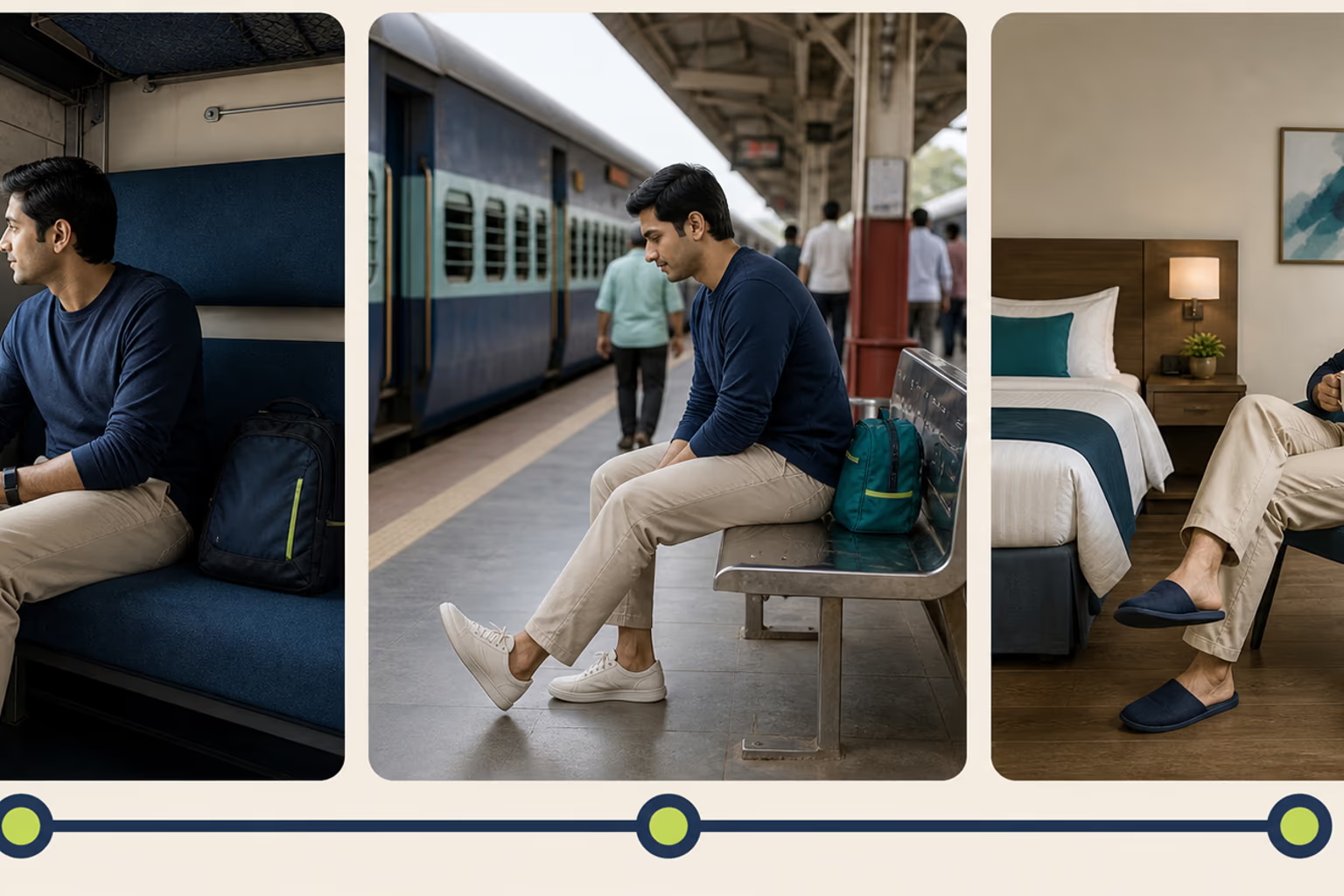
Staying active while away from home helps maintain your daily routine without requiring a fully equipped gym or heavy weights. Travel often involves long hours in transit, sitting in meetings, or carrying luggage through stations. Introducing short bouts of movement into your stay helps counter the stiffness that accumulates from these sedentary stretches.
All activity counts toward your general well-being. You do not need a high-intensity circuit or heavy apparatus to make movement worthwhile. Simple bodyweight exercises and gentle stretches provide an effective way to keep your muscles engaged and your joints mobile while living out of a suitcase.
Choosing low-impact, quiet exercises
To keep your hotel room workout discreet, select movements that avoid heavy footfalls or sudden impacts. Replace jumping jacks and burpees with slow, controlled bodyweight exercises.
| Movement Type | Examples | Sound Level | Space Required |
|---|---|---|---|
| Lower Body | Wall sits, slow bodyweight squats, gentle lunges | Very low | Minimal floor space |
| Upper Body | Desk or wall push-ups, shoulder rolls, arm circles | Silent | Standing or leaning against furniture |
| Mobility & Core | Seated spinal twists, gentle planks on carpet, cat-cow stretches | Silent | Mat or carpeted floor area |
Switch immediately to controlled bodyweight holds, slow transitions, or simple walking in place on carpeted areas when noise or vibration becomes a concern. If you notice floorboards creaking or feel vibrations travelling through the structure, adjust your stance or shift to a softer part of the room.
Practical trade-offs and limits
Exercising in temporary accommodation involves distinct compromises. Hotel rooms offer limited floor space and acoustic insulation, restricting explosive movements and heavy equipment use. Short sessions maintain general habit continuity rather than replicating a fully equipped home gym routine.
It is also important to maintain clear boundaries regarding health and wellness. General movement guidance remains separate from medical care. If you experience severe travel fatigue, persistent circulation issues, or acute pain during travel, consult a qualified healthcare professional rather than relying on hotel room exercises to address physical symptoms.
Quiet hotel room movement checklist
Use this structured checklist to plan a discreet, low-impact session during your next trip:
- Select a carpeted area of the room to dampen footfall sound.
- Choose low-impact bodyweight exercises such as slow squats, wall sits, or gentle stretches.
- Avoid jumping, dropping bags, or running in place.
- Keep total session duration realistic for your schedule and energy levels.
- Save travel-friendly practice support for continuity across cities.
Next steps for travel-friendly practice
Maintaining consistency across different cities and hotel rooms is easier when you have structured guidance tailored to compact spaces. Prime Tempr helps travellers save online trainers and portable practices that can continue across cities while keeping general movement guidance separate from medical care.
To explore professional guidance and find routines that fit your travel schedule, visit Find travel-friendly practice support. For additional strategies on staying active during transit, read Movement for Commutes and Travel.
Follow-along reflection
Use the prompts below to review the idea in context, without turning it into a diagnosis or a fixed rule.
Questions to carry forward
- How can I exercise in a hotel room without heavy jumping or dropping weights?
- What types of movements count toward weekly physical activity guidelines?
- How do I structure a short movement session in a compact space?
- What are the realistic limits of exercising in temporary accommodation?
- How can I find travel-friendly practice support for my next trip?
Sources
- Physical activity (opens in a new tab), World Health Organization
- Top 10 Things to Know About the Physical Activity Guidelines (opens in a new tab), Office of Disease Prevention and Health Promotion
Watch alongside this guide
Just walk
This American Heart Association overview supports the article's practical focus on ordinary walking. It is context, not a personalized travel or medical plan.
The YouTube player stays unloaded until you choose to watch. Loading it connects to YouTube and may allow that service to process usage data.