How to Encourage an Older Parent to Move Without Nagging
Support your older parent's daily movement respectfully through familiar routines and independent choices, avoiding nagging entirely.
https://primetempr.com/blog/how-to-encourage-an-older-parent-to-move-without-nagging
Encouraging an older parent to stay active often turns into a cycle of repeated reminders, resistance, and family tension. When adult children push movement as a mandatory chore or an urgent medical fix, parents frequently respond by withdrawing or refusing to participate.
Moving away from nagging requires shifting the conversation from exercise mandates to shared daily activities. Progress is often gradual and nonlinear, and forcing a parent to move faster rarely yields sustainable habits. By focusing on current ability rather than age milestones, families can create an environment where movement feels natural rather than intimidating.
Why nagging backfires and how to shift the conversation
Constant reminders about exercise often trigger a loss of autonomy. When an older adult feels managed or judged, resistance is a normal response to protect their independence.
Instead of repeating unhelpful prompts, step back from direct instruction. Notice what your parent already does during the day, whether it is walking to a local market, managing household chores, or stepping out for a brief errand. Aligning encouragement with these existing habits removes the pressure of formal workouts. The goal is to support everyday participation, independence, and comfort at home and nearby.
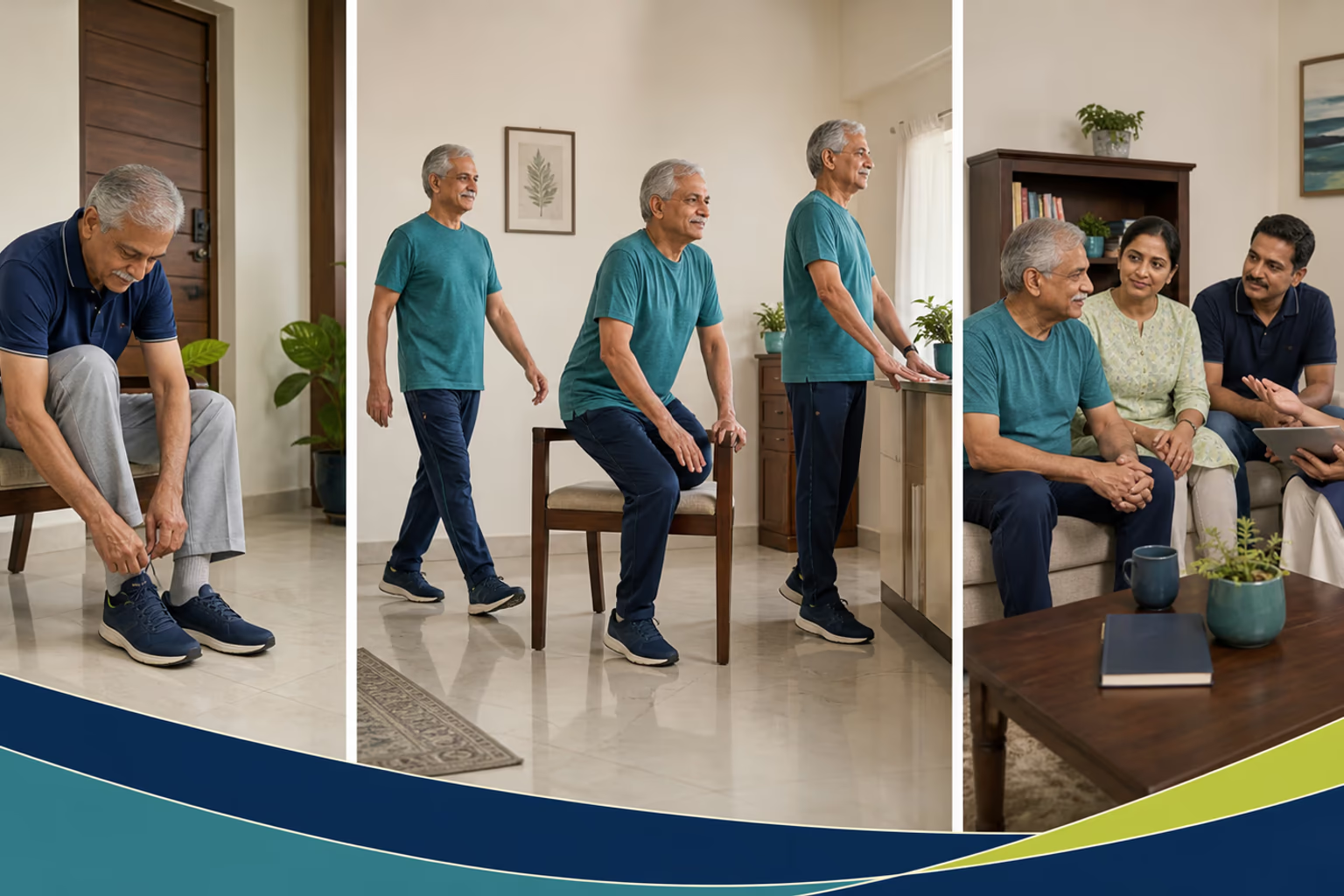
Building movement into familiar daily routines
Integrating physical activity into recognizable daily routines helps bypass the friction associated with traditional exercise. In multigenerational households or modest living spaces, structured time can be scarce, but ordinary moments offer steady opportunities.
You can tie gentle movement to predictable parts of the day. For example, standing up to stretch during tea time, walking together to fetch the morning newspaper, or pacing gently while talking on the phone introduces activity without demanding a dedicated workout slot. Public transport use, climbing a flight of stairs when an elevator is busy, or participating in family chores all contribute to daily mobility. Keeping expectations modest prevents fatigue and reduces resistance.
Matching activity to ability: aerobic, strength, and balance
Older adults benefit from a weekly mix of aerobic, muscle-strengthening, and balance activity matched to their abilities. Rather than focusing on high intensity, the emphasis should be on consistency and safety.
Aerobic movement can include brisk walking, cycling on a stationary machine, or swimming, provided these match the individual's comfort level. Muscle-strengthening exercises might involve gentle bodyweight movements, using light resistance bands, or standing from a seated position without using the hands. Balance activities can be practiced near a sturdy wall or a heavy chair for stable support.
| Activity Type | Examples for Older Adults | Primary Benefit |
|---|---|---|
| Aerobic | Walking, swimming, stationary cycling | Supports heart health and endurance |
| Muscle-Strengthening | Light resistance bands, sit-to-stand movements | Maintains muscle mass and everyday function |
| Balance | Heel-to-toe standing, single-leg stance with support | Reduces fall risk and improves stability |
Keeping practice safe and knowing when to seek assessment
Yoga styles and demands vary; qualified instruction and appropriate modification can reduce avoidable risk. If your parent is exploring yoga, stretching, or structured movement classes, look for instructors who explicitly cater to older adults and understand physical limitations.
Stop movement immediately if your parent experiences sharp pain, shortness of breath, dizziness, or chest discomfort. Static guidance and informal home attempts are not enough if a parent has new or concerning physical discomfort, sudden mobility loss, or chronic pain conditions. In these instances, consult a qualified medical professional or clinician before starting any new physical activity programme.
Respectful family movement check
Use this checklist to guide supportive conversations and ensure physical safety without creating friction.
- Focus on current ability and preferences rather than age milestones.
- Tie gentle movement to existing daily habits or routines.
- Ensure stable support and appropriate modifications are available.
- Check in calmly without repeating unhelpful reminders.
- Explore age-inclusive trainers or programmes that match your parent's pace.
Professional guidance or structured classes cost time and money compared to informal home attempts, but they offer external expertise that can prevent conflict. Prime Tempr profiles help families compare age-inclusive trainers, class pace, accessibility experience, and online options before choosing responsive support. You can find an age-inclusive trainer or browse yoga programmes to see what fits your parent's daily rhythm. For broader strategies, explore our guide on Supporting Active Aging at Home.
Follow-along reflection
Use the prompts below to review the idea in context, without turning it into a diagnosis or a fixed rule.
Trade-offs to keep in view
- Progress is often gradual and nonlinear; forcing a parent to move faster rarely yields sustainable habits.
- Professional guidance or structured classes cost time and money compared to informal home attempts.
If this approach does not fit
Step back from direct suggestions, focus entirely on shared daily routines or low-pressure options, and consult a qualified professional or clinician if safety or pain is a concern.
Questions to carry forward
- Why does nagging parents about physical activity usually backfire?
- How can families introduce movement into familiar daily routines?
- What kinds of physical activity are suitable for older adults?
- When should an older parent seek clinical assessment before starting an activity?
- How do you find age-inclusive trainers or classes that match a parent's pace?
Sources
- Yoga: Effectiveness and Safety (opens in a new tab), National Center for Complementary and Integrative Health
- Older Adult Activity: An Overview (opens in a new tab), Centers for Disease Control and Prevention
Watch alongside this guide
A 15-minute workout for older adults
This National Institute on Aging routine demonstrates manageable strength and balance pacing. Use stable support and seek assessment for new or concerning changes.
The YouTube player stays unloaded until you choose to watch. Loading it connects to YouTube and may allow that service to process usage data.