How to Discuss a New Exercise Class With an Older Family Member
Talk about a new exercise class respectfully by centering on current ability, practical preferences, and collaborative choices over pressure.
https://primetempr.com/blog/how-to-discuss-a-new-exercise-class-with-an-older-family-mem
Family discussions about starting a new exercise class can easily feel like nagging, pressure, or a challenge to independence, leaving people unsure how to talk about movement respectfully. When adult family members bring up health routines, the conversation often triggers immediate resistance. Older adults value their autonomy and everyday routines. Framing a class as something they need for health purposes can accidentally sound like criticism of their current habits or physical capacity.
Talking about a new exercise class works best when it centers on current ability, personal preference, and practical support rather than unsolicited health directives. This discussion covers why these conversations get tense, how to navigate practical trade-offs, and how to choose a proportionate next step together.
Why exercise conversations get tense
Family discussions about physical activity often fail because they begin with what someone supposedly lacks rather than what they already enjoy. When an adult child suggests a fitness class, it can feel to an older parent like an insinuation that they are slowing down or losing independence. This dynamic creates an immediate wall of defensiveness.
Another common failure mode is overwhelming your family member with too many logistics, high-intensity options, or rigid schedules all at once. Pushing a structured group class that requires complicated public transport or long travel times can make the entire idea feel stressful rather than supportive. Ignoring home environment constraints, daily fatigue patterns, or personal comfort preferences leads to quick rejection of the proposal.
If the initial conversation meets resistance, drop the topic of structured classes temporarily and focus instead on making a small, familiar daily walk feel safer or easier. Respecting hesitation preserves trust and keeps the door open for future discussions.
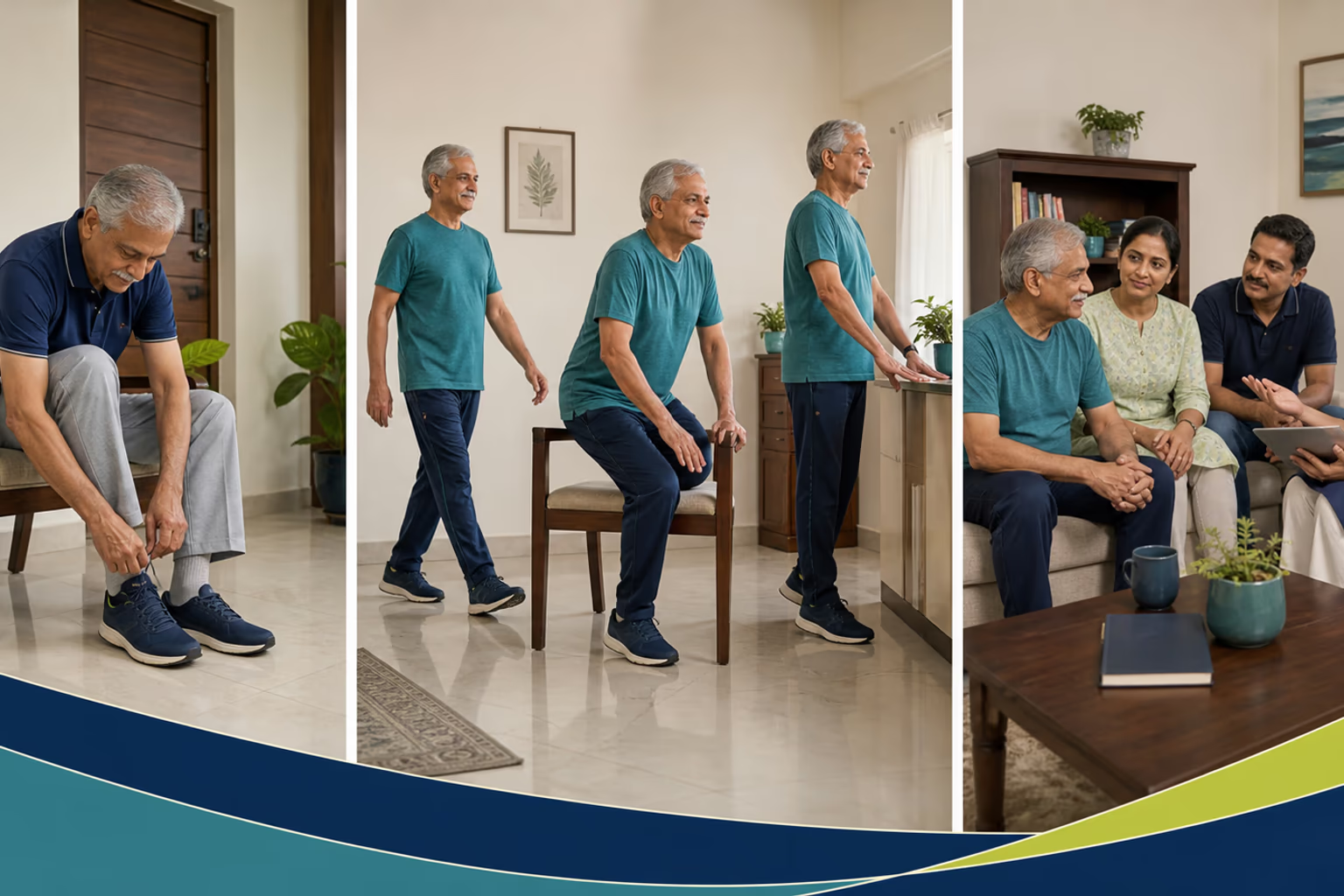
Focus on current ability and practical preferences
Grounding the discussion in what the person actually enjoys and can comfortably manage changes the entire tone of the interaction. Older adults benefit from a weekly mix of aerobic, muscle-strengthening, and balance activity matched to their abilities. However, the delivery matters just as much as the clinical guidelines.
Instead of leading with health warnings or medical requirements, ask open questions about their current daily rhythms. Find out what times of day feel most energetic and what kinds of physical tasks they already find satisfying, whether that involves gardening, walking to a local market, or managing household stairs.
When you understand their baseline, you can frame a potential class around shared goals, such as maintaining balance for daily mobility or simply enjoying a pleasant weekly outing with peers.
How to compare class options respectfully
Before proposing a specific venue or instructor, evaluate the practical trade-offs involved in different types of movement settings.
Structured group classes offer valuable social connection and guided pacing, but they require reliable travel and fixed schedules. At-home routines offer complete convenience and privacy, but they lack peer encouragement and direct professional supervision.
Yoga styles and demands vary significantly, and qualified instruction with appropriate modification can reduce avoidable risk. You need to look beyond generic fitness marketing and check specific environmental factors.
| Class Feature | Group Studio Class | At-Home / Online Practice |
|---|---|---|
| Social Connection | High peer interaction and shared motivation | Low, unless joined with family or virtual groups |
| Travel & Logistics | Requires transport and fixed timing | Zero travel time; flexible scheduling |
| Supervision | Direct instructor feedback and adjustments | Self-paced; relies on pre-recorded or live screen guidance |
| Accessibility | Dependent on venue steps, seating, and parking | Dependent on home space and device setup |
When evaluating an instructor, look for demonstrated experience teaching older adults. A qualified teacher will naturally offer modifications, respect physical limits without drawing unwanted attention to them, and prioritize stability over advanced postures.
Family discussion and class selection checklist
Use a practical checklist to guide your conversation and keep the process collaborative rather than pressured.
- Discuss preferred timing: Ask about preferred times of day and current daily routines before suggesting any class schedule.
- Review travel ease: Check local transport or travel comfort to the class venue to avoid adding transit fatigue.
- Verify instructor background: Confirm whether the instructor or studio has specific experience with older adult pacing and modifications.
- Inspect venue accessibility: Review whether stable support, appropriate seating, and accessible entryways are available in the class environment.
- Agree to a trial pass: Propose trying a single introductory session or visitor pass without any long-term financial or attendance commitments.
Your next step
If your family member shows interest in exploring an option, keep the momentum low-pressure by letting them review choices alongside you. Prime Tempr profiles help families compare age-inclusive trainers, class pace, accessibility experience, and online options before choosing responsive support. Take time to review these details together, select a single low-stakes session, and let your family member retain full control over the final decision.
Keep learning
Ready for the next step? Supporting Active Aging at Home.
Sources
- Yoga: Effectiveness and Safety (opens in a new tab), National Center for Complementary and Integrative Health
- Older Adult Activity: An Overview (opens in a new tab), Centers for Disease Control and Prevention
Watch alongside this guide
A 15-minute workout for older adults
This National Institute on Aging routine demonstrates manageable strength and balance pacing. Use stable support and seek assessment for new or concerning changes.
The YouTube player stays unloaded until you choose to watch. Loading it connects to YouTube and may allow that service to process usage data.