How to Collect Useful Feedback After a Yoga Class
Collect actionable feedback from students, respecting professional boundaries with targeted, low-friction methods.
https://primetempr.com/blog/how-to-collect-useful-feedback-after-a-yoga-class
Collecting useful feedback after a yoga class is not about chasing validation or endless questionnaires. It is about asking specific, low-friction questions that respect teaching scope, student privacy, and professional boundaries. Many yoga teachers face a familiar dilemma at the end of a session. The room is either filled with polite silence or vague praise like "that felt great." While friendly compliments boost confidence, they rarely provide practical guidance for improving class planning, adjusting verbal cues, or ensuring safe modifications.
Vague feedback makes it hard for teachers to understand where a sequence missed the mark or which adjustments helped students navigate complex poses. Open-ended surveys often yield unhelpful pleasantries. Worse, poorly framed requests can invite personal medical or psychological disclosures, which fall outside a yoga teacher's scope of practice. Gathering honest, actionable insights requires clear boundaries and simple methods.
Why Traditional Yoga Feedback Fails
Traditional feedback methods usually fail because they ask the wrong questions at the wrong time. Asking a group of tired students leaving savasana, "How was class for every person?" guarantees polite compliance. Students want to be kind to their teacher, so they say everything was wonderful, even if the pacing felt rushed or the verbal cues were confusing.
Avoid overreacting to a single comment. If one student finds a transition challenging, a teacher might drastically alter a sequence that worked for others. Useful feedback identifies repeating patterns across multiple classes, not isolated preferences.
Defining the Scope of Instructional Feedback
Teachers must establish clear professional boundaries before asking for input. Yoga styles and demands vary; qualified teaching and suitable modifications matter for safety. A yoga class is not a therapy session or a clinical evaluation.
Yoga teachers should teach within their training, experience, and competence, and refer students to qualified professionals when needs fall outside that scope. Instructional feedback focuses strictly on the mechanics of the practice:
- Were the verbal instructions clear and easy to follow?
- Did the pacing allow adequate time to transition safely?
- Were the offered modifications helpful for different body types and energy levels?
Keeping questions grounded in physical practice prevents students from sharing overly personal details and protects the teacher from stepping into advisory roles they are not trained to handle.
Low-Friction Ways to Ask for Specific Insights
Make the process quick and anonymous to get honest answers. Long digital surveys sent hours after class often have low completion rates. Integrate low-friction methods directly into your routine.
| Feedback Method | Best Used For | Practical Trade-off |
|---|---|---|
| Verbal Closing Question | Quick pulse check on pace or specific transitions | Prone to polite compliance; students rarely voice criticism out loud |
| Anonymous Index Card Drop | Gathering honest thoughts on physical modifications or pace | Requires physical materials and a designated drop box |
| Short Digital Follow-up | Asynchronous reflections for workshop or series attendees | Lower response rates once students leave the studio environment |
When using a verbal closing question, avoid broad inquiries. Ask one focused question, such as, "Did the option for the hips feel accessible today?" This gives students permission to reflect on a specific element rather than feeling pressured to judge the entire experience.
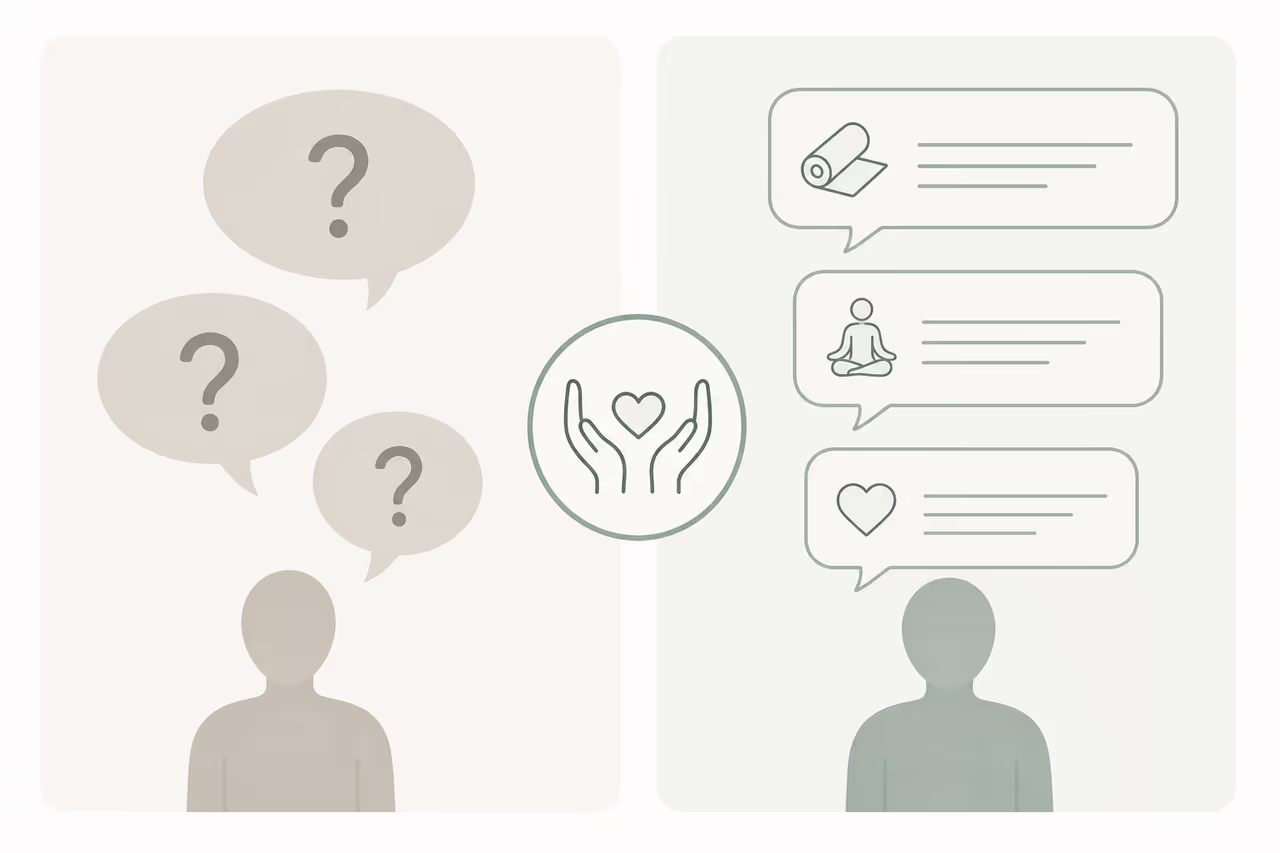
Connecting Feedback to Better Class Planning
Translate student observations into safer, clearer sequences. If multiple students report confusion during a balancing series, the issue is rarely student comprehension; it usually points to unclear transitions or rushed pacing in your teaching delivery.
Use repeating patterns of feedback to refine how you plan a yoga class around one clear outcome. If feedback indicates that modifications felt rushed, slow down the instructional buildup in your next session. If students note that a certain peak pose felt inaccessible, revisit your preparatory movements to ensure adequate mobility work beforehand.
Post-Class Feedback Method Selector
Implement a sustainable feedback routine without overwhelming students or blurring professional lines.
- Define the target: Choose one specific aspect of the class to evaluate, such as the clarity of your alignment cues, the pacing of transitions, or the accessibility of modifications.
- Select the format: Pick a low-friction collection method suited to your environment, like a single verbal question at the end of practice or an anonymous feedback box near the exit.
- Keep it physical: Ensure your prompts remain focused on movement mechanics, breath pacing, and physical accessibility rather than emotional states or personal relationships.
- Enforce boundaries: If a student attempts to use feedback time to discuss chronic injuries, pain management, or emotional distress, kindly redirect them to qualified healthcare professionals.
- Review monthly: Look at your collected notes once a month to identify consistent patterns, ignoring one-off outliers that do not reflect the broader group experience.
Your Next Step as a Teacher
Building a sustainable teaching practice involves more than just delivering a sequence. It requires clear communication, reliable class structures, and professional reach. Explore how Prime Tempr gives teachers a storefront, free practice library, and discovery profile where clear offers and responsible teaching information can become a coherent student journey. For more guidance on refining your instructional approach, explore our complete archive on teaching yoga well.
Sources
- Scope of Practice (opens in a new tab) - Yoga Alliance
- Yoga: Effectiveness and Safety (opens in a new tab) - National Center for Complementary and Integrative Health
Watch alongside this guide
An inclusive guide to yoga and meditation
This inclusive introduction gives teachers a concrete example of choice, clarity, and sensory-aware presentation. Source: Autism BC. This optional video is context, not evidence or personal instruction.
The YouTube player stays unloaded until you choose to watch. Loading it connects to YouTube and may allow that service to process usage data.