How to Choose Stable Household Support for Standing Exercises
Choose immovable household furniture and age-inclusive guidance to practice standing exercises safely without unexpected slips or tips during workouts.
https://primetempr.com/blog/how-to-choose-stable-household-support-for-standing-exercise
Reliable household support requires immovable, weighted, or wall-anchored furniture rather than rolling or lightweight items, paired with ability-matched guidance. When practicing standing movements at home, the surface you touch for spatial reference must remain completely stationary under lateral and downward pressure. This guide explains how to identify safe support, recognize hidden hazards in everyday furniture, and prepare a secure practice space.
What makes household support stable
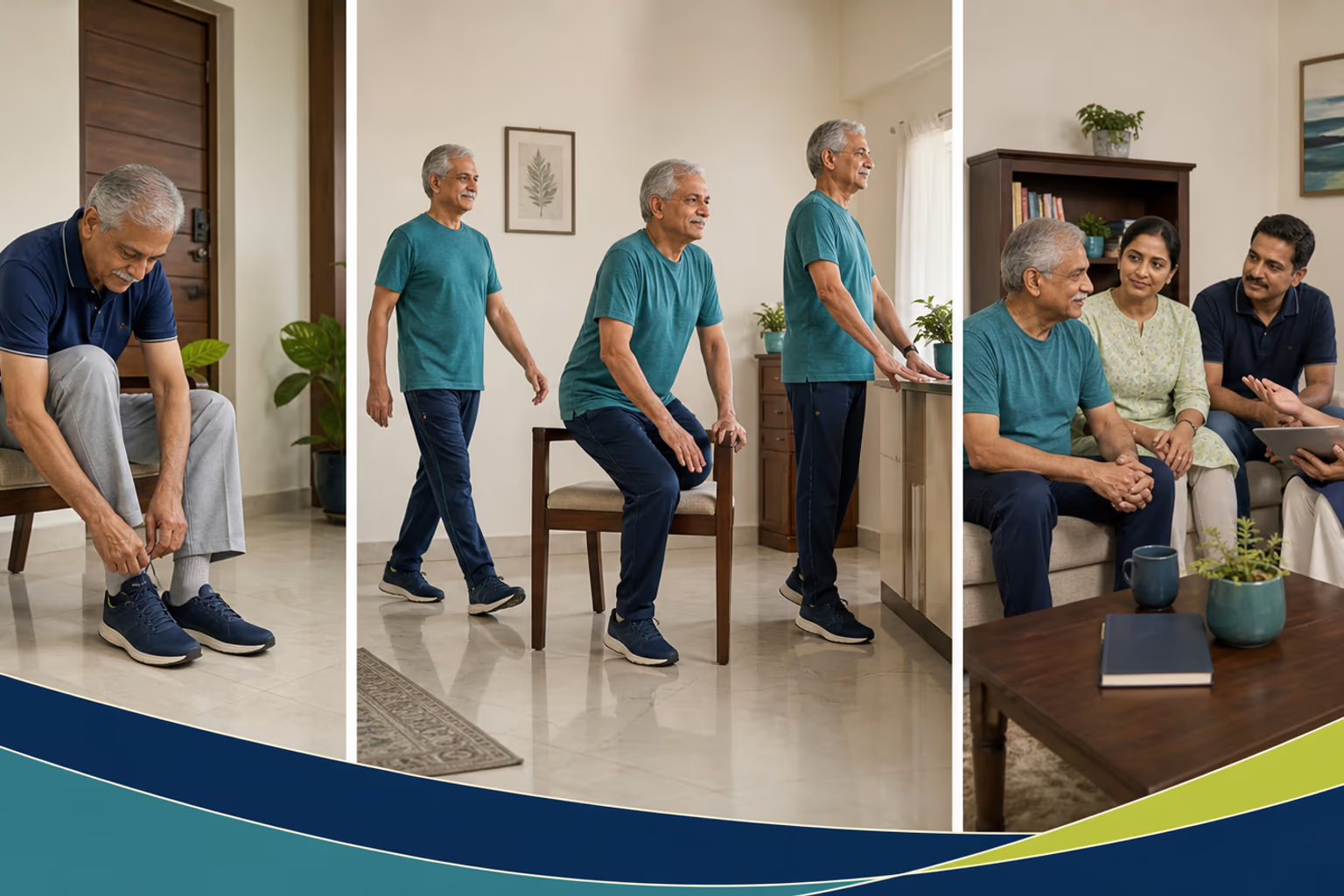
Stable household support consists of heavy, fixed furniture that cannot slide, tip, or roll when weighted unevenly. Heavy kitchen counters, sturdy wooden dining tables, and wall-mounted handrails provide the structural integrity needed for balance practice. Older adults benefit from a weekly mix of aerobic, muscle-strengthening, and balance activity matched to their abilities, and having a reliable anchor point helps make these movements approachable at home.
When you rest a hand on a stable surface, it acts as a spatial reference rather than a crutch to hold your entire body weight. The ideal support surface sits at a comfortable hip or waist height, allowing an upright posture without excessive bending or reaching.
Common household items to avoid
Many common household items introduce severe fall hazards because they are designed for mobility rather than weight-bearing stability. Rolling office chairs, lightweight plastic stools, folding card tables, and swivel chairs must be strictly avoided during standing exercises.
Rolling furniture can slide away the moment lateral pressure is applied, causing a sudden loss of balance. Lightweight stools can easily tip over if your weight shifts outside their narrow base. Similarly, unstable items like TV trays or bedside tables with wheels lack the mass to remain anchored. If you catch yourself leaning heavily into a rolling chair, switch immediately to a fixed wall or a heavy unmoving countertop.
Testing and preparing your practice space
Before beginning any standing movement, inspect your floor surface and test the immovability of your chosen support prop. Clear the surrounding area of loose rugs, electrical cords, and children's toys that might cause a trip.
Household support safety checklist
- Confirm the furniture is heavy or wall-fixed and does not roll, slide, or tip.
- Check that grip surfaces are clean, dry, and free of loose throws or rugs.
- Test stability with light lateral pressure before placing full body weight.
- Pair practice with age-inclusive guidance or professional evaluation when starting new routines.
Perform a manual test by placing your hands on the counter or table and pushing sideways with moderate force. If the furniture shifts even an inch, it is not stable enough for balance work. Additionally, ensure your footwear or bare feet have good traction on the floor surface.
Next steps for supported movement
Selecting furniture is only the first step toward safe home practice. Yoga styles and demands vary; qualified instruction and appropriate modification can reduce avoidable risk. Exploring structured classes helps ensure that your movements match your current physical capacity rather than an arbitrary fitness standard.
Families can use Prime Tempr profiles to help families compare age-inclusive trainers, class pace, accessibility experience, and online options before choosing responsive support. If persistent balance issues or joint pain make independent standing difficult, seek a professional clinical assessment rather than relying solely on home modifications.
Follow-along reflection
Use the prompts below to review the idea in context, without turning it into a diagnosis or a fixed rule.
Trade-offs to keep in view
- Heavy furniture offers safety but may limit spatial freedom in compact rooms.
- Household support aids balance but does not replace professional clinical assessment for new instability.
If this approach does not fit
Switch immediately to a fixed wall, heavy unmoving countertop, or seek professional assessment if balance remains uncertain.
Questions to carry forward
- What makes a household item safe and stable for standing exercises?
- Why should rolling chairs or lightweight stools be avoided?
- How do I test furniture stability before using it for balance work?
- How does structured guidance help integrate support safely into weekly routines?
Keep learning
Ready for the next step? Supporting Active Aging at Home.
Sources
Watch alongside this guide
A 15-minute workout for older adults
This National Institute on Aging routine demonstrates manageable strength and balance pacing. Use stable support and seek assessment for new or concerning changes.
The YouTube player stays unloaded until you choose to watch. Loading it connects to YouTube and may allow that service to process usage data.