Choosing Accessible Yoga Without Floor Transitions
Learn to identify chair or standing yoga classes and vet studios to support your specific mobility needs.
https://primetempr.com/blog/how-to-choose-accessible-yoga-when-floor-access-is-difficult
If you struggle to move to or from the floor, traditional yoga classes may seem inaccessible. Yoga is fundamentally movement, breath, and awareness, none of which require a floor mat. You can improve your balance, strength, and range of motion without ever transitioning to the floor.
The key is to shift your focus from "mat-based" yoga to formats specifically designed for upright movement. By prioritizing chair-based or standing-focused classes and proactively vetting studios, you can find a practice that supports your body exactly as it is today.
Redefining Yoga Beyond the Mat
Many assume yoga requires floor-based sequences, but this is a narrow view of the discipline. Yoga styles and demands vary; qualified instruction and appropriate modification can reduce avoidable risk and make the practice inclusive for every person.
Whether you manage joint concerns, balance issues, or prefer staying upright, your movement goals are valid. Older adults benefit from a weekly mix of aerobic, muscle-strengthening and balance activity matched to their abilities. If a class forces you up and down from the floor, it distracts from stability and breath. Choosing formats that eliminate these transitions lets you focus on the movement.
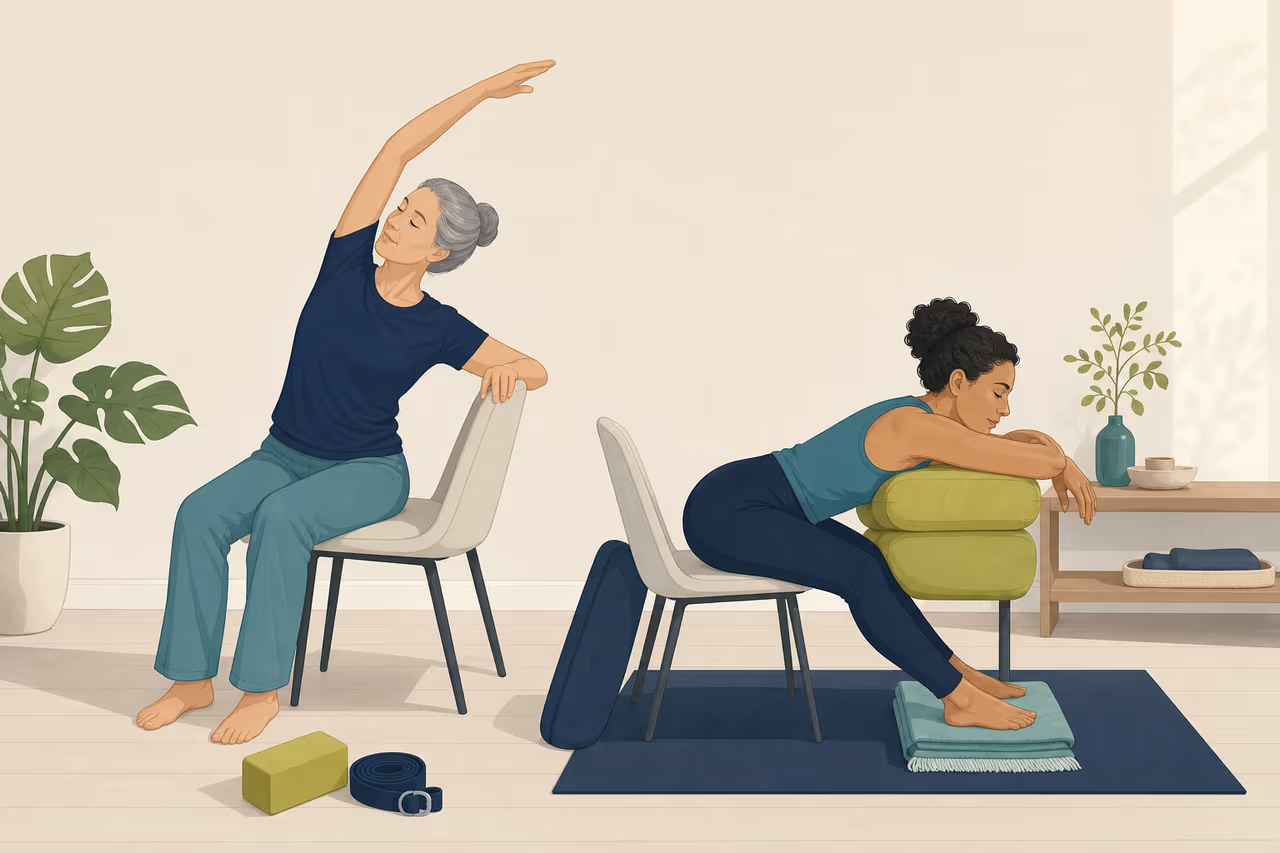
Identifying Accessible Formats
Not all "gentle" classes are created equal. A class labeled as "gentle" might still involve floor work. To ensure your practice remains accessible, look for these specific categories:
- Chair Yoga: These classes use a chair as the primary prop. You perform seated poses to improve posture and mobility, and often use the chair for support during standing balances.
- Standing Yoga: These sessions focus on weight-bearing movements, balance, and strength while standing. They often utilize a wall or a sturdy chair for stability.
- Modified Mat Classes: Some teachers offer "all-levels" classes where they explicitly provide standing or chair-based alternatives for every floor-based pose. However, you should confirm this with the instructor beforehand.
Remember that chair-based yoga is not "lesser" than mat yoga; it is simply a different application of the same principles. It provides a unique intensity level that can be just as challenging and rewarding as any other style.
How to Vet a Class Before You Book
Do not assume a studio’s marketing photos, which typically feature athletic floor poses, represent the only way to practice. Use a systematic approach to determine if a space suits your needs.
Prime Tempr’s trainer and location profiles help you compare formats, locations, and details before committing. Use these profiles to narrow your search to studios that emphasize accessibility or specialized movement.
Your Pre-Class Accessibility Checklist
Before signing up for a session, use this checklist to confirm the environment meets your needs:
- Identify the class label: Look for classes explicitly labeled as "Chair Yoga," "Accessible Yoga," or "Senior Yoga."
- Contact the teacher: Reach out via email or phone. Ask: "Are all poses done in a chair or standing?"
- Confirm equipment: Ask if the studio provides a stable, non-folding chair. If you have specific height requirements, mention them.
- Discuss modifications: Ask if the teacher is comfortable providing modifications for your specific range of motion. A good teacher will welcome this conversation.
The Importance of Clear Communication
Most teachers appreciate students clarifying their needs. If you feel unsure about a class, request a private session to establish a baseline. Working one-on-one with a trainer helps you determine which modifications work best before joining a group setting.
If a studio or class proves to be a poor fit, do not be discouraged. You can also explore Chair Yoga for Beginners: A Practical Guide to understand what to expect during your first session.
The goal is finding a practice that fits your life rather than forcing your life into a rigid yoga style. Prioritizing comfort and safety helps build a sustainable, effective, and enjoyable movement routine.
For more resources on inclusive practice, visit our Accessible Yoga hub.
Sources
- Yoga: Effectiveness and Safety (opens in a new tab), National Center for Complementary and Integrative Health.
- Older Adult Activity: An Overview (opens in a new tab), Centers for Disease Control and Prevention.
Watch alongside this guide
Accessible yoga for every body
This class demonstrates chair and support options that make the article's accessibility principles easier to see in practice. Source: Vancouver Coastal Health. This optional video is context, not evidence or personal instruction.
The YouTube player stays unloaded until you choose to watch. Loading it connects to YouTube and may allow that service to process usage data.