How to Choose a Neck Mobility Class That Actually Helps
Prioritize active movement over passive stretching by learning to evaluate instructors, understand group limits, and choose the right guidance.
https://primetempr.com/blog/how-to-choose-a-neck-mobility-class-that-actually-helps
Choosing a neck mobility class starts with a simple reality: your neck is a complex, sensitive area that requires precision, not intensity. If you experience stiffness or limited range of motion, the most effective approach prioritizes personalized observation and progressive loading over generic, high-intensity routines that ignore individual limits.
Prime Tempr helps readers compare trainers and local movement businesses when a generic mobility routine needs observation, progression, or a format matched to the individual. Understanding the difference between mobility and stretching lets you evaluate whether a class supports long-term movement health or simply pushes you through ranges your body is not ready for.
Why Neck Mobility Is More Than Just Stretching
There is a fundamental difference between passive stretching and active mobility. Recognizing this distinction is the first step in choosing a class that will genuinely help you.
Stretching typically involves holding a position to lengthen a muscle. While this feels good in the moment, it does not necessarily improve your ability to control your neck through its full range of motion. Neck mobility, by contrast, focuses on active, controlled movement by engaging the muscles around the neck, shoulders, and upper back to move the joint safely.
Any amount of physical activity is better than none, and muscle strengthening benefits everyone. However, when it comes to the neck, the goal should be to build strength and control within your current, comfortable range of motion rather than forcing the neck into deeper positions. If a class focuses exclusively on "deep stretches" without teaching you how to stabilize your neck, you may be missing the opportunity to build the functional strength required for lasting mobility.
For a deeper dive into these concepts, see our guide on Mobility vs Flexibility Explained: What’s the Difference?.
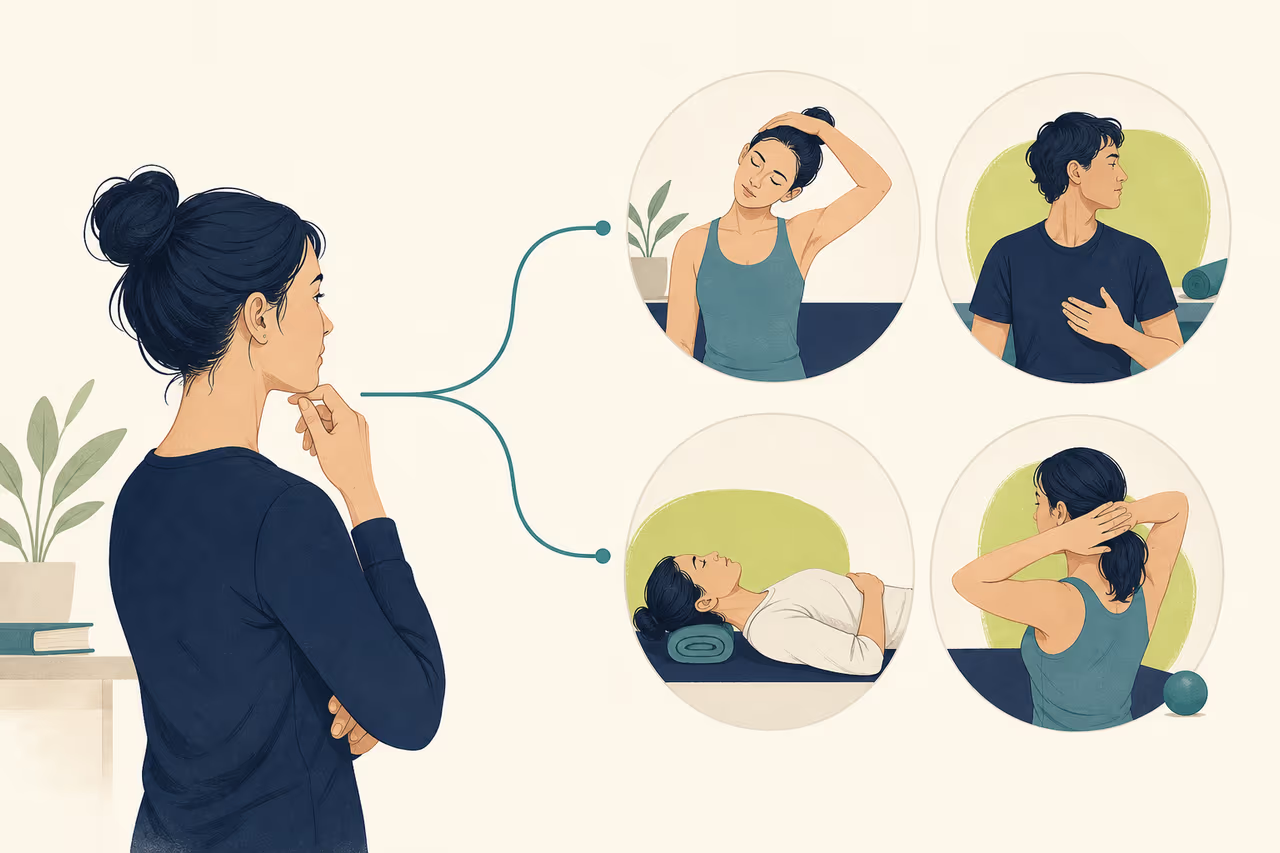
What to Look for in a Class Format
When evaluating a class, look for an emphasis on controlled, active movement. A quality instructor provides clear cues prioritizing safety and alignment over depth.
The Neck Mobility Class Checklist
Use this checklist to evaluate potential classes or trainers before you commit:
- Check for modifications: Does the trainer offer clear, accessible modifications for different levels of stiffness? A one-size-fits-all approach is a red flag for neck-focused work.
- Prioritize active movement: Does the class emphasize moving the neck through its range using your own muscle power, rather than just holding static, passive stretches?
- Clear safety cues: Does the trainer explicitly instruct you on how to avoid pain, pinching, or sharp sensations? You should never feel forced into a position.
- Observation opportunities: Does the class size allow for at least minimal observation or feedback? If the room is too crowded, the trainer cannot ensure you are moving safely.
- Holistic warm-ups: Does the class include a warm-up that prepares the surrounding thoracic and shoulder areas? The neck does not operate in isolation; it relies on the stability of the upper back and shoulders.
When to Choose 1:1 Guidance Over a Group Class
Group classes offer community, affordability, and a consistent schedule, which helps maintain a habit. However, they lack the personalized observation required for specific neck restrictions.
If you have significant stiffness, a history of discomfort, or if you find that generic online routines leave you feeling worse rather than better, a group class may not be the right starting point. In these cases, 1:1 guidance is often more appropriate. A private session allows a trainer to assess your unique movement patterns, identify where you are holding tension, and provide specific, progressive loading that is tailored to your body.
If you are ready to explore options that offer this level of personalization, you can Find movement guidance through our directory to compare local trainers who specialize in mobility and personalized movement education.
How to Assess Your Progress Safely
It is easy to fall into the "no pain, no gain" trap, but this mindset is counterproductive when working on neck mobility. Progress should be measured by your ability to move with ease and control, not by how far you can push your neck into a stretch.
Adults can work toward 150 to 300 weekly minutes of moderate aerobic activity and muscle strengthening on at least two days. Within this framework, treat your neck mobility work as a consistent, low-intensity practice.
Signs of Progress
- Increased ease: You notice less tension during daily activities, like looking over your shoulder while driving.
- Better control: You can move your neck through its range of motion without feeling the need to "jerk" or force the movement.
- Consistency: You are able to perform your mobility routine regularly without experiencing soreness or discomfort afterward.
Failure Modes and Recovery
If a class feels too intense or causes discomfort, stop immediately. Do not attempt to "push through" the sensation. Scale back the range of motion,move only as far as you can without pain,or seek a 1:1 consultation with a qualified trainer to assess your specific needs. Remember that a class is a tool for your wellbeing, not a test of your flexibility. If the format doesn't match your body's current requirements, it is okay to change your approach.
Sources
- Physical activity (opens in a new tab), World Health Organization.
- Top 10 Things to Know About the Physical Activity Guidelines (opens in a new tab), Office of Disease Prevention and Health Promotion.
Watch alongside this guide
The science of stretch
A Harvard Medical School researcher explains stretching concepts that add useful context to this mobility guide. Source: Conversations That Matter. This optional video is context, not evidence or personal instruction.
The YouTube player stays unloaded until you choose to watch. Loading it connects to YouTube and may allow that service to process usage data.