Selecting a Knee-Friendly Yoga Class
Choose a yoga class by identifying instructors who prioritize smart modifications, thoughtful prop use, and clear, supportive communication.
https://primetempr.com/blog/how-to-choose-a-knee-friendly-yoga-class
Finding a yoga class that respects your knees is less about choosing a specific "style" of yoga and more about identifying instructors who prioritize modifications, the use of props, and open communication. Many students fear that yoga is synonymous with intense kneeling or deep joint flexion, but the reality is that yoga styles and demands vary significantly; qualified instruction and appropriate modification can reduce avoidable risk.
If you have concerns about knee comfort, seek an environment where the instructor treats the body as a variable to be supported rather than a fixed shape to be forced.
What Makes a Class Knee-Friendly?
A knee-friendly class is defined by its adaptability. It is not necessarily a "slow" class, but rather one that provides alternatives to high-impact or high-flexion movements.
Supportive classes share these characteristics:
- Emphasis on Standing or Seated Poses: Classes prioritizing standing balance or chair-based movements reduce time spent on the floor.
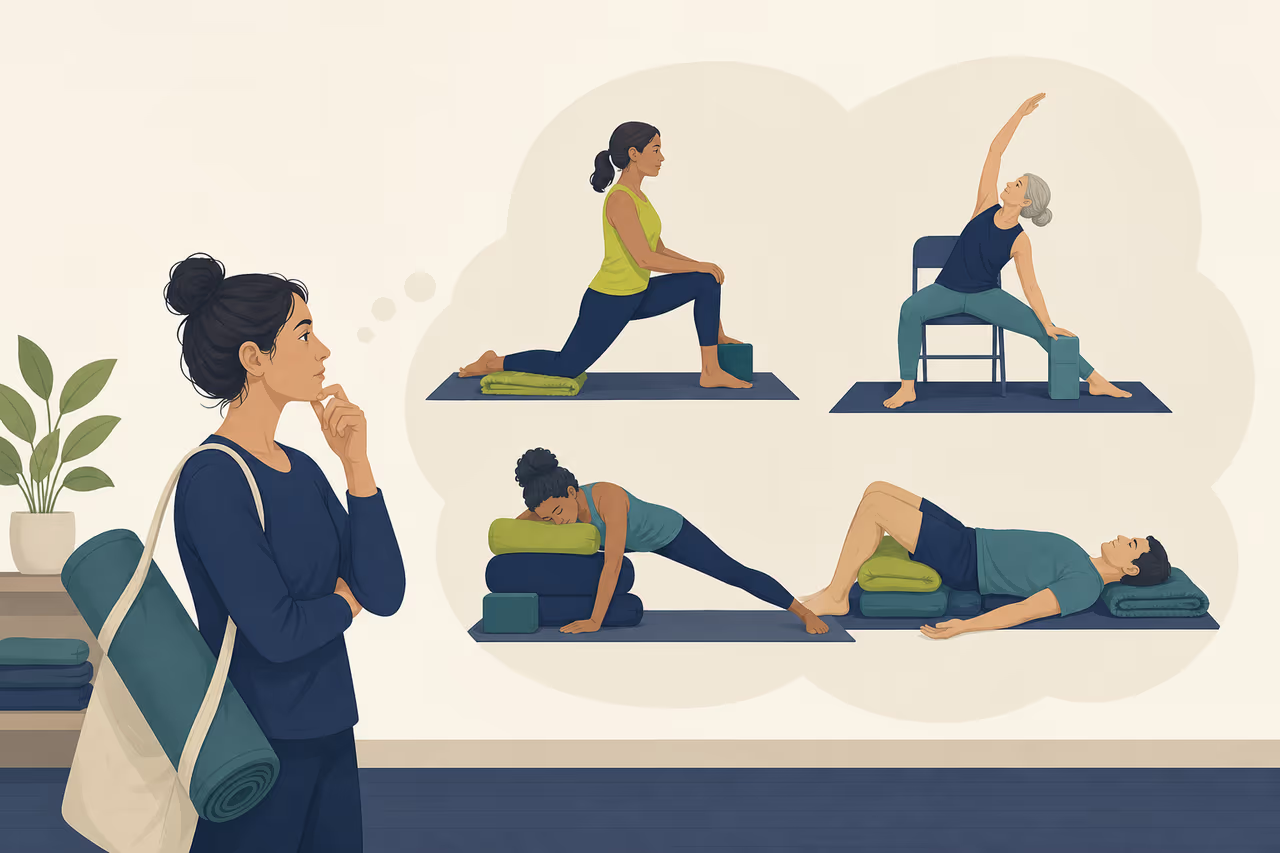
- Proactive Use of Props: Studios that encourage blocks, blankets, and bolsters are more accessible. A folded blanket under the knees during kneeling poses reduces pressure.
- Clear Modification Cues: Skilled instructors offer alternatives to deep knee bends, such as keeping legs straight in forward folds or using chairs for lunges.
- Non-Judgmental Culture: The most important feature is a culture where you are encouraged to skip, modify, or rest during any sequence that causes discomfort.
Evaluating Class Descriptions
Studio marketing can be vague, but you can often read between the lines to determine if a class is right for your knees. Avoid assuming that "gentle" or "restorative" automatically means knee-friendly, as these classes may still involve extended periods of floor work or kneeling.
Look for keywords in class descriptions such as:
- "Chair yoga" or "Accessible yoga"
- "Standing focus"
- "All levels" (if accompanied by a mention of modifications)
- "Prop-heavy" or "Supportive"
If a description is overly focused on "deep stretches," "intense flows," or "advanced transitions," it may be less suitable for someone managing knee sensitivity. When in doubt, treat the description as a starting point, not a guarantee.
The Importance of Direct Communication
Contact the instructor or studio manager before booking to ensure the class meets your needs. You are the primary advocate for your body, and a good instructor appreciates your proactive approach to safety.
When you contact a studio, consider asking these specific questions:
- "How much time is typically spent on the floor or in a kneeling position?"
- "Are there modifications available for students who cannot put weight on their knees?"
- "Do you provide props like blankets or bolsters for cushioning?"
- "Is it acceptable for me to use a chair for support during standing poses?"
If an instructor seems dismissive of these questions or insists that their class is "for every person" without acknowledging the need for individual adjustments, it is a signal to look elsewhere.
Pre-Class Knee-Friendly Checklist
Use this checklist to guide your search and preparation before committing to a new class or studio:
- Check the class description: Look for "gentle," "chair," or "standing" focus.
- Message the instructor: Ask directly about the time spent on the floor or kneeling.
- Confirm prop availability: Ensure the studio provides blocks, blankets, or bolsters.
- Plan to arrive early: Use the time before class to discuss your specific knee concerns with the teacher.
Using Prime Tempr to Find Your Match
Prime Tempr's trainer and location profiles allow you to compare formats and available information. Use these profiles to vet studios before you arrive.
By reviewing the details provided on Find an accessible class, you can identify teachers who explicitly mention modifications or accessible formats. Once you have narrowed down your search, use the contact information provided on the profile to reach out directly. This process allows you to confirm the accessibility details that matter to you, ensuring that you choose a class that supports your long-term joint health rather than one that forces you into uncomfortable positions.
Managing Trade-offs and Failure Modes
Even in a well-chosen class, there are trade-offs. A class might be "knee-friendly" in its floor work but still require significant standing balance work, which can be taxing on the knees in different ways. Instructors may not always know your specific medical history; you remain the primary advocate for your body.
If a class feels unsuitable, follow these steps:
- Stop: You are not required to complete every pose.
- Modify: Use props to reduce the range of motion.
- Leave: If the class consistently causes discomfort, it is acceptable to leave or choose a different instructor.
Prioritize your long-term joint health over completing the sequence. For more on how to navigate these challenges, you may find Yoga Without Kneeling: A Practical Guide helpful.
Frequently Asked Questions
Does "gentle" yoga mean I won't have to kneel? Not necessarily. Many gentle classes still involve floor-based sequences. Always ask the instructor about the specific format.
What if I feel pressure to keep up with the class? A high-quality instructor emphasizes that yoga is an individual practice. If you feel pressured, the environment may not be the right fit for your current needs.
Should I tell the instructor about my knee issues? Yes. Informing the teacher before class allows them to offer specific modifications and keeps them aware of your limitations during the practice.
Sources
- Yoga: Effectiveness and Safety (opens in a new tab), National Center for Complementary and Integrative Health.
- Older Adult Activity: An Overview (opens in a new tab), Centers for Disease Control and Prevention.
Watch alongside this guide
Accessible yoga for every body
This class demonstrates chair and support options that make the article's accessibility principles easier to see in practice. Source: Vancouver Coastal Health. This optional video is context, not evidence or personal instruction.
The YouTube player stays unloaded until you choose to watch. Loading it connects to YouTube and may allow that service to process usage data.