How to Choose a Back-Aware Yoga Class: A Practical Guide
Learn how to vet teachers, use props effectively, and prioritize your comfort to find a truly supportive yoga class.
https://primetempr.com/blog/how-to-choose-a-back-aware-yoga-class-a-practical-guide
Choosing a back-aware yoga class is less about finding a specific "style" or brand of yoga and more about identifying a teacher who prioritizes qualified instruction, clear communication, and the use of props to modify poses for individual needs. Because yoga styles and demands vary, qualified instruction and appropriate modification are the most effective ways to reduce avoidable risk during your practice.
Many people assume that a "gentle" or "restorative" class is automatically safe for all back conditions. However, safety is not inherent to the label of a class; it is created by the interaction between your body’s current capacity and the teacher’s ability to guide you through necessary adjustments.
Defining Back-Aware Yoga
Back-aware yoga is not a proprietary system; it is a philosophy of practice. It centers on the idea that the pose should fit the person, not the other way around. In a back-aware environment, the focus shifts away from achieving a specific aesthetic or "perfect" alignment and toward maintaining spinal integrity and comfort.
This approach acknowledges that individual anatomy, history, and current mobility levels differ. A back-aware teacher understands that a forward fold that feels therapeutic for one student might cause strain for another. By prioritizing awareness over intensity, this approach allows you to build strength and mobility without pushing into pain.
What to Look for in a Teacher
The most important asset in a back-aware practice is a teacher who values communication. When assessing a potential instructor, look for these markers of a supportive teaching style:
- Proactive Modification: Does the teacher offer variations for poses before the class begins? A qualified teacher will often provide "levels" for a pose, such as keeping the spine neutral rather than rounding it, or using a chair for support.
- Clear, Anatomical Cues: Look for teachers who explain why a movement is being performed. Instead of just saying "touch your toes," a back-aware teacher might explain how to hinge from the hips to protect the lumbar spine.
- Openness to Feedback: A teacher should be comfortable with you opting out of a pose or choosing a different movement if something doesn't feel right. If a teacher pressures you to push through discomfort, that is a significant red flag.
Questions to Ask Before You Book
Before you commit to a studio or a specific series, take the time to contact the business directly. Prime Tempr’s trainer and location profiles give you a place to compare formats, locations, and available information, allowing you to reach out and confirm the accessibility details that matter to you.
When you contact a studio, consider asking the following:
- "How do you approach modifications for back sensitivity in your general classes?"
- "Are your classes small enough to allow for individual attention or adjustments?"
- "Do you have a policy on using props like blocks, bolsters, and straps for support?"
- "Is the teacher open to a brief conversation about my specific needs before the session starts?"
The Role of Props and Modifications
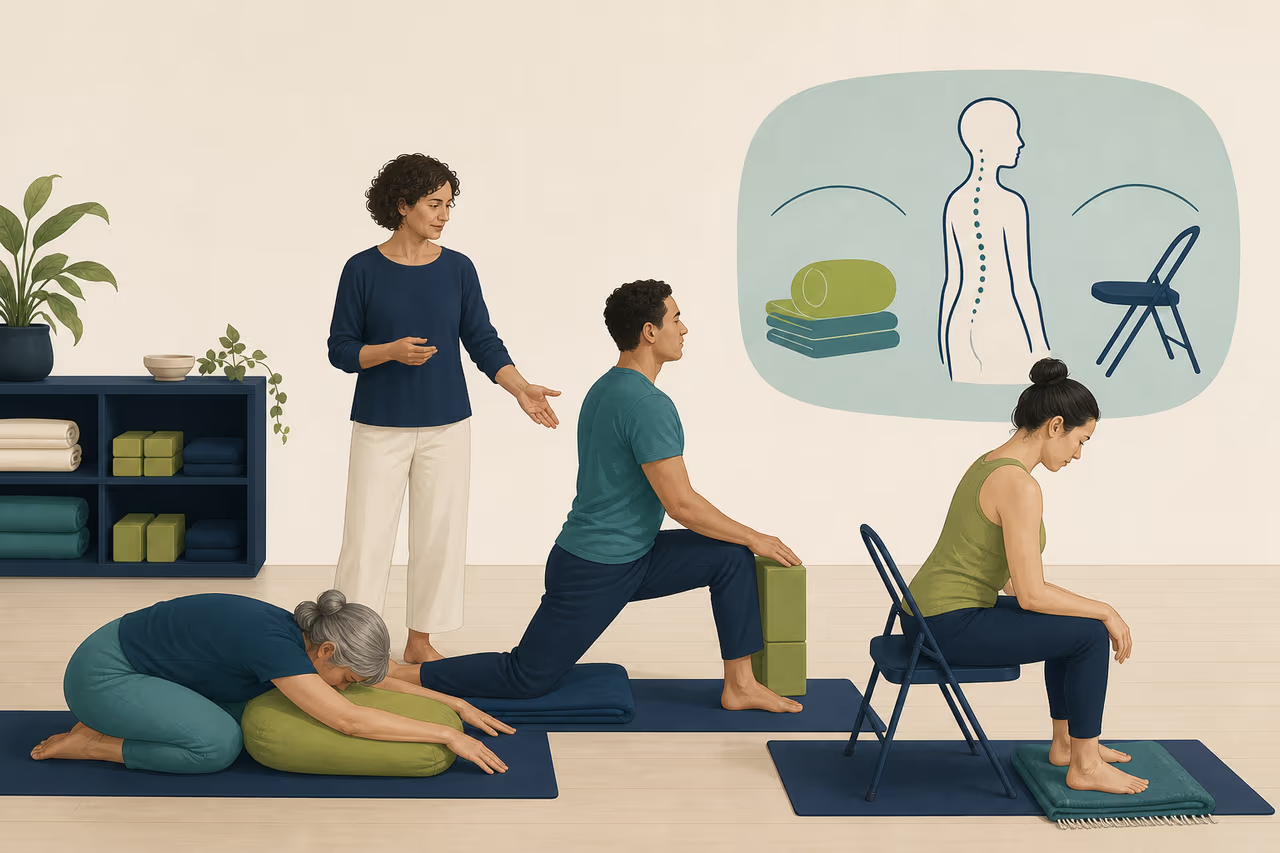
Props are not "crutches" for beginners; they are essential tools for accessibility. In a back-aware practice, props like blocks, bolsters, and straps serve to bring the floor closer to you, provide stability, and allow you to maintain proper spinal alignment.
For example, if you are performing a seated forward fold, sitting on a folded blanket can tilt your pelvis forward, preventing the rounding of the lower back that often leads to strain. Similarly, using blocks under your hands during a standing lunge can keep your torso upright, reducing the load on your back.
Remember, older adults and those recovering from inactivity benefit from a weekly mix of aerobic, muscle-strengthening, and balance activity matched to their specific abilities. Using props allows you to engage in this strengthening work while keeping the load manageable for your back.
Failure Modes and Recovery Paths
It is common to encounter challenges when starting a new practice. One major failure mode is over-relying on a teacher's credentials without checking their communication style. A teacher may be highly certified in a specific lineage but may not be the right fit for your specific back needs.
Another failure mode is ignoring personal pain signals in favor of following the group. If a class feels unsuitable or causes sharp discomfort, do not feel obligated to finish the sequence. Stop, observe the discomfort, and communicate with the teacher after class. If you find that group classes are consistently not meeting your needs, consider seeking a one-on-one session to address your specific requirements. This can provide you with a personalized toolkit of modifications that you can then bring into a group setting later.
Pre-Class Inquiry Checklist
Use this checklist to help you vet potential classes and ensure they align with your health goals:
- Ask the teacher: "How do you approach modifications for back sensitivity?"
- Confirm equipment: Check if the studio provides essential props like blocks, bolsters, and straps.
- Assess class size: Does the class size allow for the teacher to notice if you are struggling?
- Communicate early: Verify if the teacher is open to hearing about your specific needs before the session starts.
Next Steps for Your Practice
Finding the right environment is a process of discovery. Start by exploring local options that emphasize accessibility and clear communication.
By being proactive in your search and honest about your needs, you can find a practice that supports your long-term movement goals rather than one that hinders them. Remember that progress in yoga is measured by your ability to move with awareness and consistency, not by the intensity of your poses or the speed of your results.
Sources
- Yoga: Effectiveness and Safety (opens in a new tab), National Center for Complementary and Integrative Health.
- Older Adult Activity: An Overview (opens in a new tab), Centers for Disease Control and Prevention.
Watch alongside this guide
Accessible yoga for every body
This class demonstrates chair and support options that make the article's accessibility principles easier to see in practice. Source: Vancouver Coastal Health. This optional video is context, not evidence or personal instruction.
The YouTube player stays unloaded until you choose to watch. Loading it connects to YouTube and may allow that service to process usage data.