How to Celebrate Progress Without Talking Down to an Older Adult
Acknowledge movement milestones respectfully by focusing on everyday independence rather than patronizing praise or fitness metrics.
https://primetempr.com/blog/how-to-celebrate-progress-without-talking-down-to-an-older-a
Respectful celebration of movement progress focuses on shared utility, personal choice, and practical independence rather than patronizing applause or clinical validation. When family members cheer loudly over a completed routine or obsess over fitness streaks, the gesture can easily land as infantilizing. Older adults often want recognition for maintaining autonomy, not a performance review from a well-meaning relative.
Understanding why common praise misfires helps families adjust their tone. Recognizing the practical trade-offs of different acknowledgment styles ensures that encouragement supports independence instead of undermining it.
Why standard praise can feel patronizing
Well-meaning encouragement frequently sounds patronizing when it treats an older adult like a child learning a basic task for the first time. Phrases like "good job" or exaggerated expressions of pride create an unequal dynamic where the family member assumes the role of an evaluator. This shifts the focus away from the older adult's personal agency and places it on external approval.
Another failure mode is fixating on fitness metrics, streaks, or pose depth rather than how daily tasks feel. When praise centers on numerical achievements or flexibility benchmarks, it ignores the lived reality of physical aging. Older adults benefit from a weekly mix of aerobic, muscle-strengthening, and balance activity matched to their abilities, but the goal of that activity is practical capability in daily life, not a perfect scorecard.
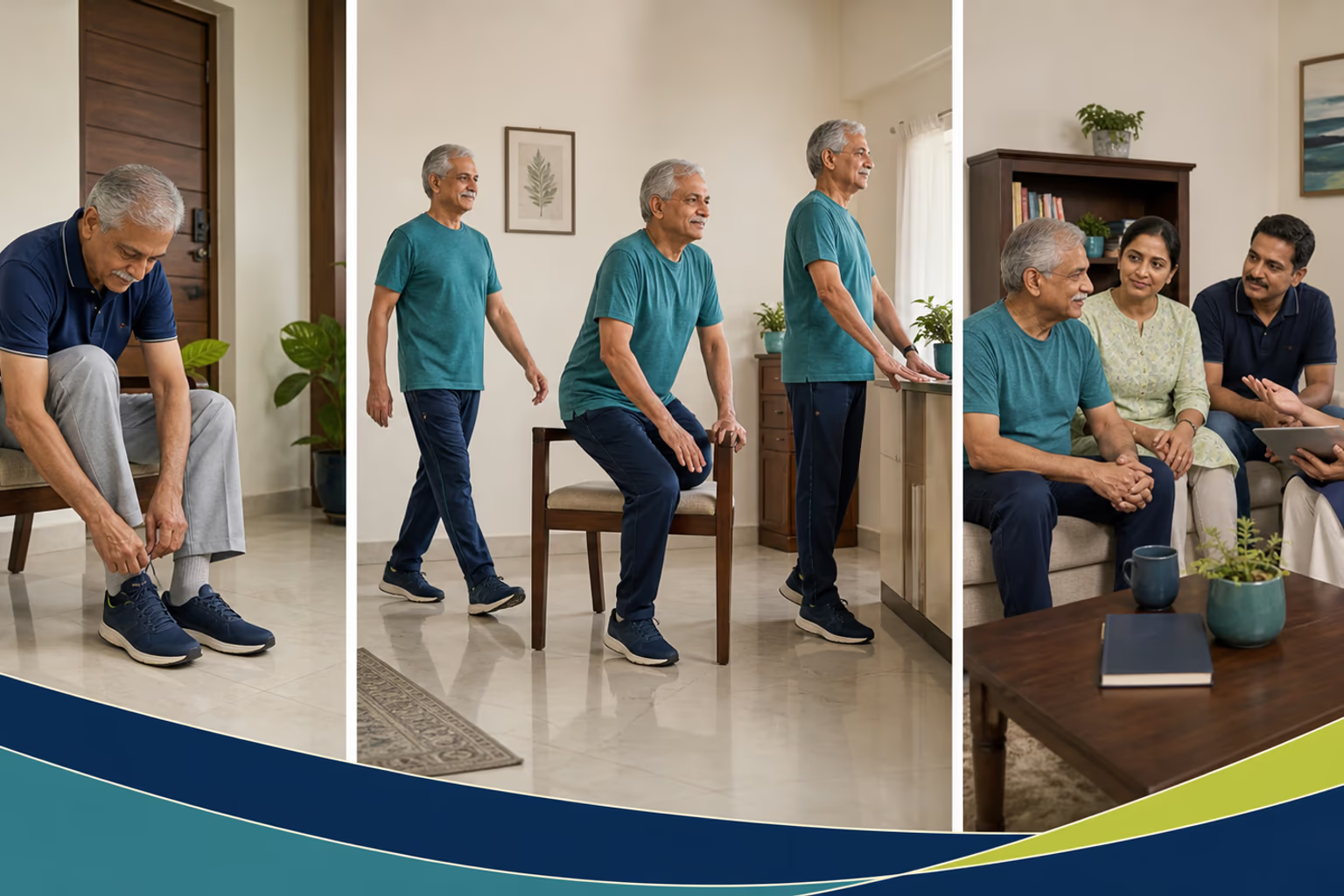
Focusing on everyday utility over performance
Shifting the conversation from fitness statistics to everyday utility changes the entire dynamic. Instead of praising a workout streak, ask how daily tasks feel. Notice whether getting up from an armchair feels easier or if navigating stairs requires less thought.
This approach respects the older adult autonomy. When an achievement is framed around carrying groceries, getting out for a walk, or moving around the home with less effort, the acknowledgment is grounded in real utility. It treats the individual as a capable peer managing their own well-being.
Minimum and normal versions of acknowledgment
To avoid making a public spectacle out of private movement achievements, families can adopt low-friction communication habits.
The minimum version involves quiet observation and neutral acknowledgment. If an older adult mentions feeling stronger during a morning walk, simply listen and validate their observation without turning it into a cheering session.
The normal version involves collaborative inquiry. Ask open-ended questions about what movement felt good during the week, and let the older adult set the tone for how much or how little the milestone is discussed. This prevents well-intentioned enthusiasm from feeling like surveillance or policing.
Quieter, peer-led acknowledgment may feel understated to family members who prefer enthusiastic validation. Focusing on everyday utility over numerical metrics means progress is harder to chart on a standard fitness app. These trade-offs are worth accepting to maintain a respectful, adult relationship.
A respectful milestone check-in
Use this decision guide to navigate conversations around physical activity and milestones without crossing into condescension.
- Ask about daily ease of movement rather than praising exercise stats. Focus the conversation on how physical activity supports everyday tasks around the home.
- Acknowledge effort through quiet observation instead of public applause. Let the older adult guide the scale of any celebration.
- Align physical goals with household independence and personal preferences. Respect that movement choices belong to the individual.
Choosing responsive support and next steps
When physical routines change or new aches appear, families often wonder when to bring in professional help. Yoga styles and demands vary, and qualified instruction and appropriate modification can reduce avoidable risk. If an older adult wants to expand their routine, consult a qualified instructor or clinician who understands age-inclusive movement.
Prime Tempr profiles help families compare age-inclusive trainers, class pace, accessibility experience, and online options before choosing responsive support. This ensures that any outside instruction respects the older adult pace, preferences, and long-term independence.
Follow-along reflection
Use the prompts below to review the idea in context, without turning it into a diagnosis or a fixed rule.
If this approach does not fit
Shift the focus immediately from external praise to collaborative inquiry, asking how an activity felt and what felt easier in daily life.
Questions to carry forward
- Why do common forms of praise sound patronizing to older adults?
- How do you frame progress around everyday independence instead of numbers or fitness streaks?
- What is the difference between encouraging consistency and policing performance?
- How can family members acknowledge milestones without making a spectacle of them?
- When should you consult a qualified instructor or clinician about safe physical adjustments?
Keep learning
Ready for the next step? Supporting Active Aging at Home.
Sources
- Yoga: Effectiveness and Safety (opens in a new tab), National Center for Complementary and Integrative Health.
- Older Adult Activity: An Overview (opens in a new tab), Centers for Disease Control and Prevention.
Watch alongside this guide
A 15-minute workout for older adults
This National Institute on Aging routine demonstrates manageable strength and balance pacing. Use stable support and seek assessment for new or concerning changes.
The YouTube player stays unloaded until you choose to watch. Loading it connects to YouTube and may allow that service to process usage data.