How Mobility Complements Your Strength Training
Learn how mobility supports your full range of motion in strength training, when to integrate it, and when to seek guidance.
https://primetempr.com/blog/how-mobility-complements-your-strength-training
If you feel "stuck" during a squat or struggle to maintain form during overhead presses, you might be tempted to add more weight or simply push through the discomfort. Often, the missing link isn't a lack of raw strength, but a lack of mobility.
Mobility is not separate from strength training, but rather the foundation that allows you to perform movements through their full range. Treating them as competing goals leads to inefficient training. Instead, view mobility as active control of your joints through the positions your lifting program demands.
The relationship between mobility and strength
People often confuse mobility with flexibility, yet they differ fundamentally. Flexibility is passive, relying on external forces like gravity or a partner to lengthen a limb. Mobility is active, depending entirely on your own muscle control to move joints through a specific range.
Effective strength training requires solid mobility. Without active control at the bottom of a deep squat, your body compensates by rounding the lower back or shifting weight, limiting safe loading. Any amount of physical activity is better than none, and muscle strengthening benefits everyone, but movement quality determines its effectiveness.
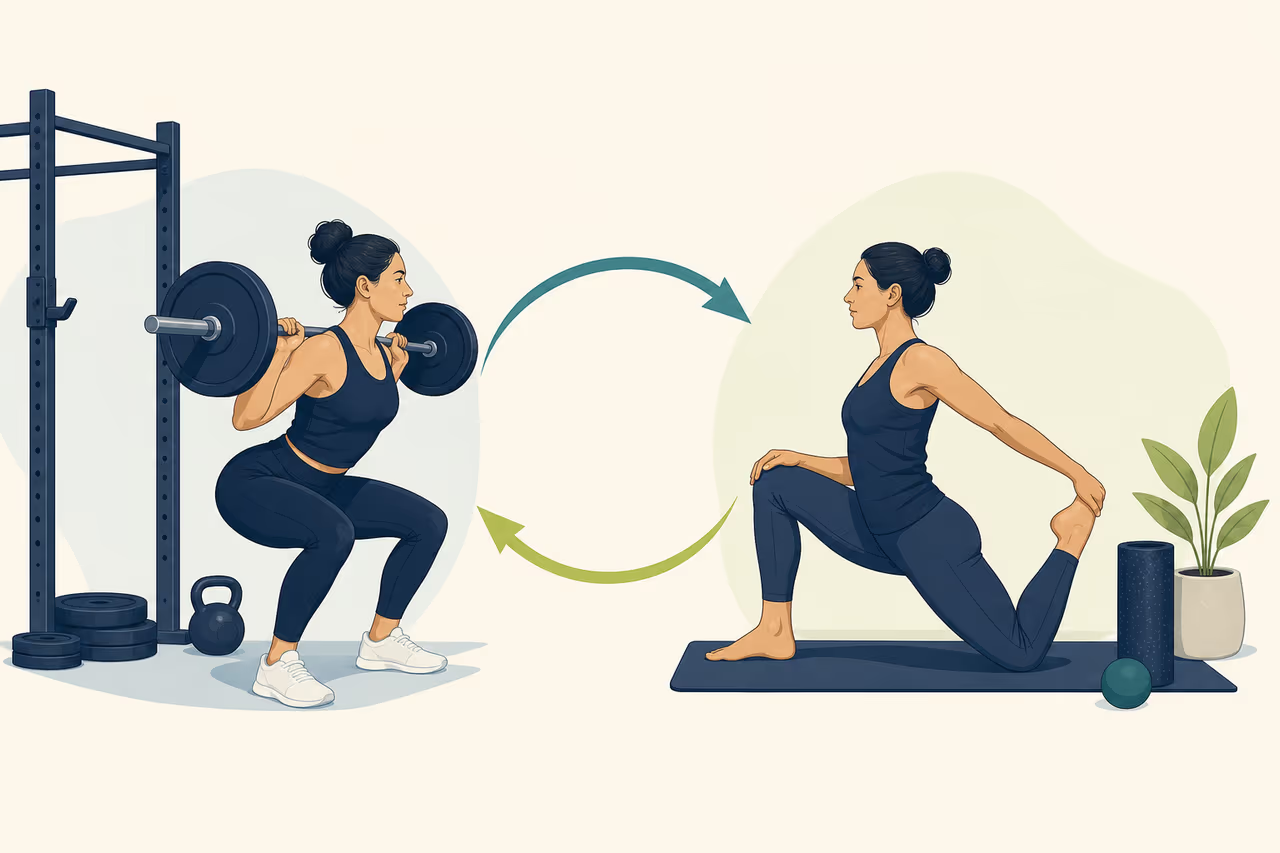
Why strength training needs mobility
Mobility work is not merely a "warm-up" activity to be rushed through. It is a skill-building practice that directly impacts your lifting performance.
- Improved Form: When your joints have the necessary range of motion, you can execute lifts with better mechanics, which helps distribute the load across the intended muscle groups rather than placing undue stress on joints or connective tissues.
- Efficiency: A limited range of motion often forces the body to use compensatory patterns. By improving mobility, you allow your muscles to work through their full length, which can lead to more effective strength gains over time.
- Consistency: When you can move comfortably and confidently, you are less likely to experience the frustration of "stuck" movements, making it easier to stick to your long-term training goals.
Adults can work toward 150 to 300 weekly minutes of moderate aerobic activity and muscle strengthening on at least two days. Integrating mobility into these sessions does not require extra gym hours; it simply means prioritizing movement quality during your current training time.
Practical integration strategies
Integrating mobility into a busy schedule requires a shift in mindset. Instead of treating mobility as an "extra," treat it as a prerequisite for your strength work.
- The "Bookend" Approach: Spend 5 to 10 minutes before your workout performing active mobility drills that mimic the movement patterns you are about to train. For example, if it is a leg day, focus on hip and ankle mobility.
- Intra-set Recovery: Use your rest periods between sets to perform low-intensity mobility work that targets the muscles you just used. This keeps the joints moving without fatiguing the muscles needed for your next heavy set.
- Dedicated Recovery Days: On days you aren't lifting, focus on longer, more comprehensive mobility sessions. This is an excellent time to address specific restrictions you’ve noticed during your strength training.
Mobility work demands time and consistency. If your heavy lifting schedule gets squeezed, prioritize the drills that directly support your primary lifts. Self-guided routines are accessible, yet they lack the corrective feedback of a professional eye.
When to seek professional guidance
Self-guided routines have clear limits. If a specific mobility drill yields no improvement after four weeks of consistent practice, or if you feel discomfort that persists despite reduced intensity, you should change your approach.
Self-guided work can sometimes lead to "chasing" flexibility in the wrong areas, or worse, pushing into a joint restriction that requires a different type of intervention. If a routine feels ineffective or causes discomfort, stop the specific movement, assess if the intensity is too high, and seek a trainer to observe your form.
Prime Tempr helps readers compare trainers and local movement businesses when standard routines require observation, progression, or individual adaptation. A trainer provides objective feedback to determine if your limitation stems from tight muscles or joint restrictions. You can find movement guidance to help bridge the gap between your current level and your goals.
Assess Your Mobility Needs
Use this reflection to evaluate your current standing and decide if you need extra support.
- Identify one strength movement where you feel "stuck" or limited in range.
- Note if this limitation feels like a muscle tightness or a joint restriction.
- Determine if you have tried consistent, specific mobility work for this area for at least 4 weeks.
- Decide if you need a trainer to observe your movement pattern to progress safely.
If you are unsure about the difference between your current flexibility and your functional mobility, you can read more at Mobility vs Flexibility Explained: What’s the Difference?.
Sources
- Physical activity (opens in a new tab), World Health Organization.
- Top 10 Things to Know About the Physical Activity Guidelines (opens in a new tab), Office of Disease Prevention and Health Promotion.
Watch alongside this guide
The science of stretch
A Harvard Medical School researcher explains stretching concepts that add useful context to this mobility guide. Source: Conversations That Matter. This optional video is context, not evidence or personal instruction.
The YouTube player stays unloaded until you choose to watch. Loading it connects to YouTube and may allow that service to process usage data.