Selecting Your First Low-Impact Yoga Class
Ask what a yoga class actually involves, including floor transitions, wrist loading and rest options, rather than relying on its label.
https://primetempr.com/blog/a-practical-guide-to-selecting-your-first-low-impact-yoga-cl
If you want a less demanding yoga class, ask about the actual movements rather than relying on "low impact" or "beginner" in the title. A class without jumping can still involve strenuous holds, wrist loading or difficult floor transitions.
Slower does not automatically mean easier, and a prop does not make every posture suitable.
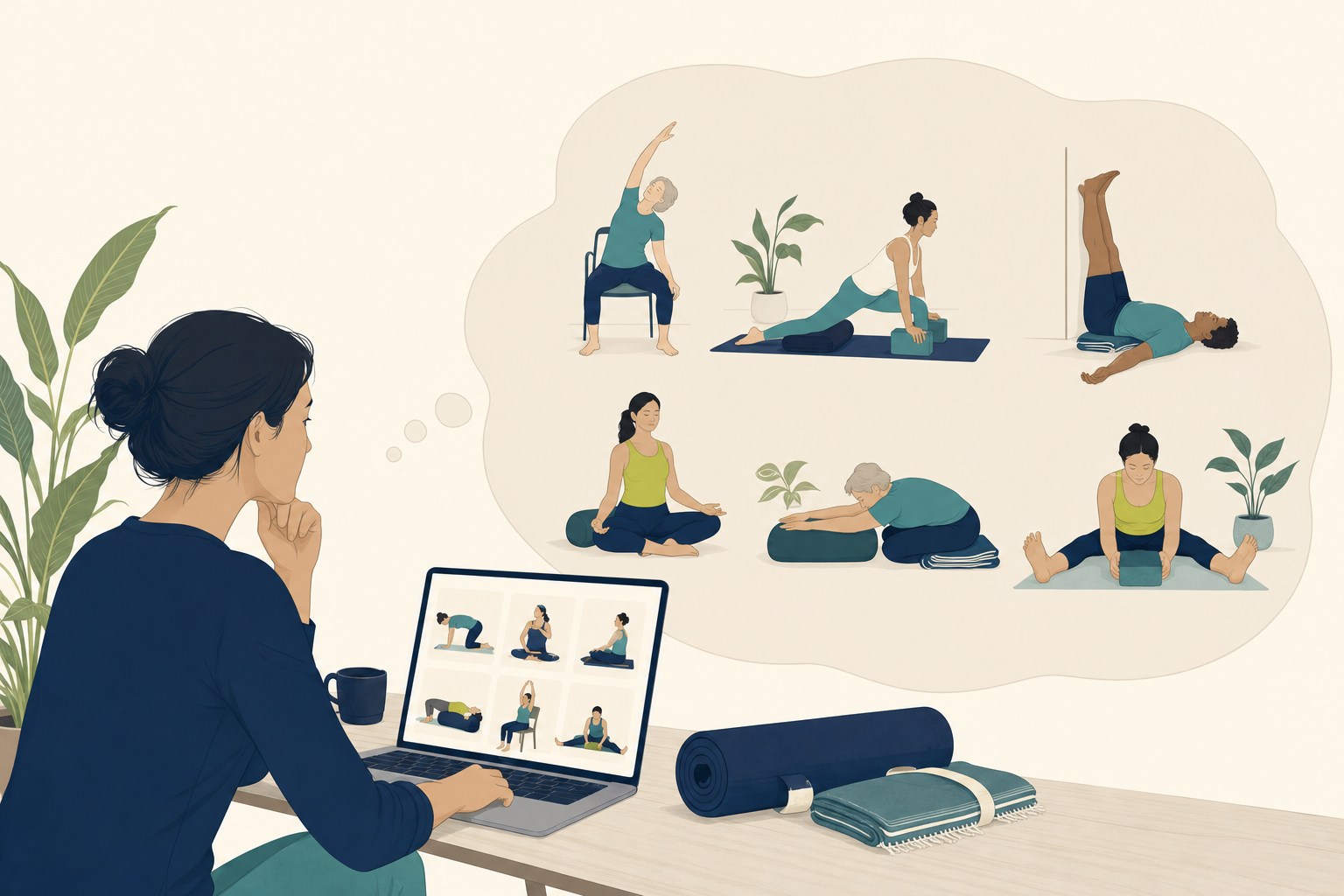
Describe what you need
Tell the instructor which practical features matter: staying seated, avoiding floor transitions, using balance support, having more time between movements or taking breaks. Share relevant health information privately.
If you are recovering from an injury or following medical restrictions, ask your healthcare professional what is appropriate. A general yoga class is not automatically rehabilitation.
Ask how the session works
- Does it include kneeling, weight through the hands, unsupported balance or repeated floor-to-standing transitions?
- Are alternatives demonstrated, and can you remain seated or rest?
- Is the room heated, and how long are positions held?
- What support or equipment is provided?
- How can you ask for help during class?
Names such as Hatha, restorative or gentle can help describe a style, but the details vary between teachers. A clear answer is more useful than a reassuring label.
Check the visit and the booking
Confirm access to the room and toilets, space for any mobility aid and the terms of an introductory booking. Ask whether you can observe or speak with the teacher before committing to a package.
A smaller group or private session may allow more attention, but neither guarantees that the instruction suits your health or access needs.
Keep your choices during class
You can decline touch, skip a movement, rest or leave. If a position is uncomfortable, stop rather than adding a prop and assuming that resolves the problem.
Notice whether the teacher explains alternatives without pressure. Pain, dizziness or another concerning change needs appropriate attention, not encouragement to finish the pose.
Sources
- NCCIH: Yoga effectiveness and safety (opens in a new tab).
- CDC: Older adult activity overview (opens in a new tab), relevant to older readers choosing activity according to their abilities.
Watch alongside this guide
Accessible yoga for every body
This class demonstrates chair and support options that make the article's accessibility principles easier to see in practice. Source: Vancouver Coastal Health. This optional video is context, not evidence or personal instruction.
The YouTube player stays unloaded until you choose to watch. Loading it connects to YouTube and may allow that service to process usage data.