Yoga vs Strength Training: Structure, Differences, and Practical Trade-Offs
Compare yoga and strength training to evaluate structural differences, practical trade-offs, and how physical activity reduces sedentary time.
https://primetempr.com/blog/yoga-vs-strength-training-structure-differences-and-practica
Choosing between yoga and strength training often starts with an unclear picture of how these practices differ in structure, physical demand, and daily utility. Yoga combines postures, breathing, and meditation, with styles and potential benefits varying widely across traditions. Strength training generally focuses on external resistance, muscular conditioning, and progressive overload. Rather than viewing them as mutually exclusive choices where one replaces the other, understanding their distinct mechanisms helps you determine what fits your current capacity and lifestyle.
Any amount of physical activity is better than none, all activity counts, and people should limit sedentary time. Whether you choose bodyweight postures, loaded barbell work, or brisk daily walking, breaking up prolonged sitting supports overall wellbeing. An intense streak, high flexibility, or a rigid workout calendar does not guarantee universal progress or protect against burnout if the underlying routine fails to match your goals.
Understanding the Core Structures
Yoga and strength training engage the body through fundamentally different frameworks. Yoga integrates physical postures (asana), controlled breathing (pranayama), and meditation or focused attention. Because styles vary from gentle, restorative sessions to physically demanding vinyasa flows, the exact physical demands shift depending on the class and the teacher. Potential benefits should be described with uncertainty, as individual responses to practice vary based on consistency, baseline fitness, and health status.
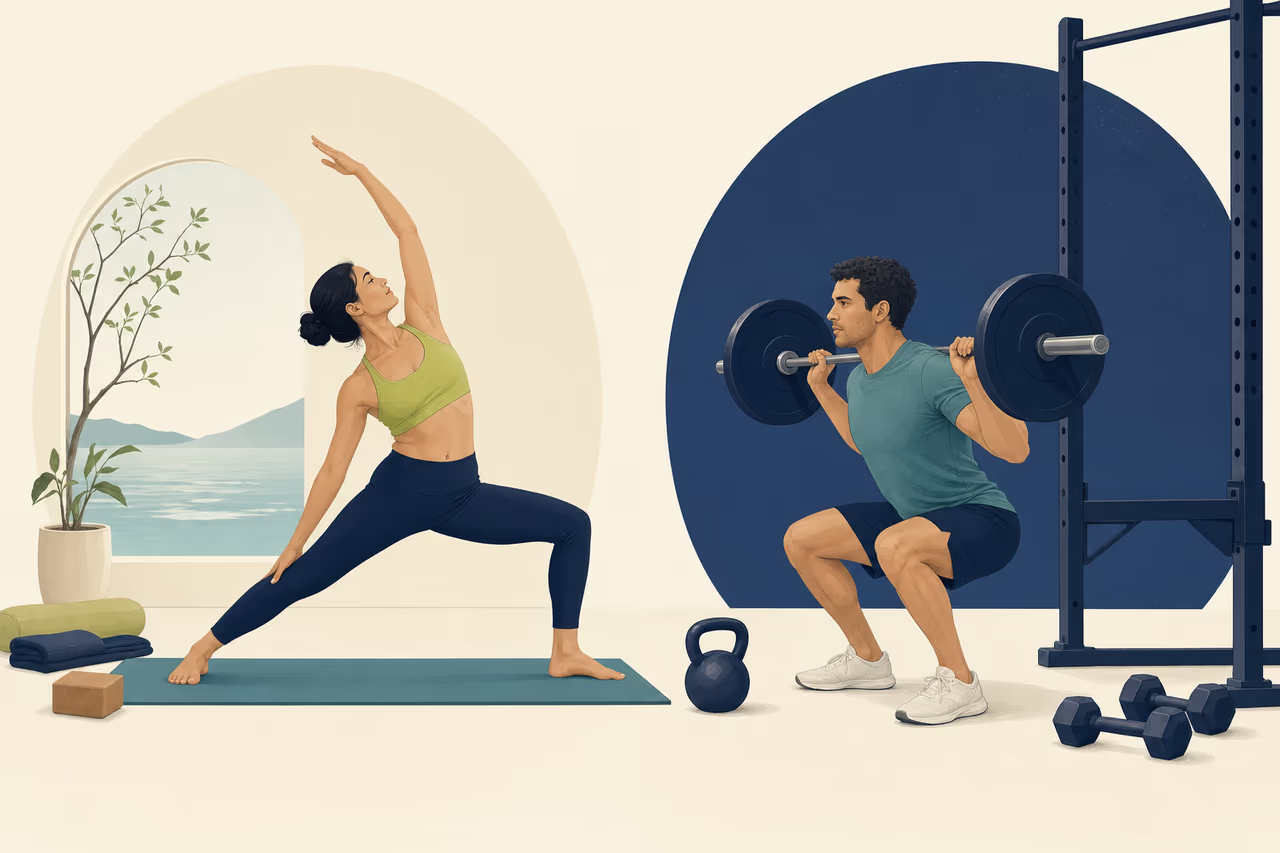
In contrast, strength training centres on muscular loading, joint stability under heavy loads, and systematic progression over time. While both disciplines require focus and body awareness, they target different adaptations. Yoga often emphasizes mobility, balance, and mind-body awareness, whereas strength training prioritizes force production and muscular endurance. Recognizing these structural distinctions prevents the common failure mode of assuming one practice completely covers all physical needs without supplementation.
Practical Trade-Offs and Safety
Every physical discipline carries distinct trade-offs, and neither yoga nor strength training is entirely without risk. Injuries can occur during yoga practice, particularly when pushing into complex postures without adequate preparation, proper alignment, or appropriate modifications. Overstretching or ignoring joint discomfort can lead to strain, emphasizing the importance of working within your current limits rather than chasing an idealized aesthetic or a perfect attendance streak.
Similarly, strength training introduces risks related to load management, improper form, and insufficient recovery time between heavy sessions. Evaluating these trade-offs honestly helps you align your routine with your body's feedback rather than forcing an arbitrary program that disregards fatigue, stiffness, or injury history.
Choosing Between Yoga and Strength Training
Deciding how to allocate your movement time does not require an all-or-nothing approach. By assessing your daily schedule, sedentary habits, and personal movement preferences, you can design a sustainable routine.
Choosing Between Yoga and Strength Training
| Feature | Yoga | Strength Training |
|---|---|---|
| Core Components | Postures, breathing, meditation | External resistance, muscular conditioning |
| Primary Focus | Mobility, balance, mind-body awareness | Force production, muscular endurance |
| Style Variations | Ranges from gentle/restorative to dynamic flow | Ranges from bodyweight to heavy barbell lifting |
| Safety Considerations | Strains from overstretching or alignment issues | Strains from load management and form breakdown |
When you are ready to transition from research to practice, structured guidance helps bridge the gap. If you want to incorporate mindful movement and breathwork into your week, Explore trainers and studios to see what is available in your area. You can also Find a yoga teacher or Browse yoga programmes to compare offerings by profile, location, and teaching style, ensuring your research leads to a better-fit real class rather than a generic recommendation.
Plan your next step
- Assess your current weekly sedentary time and overall physical activity levels.
- Consider whether your primary goal leans toward postures, breathing, and meditation or general physical conditioning.
- Acknowledge that any amount of physical activity is better than none and all activity counts.
- Explore local trainers and studios to find professional guidance that matches your current capacity.
Sources
Watch alongside this guide
A beginner Yin yoga practice
This slower practice gives you a concrete style example to compare with the goals and class formats in the guide. Source: Yoga with Kassandra. This optional video is context, not evidence or personal instruction.
The YouTube player stays unloaded until you choose to watch. Loading it connects to YouTube and may allow that service to process usage data.