Yoga vs Mobility Training: Structure, Focus, and Practical Trade-Offs
Compare yoga and mobility training to understand their structural differences, safety considerations, and practical trade-offs for your daily movement.
https://primetempr.com/blog/yoga-vs-mobility-training-structure-focus-and-practical-trad
Choosing between a yoga practice and a dedicated mobility training routine depends on what you want from your movement time. Deciding whether to attend a class or follow a targeted joint conditioning sequence requires understanding how their structures, focus areas, and practical trade-offs differ. Yoga combines postures, breathing, and meditation with varying styles and uncertain benefits, whereas general physical activity and targeted movement routines have distinct functional goals. Your choice depends on whether you seek a multi-dimensional contemplative practice or focused physical conditioning.
What Yoga Involves: Postures, Breath, and Variation
Yoga combines postures, breathing and meditation; styles vary, benefits should be described with uncertainty, and injuries can occur. Unlike a linear strength or conditioning session, a yoga session weaves together physical shapes with intentional breath control and meditative focus.
Because yoga encompasses many different lineages, ranging from gentle restorative classes to vigorous styles, its effects cannot be generalized into a single guaranteed outcome. The benefits you experience depend heavily on the specific style, the teacher's approach, and your own physical background. Because physical postures involve stretching, balancing, and weight-bearing on various joints, injuries can occur if a practice is pushed too far or if alignment cues are ignored.
To help clarify how these approaches differ in practice, consider the structural comparison below:
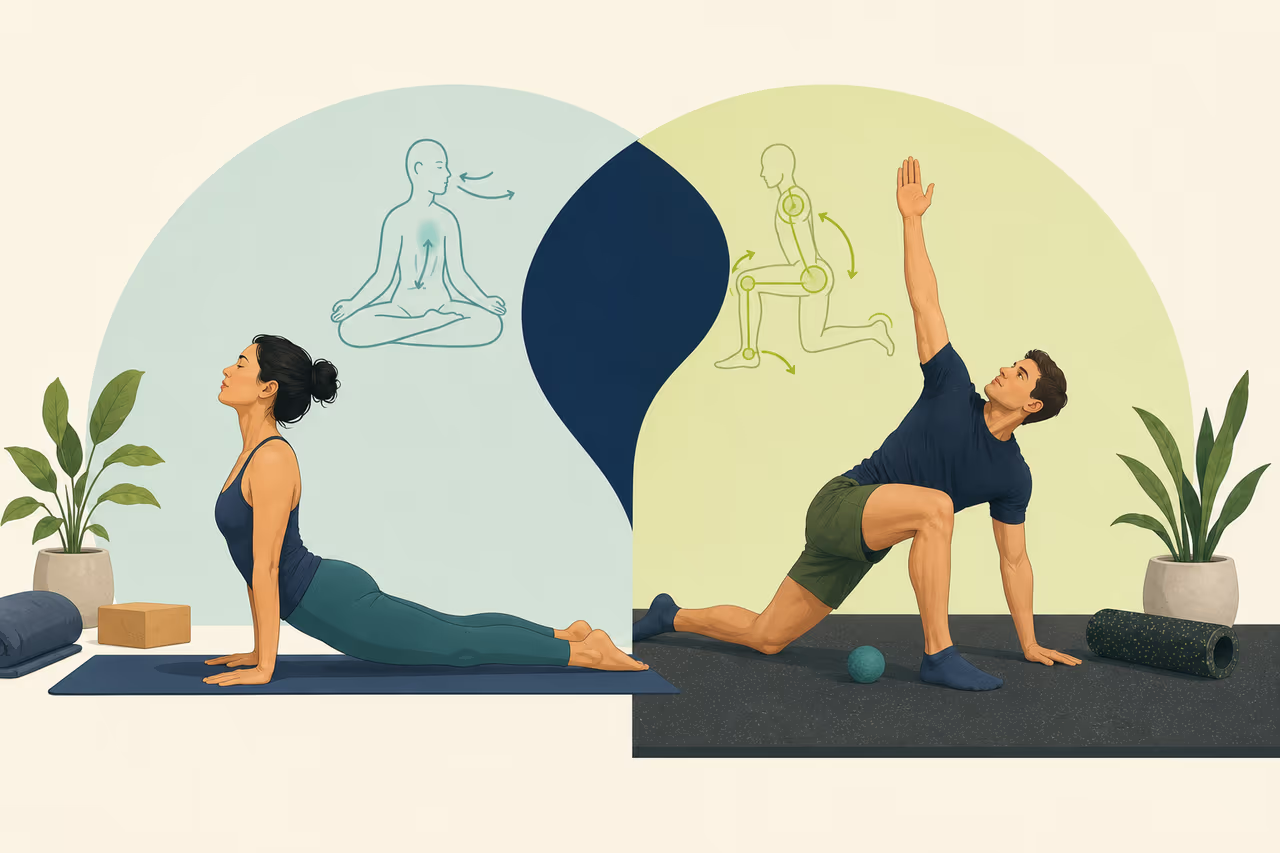
| Feature | Yoga Practice | Mobility Training Routine |
|---|---|---|
| Core Elements | Postures, breathwork, and meditation | Targeted joint ranges, stability, and conditioning |
| Style Variation | Varies widely from restorative to athletic | Typically structured around specific biomechanical goals |
| Contemplative Focus | Central component in many traditions | Usually absent or secondary to physical conditioning |
Physical Activity, Movement, and Safety
Whether you gravitate toward the mat or a movement floor, broader principles of physical movement apply. Any amount of physical activity is better than none, all activity counts, and people should limit sedentary time.
This perspective helps remove the pressure to find a "perfect" routine right away. If your daily schedule leaves little room for a full sixty-minute class, breaking movement into smaller intervals or alternating between different types of physical activity still supports your overall wellbeing. At the same time, safety considerations remain paramount. If a chosen practice feels too intense, painful, or misaligned with your body, scale back the range of motion, focus on simpler breath-led postures, or consult a qualified trainer to tailor your sessions.
Practical Trade-Offs: Choosing Your Next Step
Every movement discipline involves compromises. Yoga styles vary wildly, meaning benefits cannot be guaranteed universally and injuries can occur. Mobility training focuses heavily on specific joint ranges and conditioning, omitting the meditative and breathwork traditions central to many yoga lineages.
Recognizing these trade-offs prevents common failure modes, such as assuming yoga is a guaranteed medical treatment or confusing high-intensity flexibility training with safe, sustainable physical activity. Rather than treating style labels as rigid guarantees, approach your exploration with curiosity and realistic expectations.
Prime Tempr lets readers compare trainers and yoga businesses by profile, location and offering, so style research can lead to a better-fit real class rather than a generic recommendation. When you are ready to take a concrete step, you can Explore trainers and studios to see what is available in your area, or dive deeper into Yoga Styles and Goals to better understand how different traditions align with your daily routine.
Choosing Between Yoga and Mobility Work: A Quick Assessment
If you are deciding how to spend your movement time, walk through this quick assessment to determine your immediate next step:
- Assess your primary daily goal: Are you looking for breath-led postures and meditation, or targeted joint conditioning?
- Check local options: See whether a nearby studio offers structured yoga classes or specialized movement coaching.
- Remember activity counts: Any physical activity counts, and reducing sedentary time matters more than finding a flawless routine.
- Start small: Begin with a short, accessible session before committing to long-term programmes.
Sources
Watch alongside this guide
A beginner Yin yoga practice
This slower practice gives you a concrete style example to compare with the goals and class formats in the guide. Source: Yoga with Kassandra. This optional video is context, not evidence or personal instruction.
The YouTube player stays unloaded until you choose to watch. Loading it connects to YouTube and may allow that service to process usage data.