Yoga Nidra vs. Meditation: How to Choose the Right Practice
Compare yoga nidra and meditation to determine which practice best supports your current goals and energy levels.
https://primetempr.com/blog/yoga-nidra-vs-meditation-a-practical-guide-to-choosing
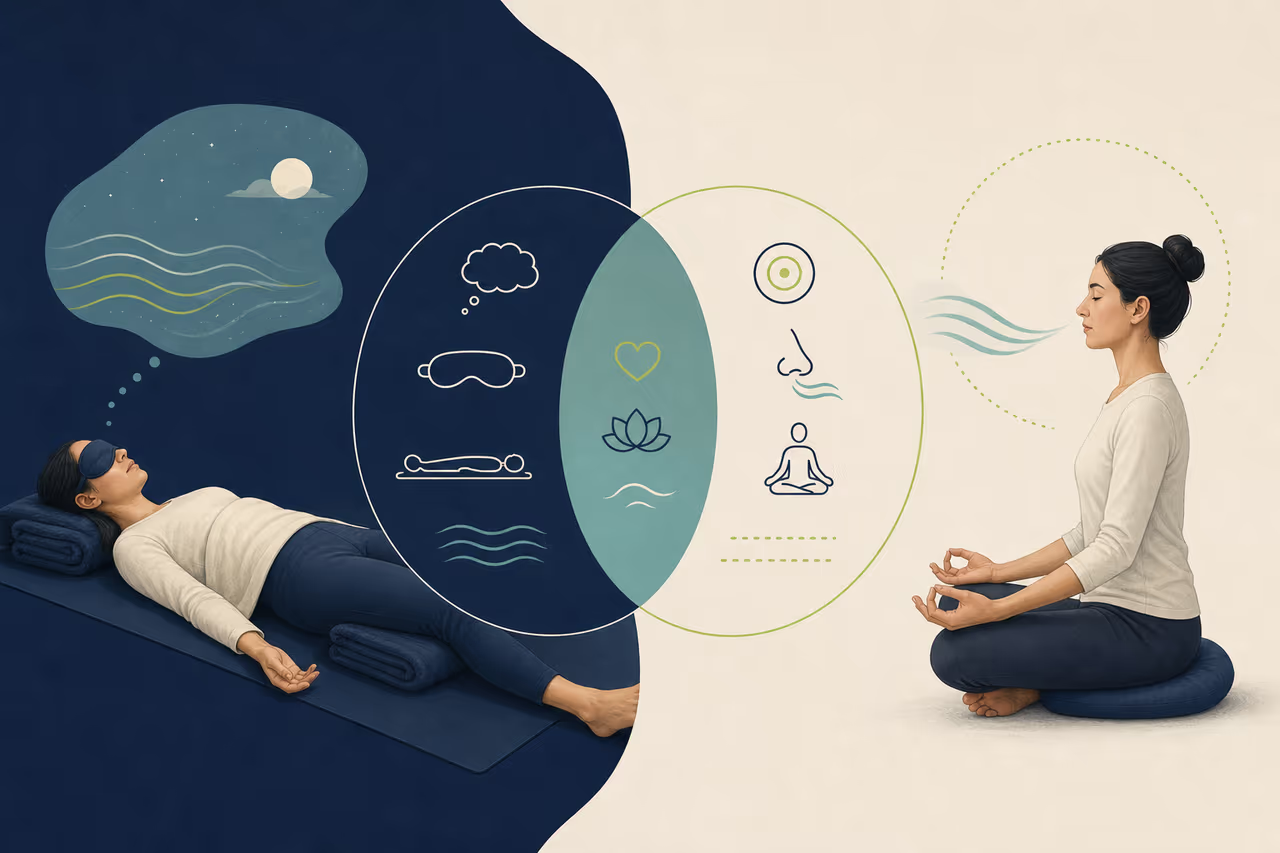
The distinction between yoga nidra and meditation is the level of active mental engagement. Yoga nidra is a structured, passive technique for deep rest, while meditation is a broad category of practices requiring active focus to cultivate awareness.
Neither practice is objectively "better" than the other. Instead, they serve different purposes depending on your current energy levels, goals, and mental state. Because meditation practices vary widely in technique and outcome, and evidence regarding their effects remains mixed, it is helpful to view these as tools to be explored rather than universal solutions for wellbeing.
The Core Difference
Meditation is an active practice. Whether you focus on your breath, a mantra, or bodily sensations, you train your mind to return to a specific point. This requires consistent effort and the ability to notice when your thoughts wander.
Yoga nidra, often translated as "yogic sleep," is a passive, systematic practice. You are typically lying down, listening to a guide who leads you through a series of body scans, breath awareness exercises, and visualizations. While you are technically "awake," the goal is to hover in the space between wakefulness and sleep. You are not trying to "do" anything with your thoughts; you are simply following instructions to facilitate a state of deep physiological and mental relaxation.
Practical Trade-offs
Choosing between these methods depends on your current state and needs. Both practices involve specific trade-offs to weigh before you begin.
Meditation: The Active Approach
- The Effort: Because meditation requires active mental engagement, it can feel challenging or frustrating for beginners. It is common to feel like you are "doing it wrong" when your mind wanders.
- The Benefit: It is highly effective for building sustained focus and developing a different relationship with your thoughts over time.
- The Limitation: If you are already mentally exhausted or feeling overwhelmed, the effort required for meditation might feel like an additional burden rather than a relief.
Yoga Nidra: The Passive Approach
- The Effort: It is low-effort, making it highly accessible for those who are tired or find sitting still in a traditional meditation posture uncomfortable.
- The Benefit: It is specifically designed to help the nervous system shift into a state of rest, which many people find helpful for recovery.
- The Limitation: It is highly structured and usually requires a pre-recorded track or a teacher. This lack of spontaneity means you are dependent on external guidance, which can make it difficult to practice "on the go."
Knowing Your Limits
Approach both practices realistically. Neither yoga nidra nor meditation replaces conventional medical or psychological care. If you manage significant health concerns, view these practices as supplementary rather than curative.
These practices are not universally comfortable. Quiet reflection or deep relaxation can trigger unexpected emotional responses or physical discomfort. If a practice feels overwhelming, causes physical pain, or heightens anxiety, stop immediately.
A negative experience is not a failure. It indicates that the current technique or environment may not suit your needs. Consult a qualified trainer or healthcare professional to adjust your approach or explore an alternative method.
Why Guided Support Matters
Many free apps and recordings exist, but following a generic recording differs from working directly with a human instructor.
A qualified teacher observes your practice, answers questions, and explains the context behind specific techniques. They help you troubleshoot roadblocks, suggest physical modifications for comfort, and ensure your practice remains sustainable rather than a source of stress.
At Prime Tempr, we believe the best approach starts by connecting with trainers who teach breathing and meditation in context. An article offers a starting point, but it cannot replace responsive, human-led guidance. A teacher who adapts to your needs,whether focused on mobility, recovery, or sleep,helps keep your practice safe and beneficial.
Choosing Your Starting Point
If you are unsure where to begin, use this guide to narrow down your options:
- If you want to cultivate focus or awareness: Explore guided meditation. Start with short, 5-10 minute sessions to gauge your response.
- If you are seeking deep physical and mental rest: Explore yoga nidra. It is a gentle way to introduce stillness into your routine.
- If you feel stuck or overwhelmed: Find a local trainer for personalized guidance. They can help you navigate the nuances of these practices in a way that feels supportive and non-judgmental.
- Always start small: Regardless of the method, keep your initial sessions brief. Consistency is more valuable than intensity, and starting with 5-10 minutes allows you to observe how your body and mind react without overcommitting.
Sources
- Meditation and Mindfulness: Effectiveness and Safety (opens in a new tab) – National Center for Complementary and Integrative Health.
- Relaxation Techniques: What You Need To Know (opens in a new tab) – National Center for Complementary and Integrative Health.
Watch alongside this guide
Breathing meditation
This short guided meditation lets you follow the basic attention and breathing ideas described in the article. Source: UCLA Health. This optional video is context, not evidence or personal instruction.
The YouTube player stays unloaded until you choose to watch. Loading it connects to YouTube and may allow that service to process usage data.