Yoga Has No Single Timeless Version
Yoga is a living, evolving tradition; understanding this diversity helps you choose a practice that fits your life.
https://primetempr.com/blog/yoga-has-no-single-timeless-version
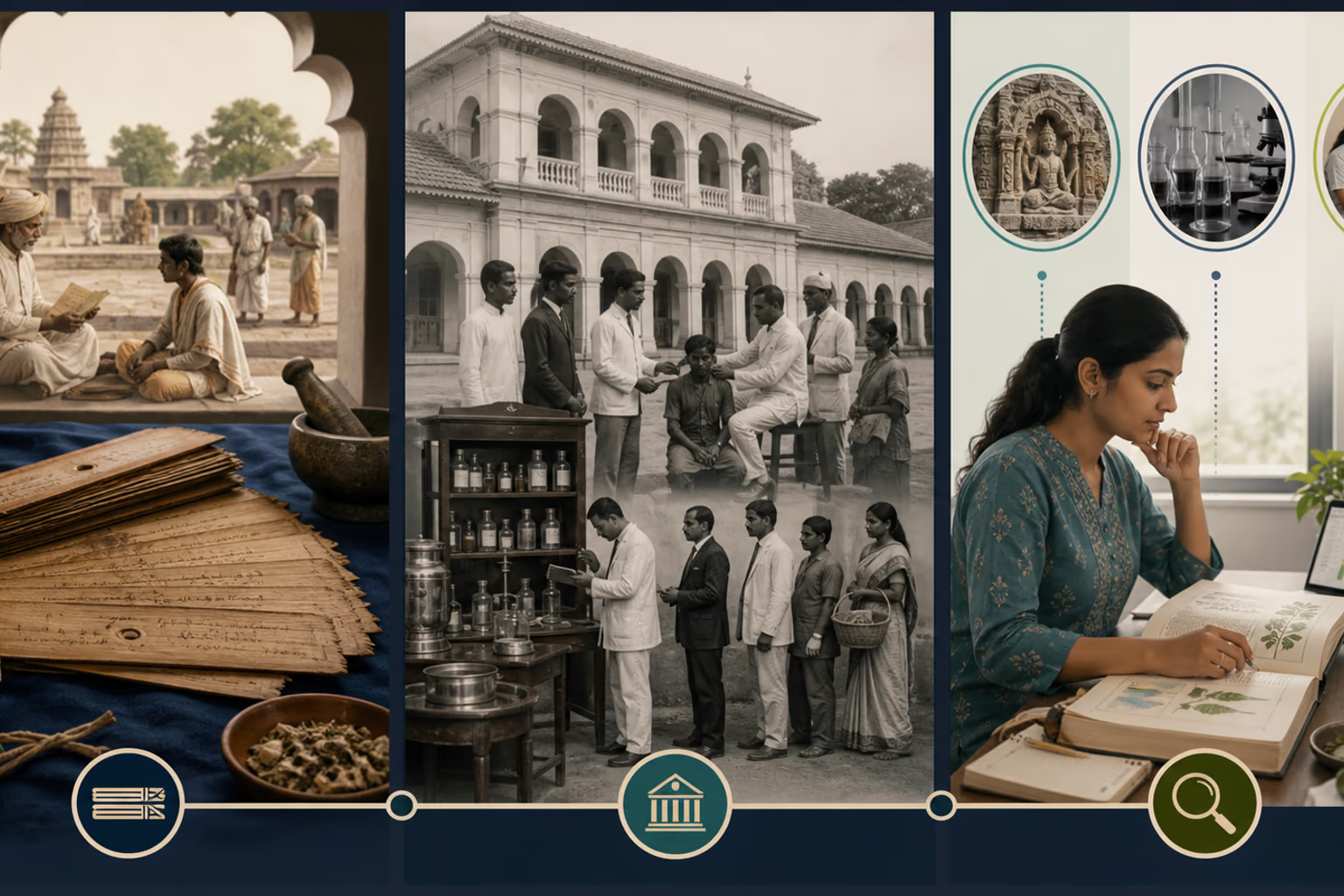
No single, timeless version of yoga exists. If you feel confused by the differences between restorative classes, high-intensity flows, and seated meditation, you are not alone. These variations are not signs of corruption. As UNESCO notes, yoga is a living, evolving tradition transmitted through teachers, communities, institutions, texts, and modern media for centuries.
When you look for an "original" form of yoga, you are searching for a static artifact in a field defined by its ability to adapt. UNESCO describes yoga as a diverse living Indian tradition, and this diversity is a fundamental feature of its history. Rather than searching for a single standard, your goal should be to find a practice that aligns with your current physical capacity and personal goals.
The myth of a single origin
The misconception that yoga is a fixed, unchanging practice often stems from a desire for certainty. It is tempting to believe that if we could just find the "first" or "pure" version of yoga, we would unlock the most effective way to practice. However, history reveals that yoga has always been shaped by the specific cultural and social contexts in which it was practiced.
Yoga is not a museum piece. It is a collection of practices that have been refined, interpreted, and passed down by countless teachers. Because these teachers lived in different eras and faced different societal needs, the way they taught yoga shifted to remain relevant. When you approach yoga today, you are participating in a lineage that is still in motion. Treating any one style as the sole "correct" version ignores this rich, layered history and limits your ability to find a practice that actually serves your needs.
Why diversity is the norm
The variety in modern studios reflects how yoga is transmitted. A teacher trained in a lineage focused on physical endurance emphasizes different aspects than one trained in meditative stillness. Both draw from the same deep well of tradition, yet they offer different approaches to the practice.
Modern environments further amplify this diversity. Desk jobs, small living spaces, and time pressures influence how yoga is taught. A sequence designed for a monastic setting centuries ago may not be the most practical or safe choice for a living room practice. View these modern adaptations as the latest chapter in a long history of practical application.
The role of modern protocols
In recent years, efforts have been made to create standardized sequences, such as the Common Yoga Protocol 2026 published by the Ministry of Ayush. These protocols serve a specific purpose: they provide an accessible, public-practice sequence that can be widely taught and understood.
The Ministry of Ayush's Common Yoga Protocol presents one contemporary public-practice sequence and is not the only form of yoga. While these protocols offer a clear starting point for public health, they do not replace the nuance and individualization provided by a skilled teacher. Standardization provides accessibility, but it often sacrifices the specific, lineage-based insights found in a long-term teacher-student relationship.
Evaluating your practice context
Because no single standard exists, you must actively evaluate the yoga you choose. If a specific style does not meet your needs, the solution is not to abandon yoga, but to shift your focus from the class label to the lineage and goals of the teacher.
Qualified instruction and appropriate modification are the best tools for reducing avoidable risk. Yoga styles and physical demands vary significantly, and what works for one person may not be suitable for another. Prime Tempr helps readers continue from a concise history lesson to teacher and school profiles where lineage, training, and contemporary interpretation can be examined more closely. You can explore teachers and schools to find someone whose approach aligns with your specific needs. For more on how to bridge the gap between ancient texts and modern mats, see our Classical Texts vs. Modern Classes: A Practical Guide.
Questions for choosing a class
Use this reflection to clarify your approach to choosing a class or teacher.
- Identify your primary goal: Are you looking for mobility, stress reduction, community, or a specific physical challenge? Be honest about what you need right now.
- Ask about lineage: When you encounter a new teacher, ask them about their primary training lineage. A teacher who can explain where their approach comes from is often better equipped to help you modify it.
- Assess physical capacity: Does the class intensity match your current physical capacity? If you are new to movement or recovering from injury, prioritize classes that emphasize modification over intensity.
- Look for information on their training background and the specific focus of their classes.
Progress in yoga is not measured by the intensity of your poses or the length of your streak. It is measured by your ability to find a practice that is sustainable, safe, and meaningful for your life today.
Sources
Watch alongside this guide
What is yoga?
This Oxford Centre for Hindu Studies introduction offers historical and philosophical context that readers can compare with the article's specific period or question.
The YouTube player stays unloaded until you choose to watch. Loading it connects to YouTube and may allow that service to process usage data.