A Screen-Break Yoga Reset for Tired Eyes and Stiff Bodies
This desk-side reset combines gentle movement, screen breaks, and safer workstation habits for daily relief.
https://primetempr.com/blog/yoga-for-digital-fatigue-reclaim-your-focus-and-energy
Long hours in front of a screen can leave your eyes tired and your body restless. Simple responses include changing position, looking away from the display, and taking a short break. Yoga offers movement, but it is not a complete solution.
This guide combines a gentle desk-side practice with practical workstation habits. Use it as a reset, not as treatment for pain, headaches, or vision problems.
First, change the conditions
Before you begin stretching, consider what contributes to your discomfort.
- Reduce glare. Move the screen or nearby lights until reflections are less noticeable.
- Let your gaze travel. Look away from close work regularly and focus on something farther away.
- Change position. Stand, walk, or work in a different posture for a few minutes.
- Take a real screen break. Switching from a laptop to a phone keeps your eyes doing close work.
OSHA recommends building micro-pauses into computer sessions and taking a five-minute break from computer tasks each hour. The CDC and NIOSH also note that short hourly breaks can reduce discomfort for computer workers.
A two-minute reset between tasks
You can do this without a mat or special clothing.
- Put both feet on the floor and let your hands rest.
- Look at a distant object while taking three ordinary, unforced breaths.
- On an exhale, soften your jaw and let your shoulders drop.
- Stand up if that is comfortable. Reach each arm forward, then overhead only as far as feels easy.
- Walk for the remainder of the break,even a lap around the room counts.
The goal is not to correct your posture. It is to stop holding one position for so long.
A gentle ten-minute practice
Choose a stable chair and keep every movement within a comfortable range.
1. Arrive for one minute
Sit or stand and notice any areas of tension. Allow your breathing to settle without forcing it to be especially deep.
2. Move the shoulders for two minutes
Lift your shoulders gently toward your ears, then release them. Make a few slow circles in each direction. Keep your neck still instead of rolling your head in a large circle.
3. Mobilize the upper back for two minutes
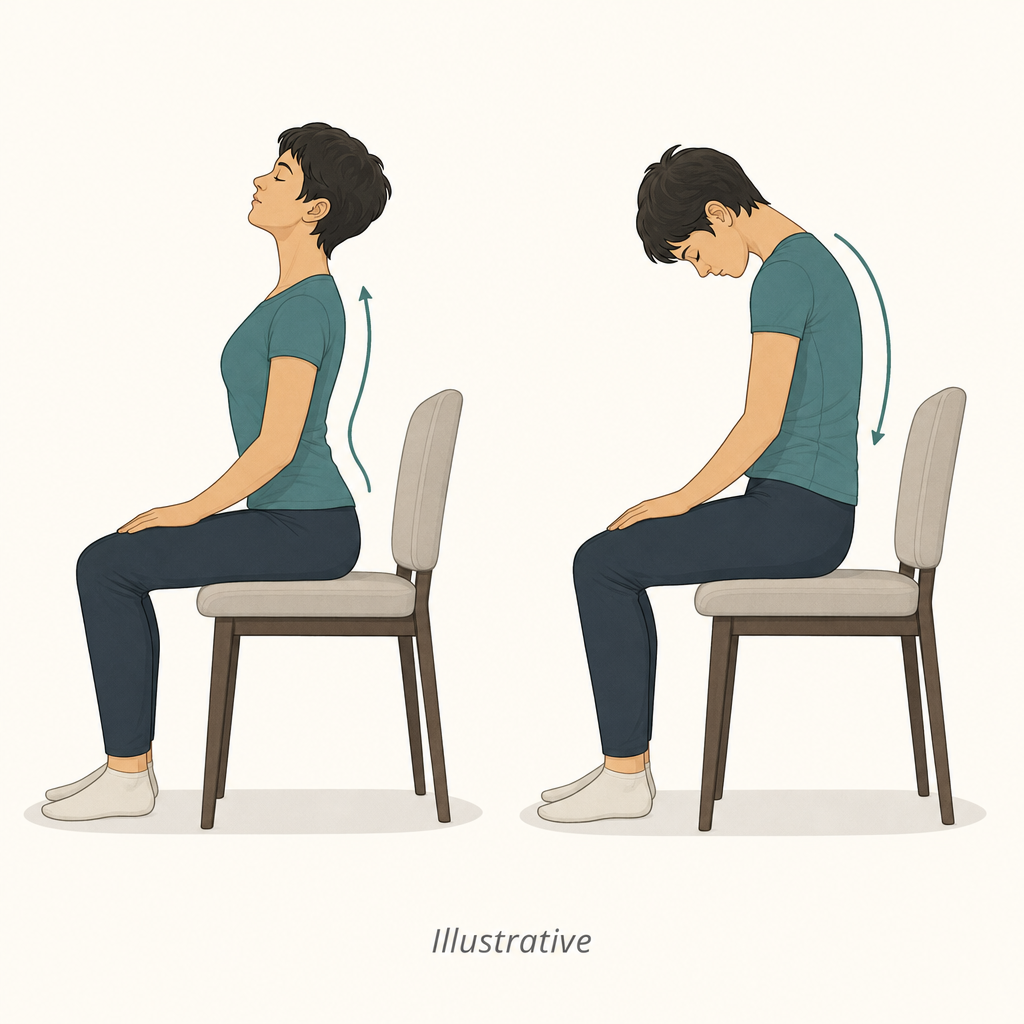
Place your hands on your thighs. Alternate between a small rounding of the upper back and a comfortable lift through the chest. Move with your breath, but pause if the movement causes pain, tingling, or dizziness.
4. Stand and reach for two minutes
Stand behind your chair for support. Reach one arm overhead, then the other. Add a small side bend if it feels spacious rather than compressed.
5. Walk and look outward for two minutes
Walk at an easy pace. Allow your eyes to take in the room or a view outside instead of focusing on another nearby object.
6. Choose your next break for one minute
Decide when you will next step away from the screen. A calendar reminder is often more useful than waiting until discomfort becomes distracting.
What yoga can,and cannot,do here
A brief practice can help you vary your position and notice tension earlier. It may also create a clear boundary between work tasks. This practice cannot diagnose the cause of recurring headaches, blurred vision, numbness, or persistent neck and back pain.
If symptoms continue, interrupt sleep, or make ordinary activities difficult, speak with an appropriate health professional. An eye-care professional can assess visual symptoms; a clinician or physiotherapist can help with persistent pain or neurological symptoms.
Make the habit easier to repeat
Keep the routine deliberately small. Pair it with something that already happens: the end of a meeting, sending a report, or refilling your water. On busy days, use the two-minute version. On easier days, use the full practice or find a teacher who can adapt movement to you.
You can also find free teacher-led practices when you want more structure. The most effective reset is one that gets you away from the screen and that you can repeat without strain.
Sources
Watch alongside this guide
A beginner Yin yoga practice
This slower practice gives you a concrete style example to compare with the goals and class formats in the guide. Source: Yoga with Kassandra. This optional video is context, not evidence or personal instruction.
The YouTube player stays unloaded until you choose to watch. Loading it connects to YouTube and may allow that service to process usage data.