Yoga as a Living Tradition: A Student’s Guide
Understand the evolution of yoga and gain the tools to evaluate your practice and find qualified instruction.
https://primetempr.com/blog/yoga-as-a-living-tradition-a-student-s-guide
Yoga is not a single, static practice but a diverse, living tradition that has evolved through centuries of transmission. Today, you might encounter yoga in a high-intensity gym class, a quiet community center, or through a wellness app. This variety often leads to confusion: if yoga is ancient, why do classes look so different? The answer lies in the fact that yoga has been transmitted through teachers, communities, institutions, and media for centuries, adapting to the needs of each era. To navigate this landscape, you must look past marketing labels and evaluate the lineage and intent of your specific instructor.
The myth of a single origin
Many students begin their journey looking for the one original form of yoga. In reality, yoga is a diverse, living Indian tradition transmitted through teachers, communities, institutions, texts, and modern media. There is no single, unchanging monolith that represents the totality of yoga. Instead, think of it as a vast, branching tree. Over time, different schools and masters have emphasized various aspects,some focusing on physical postures, others on breath, meditation, or philosophical study.
When you see a modern yoga class, you are seeing the result of this long transmission process. Some styles prioritize athletic conditioning, while others maintain a closer connection to traditional meditative or restorative practices. Recognizing that these variations are a natural part of the tradition’s evolution helps you move away from the frustration of trying to find the "correct" version and toward finding a practice that aligns with your personal goals.
From tradition to global culture
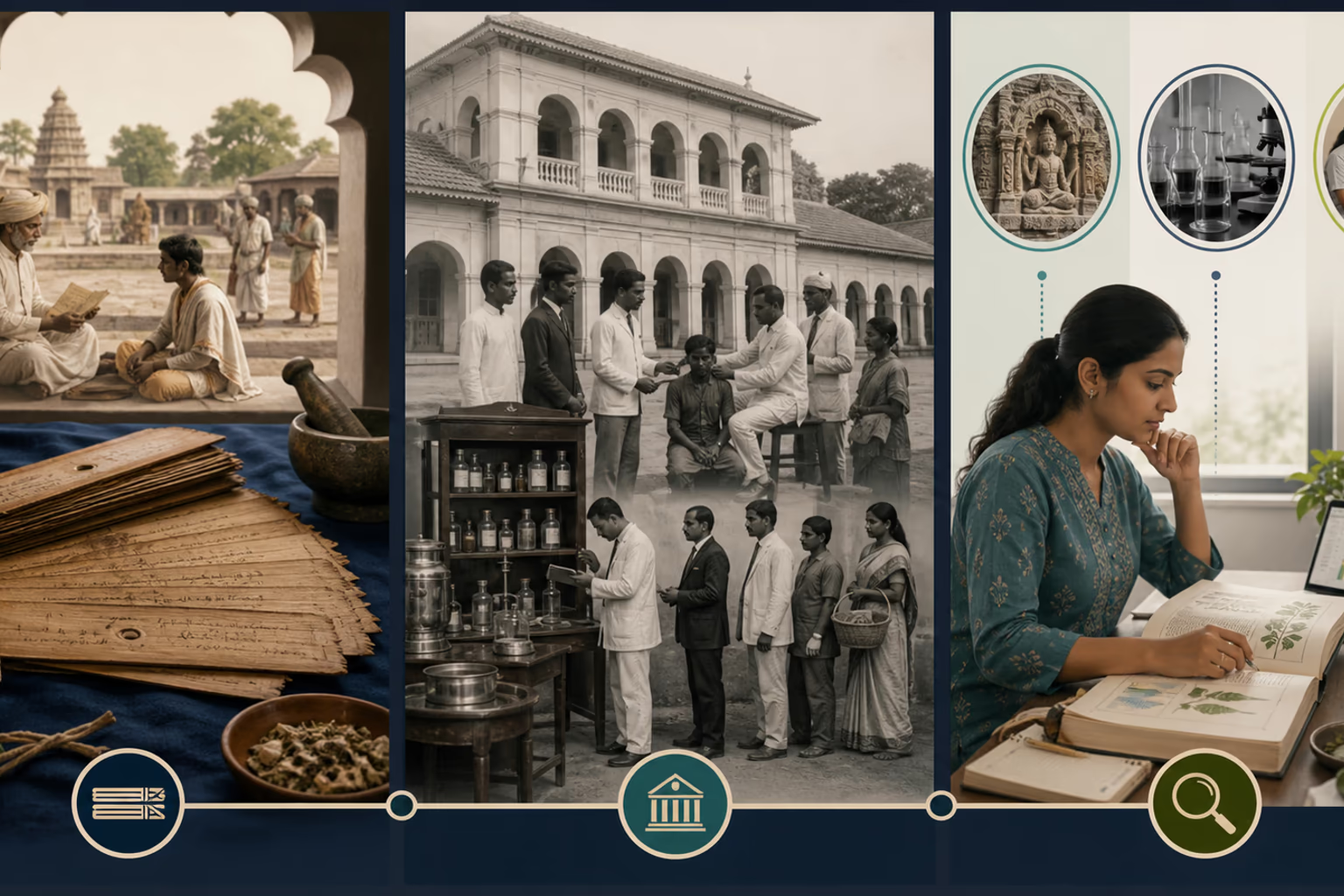
The transition of yoga from localized Indian traditions to a global fitness culture was not a sudden event but a gradual integration. In the 20th century, yoga began to reach a wider international audience through the work of influential teachers who traveled and established schools, as well as the rise of books and media that codified specific sequences.
As yoga entered the global mainstream, it inevitably adapted to the constraints of modern life. It moved from ashrams and quiet spaces into urban environments, accommodating desk jobs, small homes, and the time pressures of a busy, modern schedule. This adaptation is why you might find a 30-minute flow sequence designed for a lunch break alongside a two-hour session focused on deep, sustained holds. While these modern adaptations have made yoga accessible to millions, they have also created a market where "yoga" is sometimes used as a generic label for any fitness activity that involves stretching.
Standardization and safety in the modern era
Because yoga styles and physical demands vary significantly, qualified instruction is essential to reduce the risk of injury. In response to the rapid growth of yoga, institutions have sought to provide frameworks for safe, public-facing practice. For instance, the Ministry of Ayush’s Common Yoga Protocol provides a contemporary, standardized sequence for public practice.
Be sure to understand that such protocols represent only one facet of the broader yoga tradition. They are designed to offer a safe, accessible starting point for a general population. However, they do not replace the need for specialized guidance if you have specific health goals or physical limitations. When you participate in a class, remember that the instructor’s role is to bridge the gap between these standardized safety guidelines and your individual needs. If a class feels disconnected or confusing, return to the teacher’s lineage and training background rather than assuming the entire practice is invalid.
Choosing your path forward
The diversity of modern yoga is a strength, but it requires you to be an active participant in choosing your path. Prime Tempr helps readers continue from a concise history lesson to teacher and school profiles where lineage, training, and contemporary interpretation can be examined more closely.
Evaluating your yoga practice
Use this reflection guide to bring clarity to your current routine.
- Identify your goal: Are you practicing for physical fitness, stress relief, or philosophical study? Be honest about what you want from your mat time.
- Examine the lineage: Ask your instructor about their training background. Who were their primary teachers? What school or style do they identify with?
- Compare with standards: Look at the Common Yoga Protocol to see how your current routine compares. What elements are emphasized, and what is omitted?
- Research the roots: Pick one specific pose or breathing technique you practice regularly and spend time researching its historical context.
If you feel stuck, remember that progress is not defined by intensity, flexibility, or maintaining a perfect streak. It is defined by your ability to find a practice that is both safe and meaningful for your life. Whether you are practicing in a small home, a studio, or a community space, the value of your practice is found in the consistency and the quality of the instruction you receive.
Sources
Watch alongside this guide
What is yoga?
This Oxford Centre for Hindu Studies introduction offers historical and philosophical context that readers can compare with the article's specific period or question.
The YouTube player stays unloaded until you choose to watch. Loading it connects to YouTube and may allow that service to process usage data.