Why Yoga Teachers Use Blocks, Straps, and Bolsters
Learn why yoga teachers use props, how they improve your structural alignment, and how to practice safely on a budget.
https://primetempr.com/blog/why-yoga-teachers-use-blocks-straps-and-bolsters
Yoga props like blocks, straps, and bolsters are practical tools used to bridge the gap between your current mobility and structural alignment, rather than acting as badges of inflexibility or mandatory equipment.
If you are new to yoga, walking into a studio or watching an online video can feel intimidating when you see teachers and experienced practitioners piling up blocks, looping straps around their feet, and resting on large bolsters. A common misconception is that these items are crutches for beginners or signs of poor flexibility. In reality, teachers use them to modify leverage, support structural alignment, and make postures accessible across different body proportions.
Yoga combines postures, breathing, and meditation; styles vary, benefits should be described with uncertainty, and injuries can occur. Understanding how to use supportive gear correctly can help you navigate physical movement more comfortably.
What Yoga Props Actually Do
Yoga props do not make a pose easier; they make it anatomically appropriate for your skeleton. Every human body has different limb lengths, torso proportions, and joint mobility. When a posture requires you to place your hands flat on the floor, such as in a standing forward fold or a triangle pose, forcing your spine to round just to reach the ground can place unnecessary strain on your lower back and hamstrings.
By placing a block under your hands, you effectively bring the floor closer to you. This adjustment allows your spine to remain long and your chest to stay open, ensuring that the stretch targets the intended muscle groups without compromising joint safety. Any amount of physical activity is better than none, all activity counts, and people should limit sedentary time. Incorporating props can make regular movement more sustainable by reducing unnecessary physical friction.
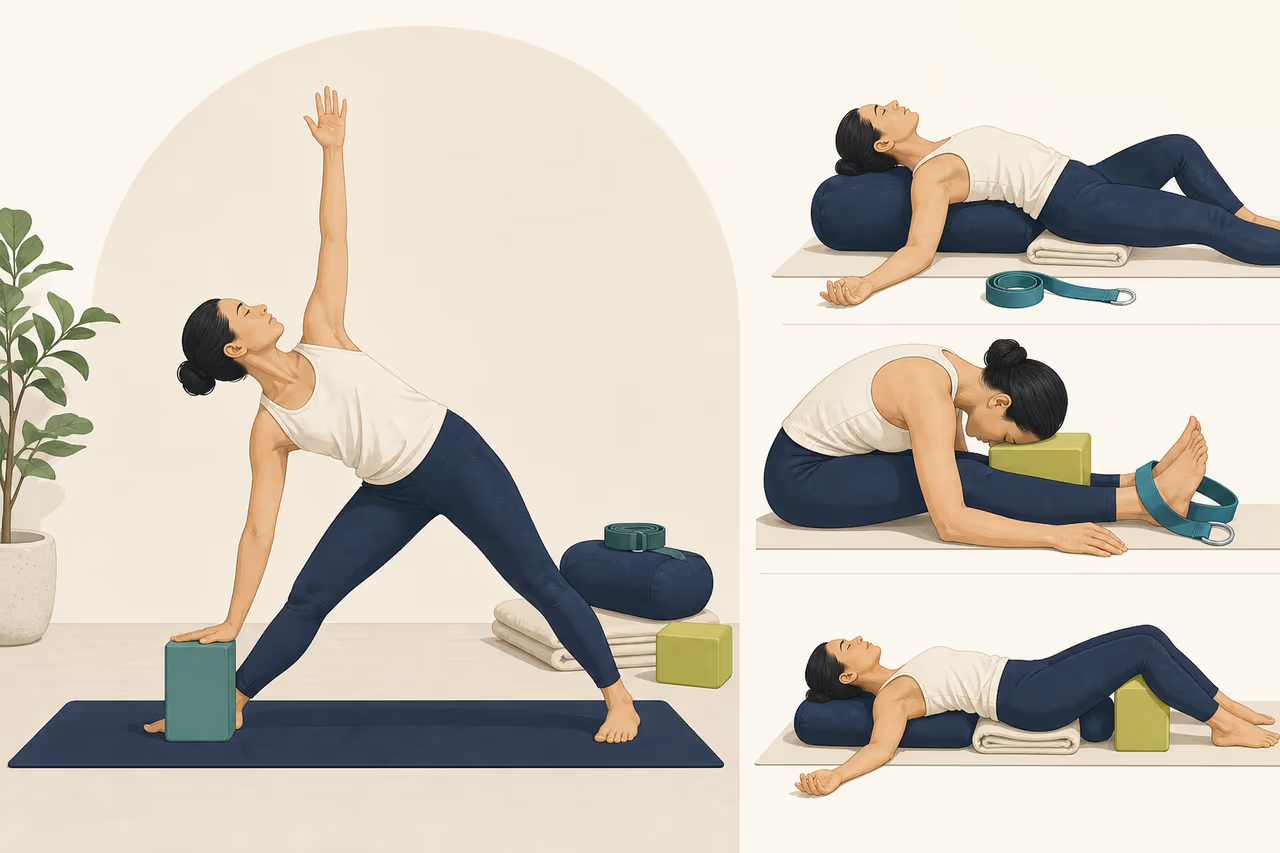
Breaking Down Blocks, Straps, and Bolsters
Each prop fulfills a distinct mechanical purpose in a practice:
- Yoga Blocks: Typically made of high-density foam, cork, or wood, blocks change your height and distance relative to the floor. They provide stability in balancing postures, support the hips in seated meditation, and reduce the depth of bends to protect sensitive lower backs.
- Yoga Straps: Straps act as an extension of your arms. If a posture requires holding your feet or binding your hands behind your back, a tight shoulder or hamstring might prevent your fingers from connecting. A strap bridges that distance, allowing you to maintain correct shoulder alignment and grip tension without hunching.
- Yoga Bolsters: Bolsters are firm, cylindrical cushions designed to support the body during restorative or Yin yoga styles. By placing a bolster under the knees in a reclined position or beneath the chest in a prone backbend, the muscles can relax completely into the support of the prop.
The Practical Trade-Offs of Using Props
While props are valuable, they come with distinct trade-offs that every practitioner should consider.
| Approach | Advantages | Potential Drawbacks |
|---|---|---|
| Using Specialized Props | Precision height, consistent density, designed specifically for traction and leverage. | Requires financial investment and storage space at home. |
| Using Household Alternatives | Free, accessible immediately, requires zero extra equipment to start. | May lack the exact firmness or stability of studio-grade gear. |
| Practicing Without Props | Teaches absolute self-reliance and minimal equipment dependence. | Risks over-stretching, poor spinal alignment, or joint strain if mobility limits are ignored. |
Another crucial trade-off is reliance versus development. Relying excessively on props without working on active mobility can sometimes limit your independent range of motion over time. Props should be used as scaffolding to teach your nervous system how a shape feels, rather than permanent fixtures that prevent you from building functional strength.
Prop Selection and Household Alternatives Checklist
If you want to try incorporating props into your routine without buying specialized equipment right away, you can use common household items:
- Identify the movement goal, such as reaching the floor in a forward fold or supporting a seated posture during breathwork.
- Choose a block alternative if needed, such as a stack of sturdy hardcover books or a firm couch cushion.
- Choose a strap alternative if needed, such as a non-stretchy belt, a long scarf, or a bathrobe tie.
- Choose a bolster alternative if needed, such as a stack of tightly rolled-up blankets or firm bed pillows.
- Test the prop under a gentle stretch to ensure it brings the floor closer or supports relaxation without straining your joints.
If props feel confusing or cumbersome, you can strip down to household alternatives or consult a beginner-friendly trainer who can demonstrate prop placement in real time. To explore structured guidance, you can find a beginner-friendly trainer who matches your pace. If you are wondering whether you need to invest right away, read our guide on what equipment do beginners really need for yoga? (hint: almost none). You can also learn how to create a simple home yoga space without buying extra gear.
Sources
Watch alongside this guide
Yoga for complete beginners
Use this optional beginner session to see pacing, transitions, and rest choices in a complete home practice. Source: Yoga With Adriene. This optional video is context, not evidence or personal instruction.
The YouTube player stays unloaded until you choose to watch. Loading it connects to YouTube and may allow that service to process usage data.