Why Yoga Teachers Pair Breath and Movement: A Practical Guide
Understand why yoga classes feature constant breathing cues, learn whether matching every inhale and exhale is mandatory, and explore a low-pressure way to start practicing.
https://primetempr.com/blog/why-yoga-teachers-pair-breath-and-movement-a-practical-guide
Yoga combines postures, breathing, and meditation into varied styles, and while pairing breath with movement is a common pedagogical choice, any amount of mindful physical activity counts and should be practiced at an individual, sustainable pace. Beginners often wonder why breathing cues are constant in a class and whether matching every inhale and exhale is strictly required or merely stylistic preference.
When you first step onto a mat, the constant stream of instructions to inhale as you lift and exhale as you fold can feel overwhelming. Understanding the practical mechanics behind this approach helps remove the pressure of perfectionism so you can focus on safe, steady movement.
The practical role of breath in yoga
Yoga combines postures, breathing and meditation; styles vary, benefits should be described with uncertainty, and injuries can occur. Institutional overviews from organizations like the National Center for Complementary and Integrative Health highlight that because yoga encompasses many different traditions and lineages, there is no single universal rulebook for how a class must be taught.
However, conscious breathing serves a few clear, practical functions in a session:
- It anchors attention to the physical sensations of the present moment.
- It helps regulate pacing, preventing you from moving too quickly through unfamiliar transitions.
- It provides a continuous internal feedback loop regarding your physical exertion levels.
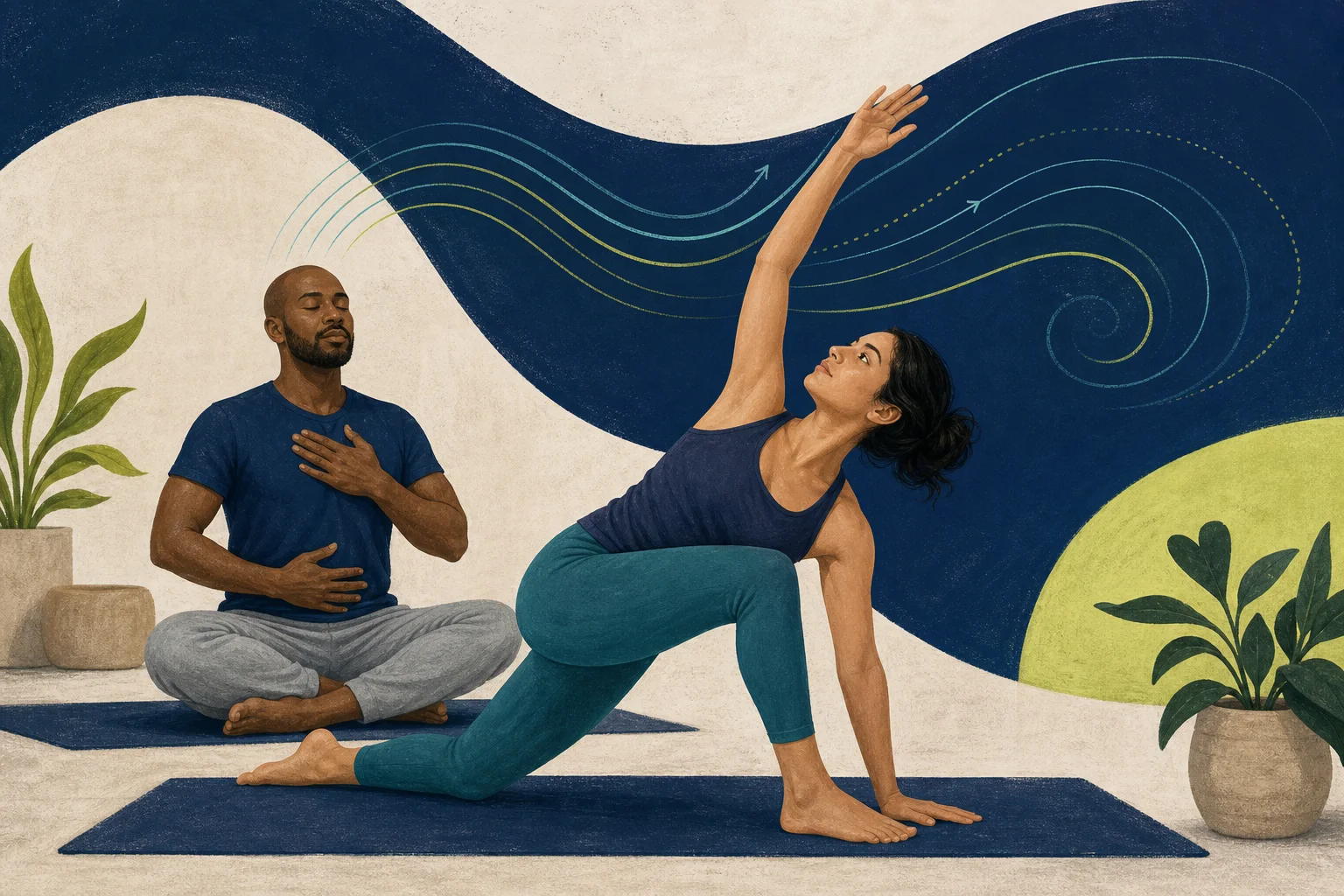
Why teachers pair inhales and exhales with postures
Yoga styles vary significantly, so a cueing style that works in one dynamic vinyasa class may not apply universally to a restorative, yin, or alignment-focused session. When instructors cue specific movements to specific breaths, they are typically trying to establish a steady rhythm. For instance, expansive movements like reaching the arms overhead or lifting the chest often align with an inhale, while folding forward, twisting, or lowering down often align with an exhale.
Yet, strict breath-movement pairing can add significant cognitive load for absolute beginners. Trying to remember whether you should be inhaling or exhaling while simultaneously figuring out where your feet, hands, and hips belong can cause you to hold your breath entirely. Holding your breath increases physical tension, which defeats the purpose of the cueing.
It is entirely normal if your breath falls out of sync with the teacher's instructions. Missing a breath cue does not invalidate your physical practice. Any amount of physical activity is better than none, all activity counts, and people should limit sedentary time, according to public health guidelines from the World Health Organization. Your primary focus should remain on maintaining smooth, comfortable respiration rather than keeping a rigid time with the room.
Practical trade-offs and safety considerations
Like any form of physical conditioning, yoga carries inherent trade-offs and potential risks. Overstretching or forcing flexibility to match a teacher's pace or breath count can strain muscles and joints.
| Approach | Potential Benefit | Common Beginner Pitfall |
|---|---|---|
| Strict Breath Pairing | Establishes rhythmic pacing and focus | Adds cognitive load; may cause breath-holding |
| Natural Respiration | Reduces tension and mental friction | May feel less structured during fast transitions |
If coordinating breath and movement feels confusing or restrictive, return to natural, comfortable breathing while maintaining gentle movement, or consult a qualified trainer for individualized pacing. Practicing with awareness of your body's actual limits matters far more than matching an external cadence.
Your breath and movement check-in
To put these concepts into practice without added stress, use this short reflection framework during your next movement session:
- Notice your natural breathing pattern before starting any movement.
- Choose a simple posture or stretch without forcing your breath to match a rigid count.
- Observe if slowing down your pace reduces physical tension in your shoulders and jaw.
- Explore beginner-friendly trainers or classes to experience guided pacing firsthand.
When you are ready to move from general education to structured support, Prime Tempr helps a reader move from general education to guided practice by comparing trainer profiles, local studio listings and trainer-shared practice content in one place. You can Find a beginner-friendly trainer, Browse yoga programmes, or read more foundational guides on Starting Yoga to find a format that suits your pace.
Sources
Watch alongside this guide
Yoga for complete beginners
Use this optional beginner session to see pacing, transitions, and rest choices in a complete home practice. Source: Yoga With Adriene. This optional video is context, not evidence or personal instruction.
The YouTube player stays unloaded until you choose to watch. Loading it connects to YouTube and may allow that service to process usage data.