Why Ankle Mobility Matters in Movement Classes
Restricted ankle mobility disrupts squats, lunges, and balance. Learn how joint range shapes movement and when to consult a trainer.
https://primetempr.com/blog/why-ankle-mobility-matters-in-movement-classes
Stiff ankles can turn a standard yoga squat or dynamic lunge into an exercise in frustration. When your heels lift off the mat or your balance wobbles during standing postures, it is easy to assume your form is simply sloppy. Yet the underlying bottleneck is often physical: restricted movement at the ankle joint forces the rest of your body to compensate, altering how force travels up your legs.
Understanding why ankle mobility matters helps you navigate your practice safely, set realistic expectations for home routines, and recognize when it is time to seek outside support.
What ankle mobility actually does in movement classes
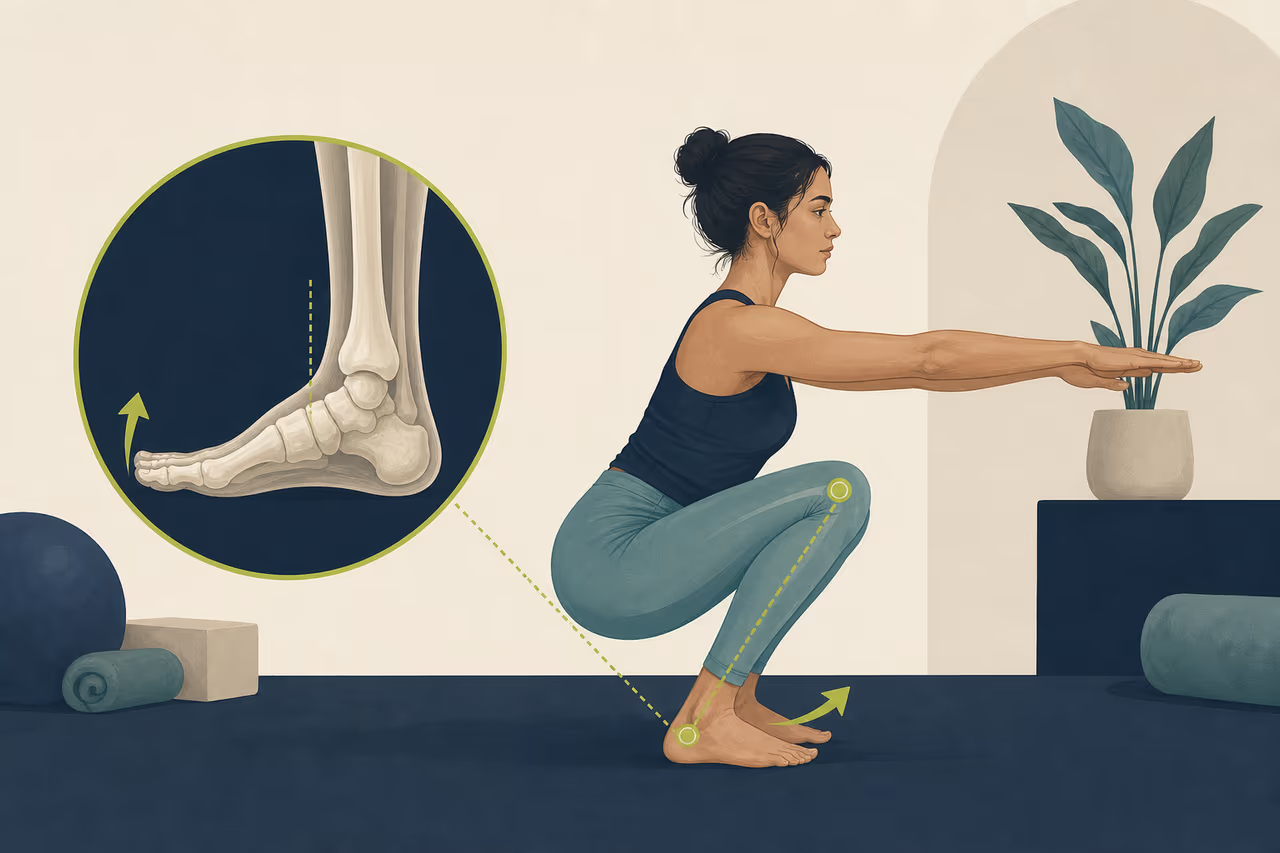
Ankle mobility is not just about pointing and flexing your toes. It is the active and passive range of motion available at the talocrural and subtalar joints. During movement classes, your ankles must allow your shin to travel forward over your foot, a movement known as dorsiflexion, while maintaining a stable platform.
When your ankles move freely, force transfers smoothly up the kinetic chain from the floor through your knees, hips, and spine. This efficient transfer distributes physical load evenly across your joints. When your ankles are stiff, however, your body has to find that missing range somewhere else. It might borrow movement from the arch of your foot, force extra rotation into your knee joint, or excessively arch your lower back to maintain balance.
Physical activity guidelines emphasize that any amount of movement counts and that muscle strengthening benefits everyone, but building strength safely requires a foundation of sound joint mechanics. If your joints cannot move through their expected ranges, strengthening exercises may reinforce movement compensations rather than resolving them.
| Movement Aspect | Good Ankle Mobility | Restricted Ankle Mobility |
|---|---|---|
| Squat Depth | Heels stay anchored; torso remains upright | Heels lift up; torso pitches forward |
| Knee Tracking | Knees track cleanly over second and third toes | Knees collapse inward or push excessively forward |
| Balance Poses | Stable micro-adjustments through the foot and ankle | Rigid bracing or frequent loss of balance |
Signs your ankles need attention during practice
Your body often signals ankle restrictions through subtle compensations during class. Recognizing these patterns helps you separate a mobility limitation from a simple lack of effort or focus.
- Lifting heels during squats: If your heels spontaneously leave the floor when you lower into a bodyweight squat or a deep chair pose, your ankles likely lack the dorsiflexion required to keep your foot flat.
- Shaky balance in single-leg poses: Standing balancing postures require the ankle complex to make constant, micro-adjustments. If your ankle joint is stiff, your entire leg may lock up, making it harder to find stability.
- Unexplained tension: Persistent tightness in the calves or Achilles tendon can be a byproduct of ankles that struggle to open up under load.
A common failure mode in movement practice is assuming that all ankle stiffness can be resolved by aggressive static stretching alone. In practice, ankle restrictions often involve a mix of tight soft tissue, joint capsule stiffness, and a lack of active neuromuscular control. Confusing passive flexibility with active joint stability can lead practitioners to force stretches that irritate the joint without improving functional movement.
Ankle Mobility Self-Assessment Checklist
Before changing your routine, take a few minutes to observe how your ankles behave under simple conditions. This checklist can help clarify what is happening.
- Test your knee-to-wall distance without lifting your heel from the floor.
- Observe if your heels lift naturally during a bodyweight squat.
- Notice whether balance feels shaky on one foot during standing yoga poses.
- Review whether discomfort during movement is dull muscle tightness or sharp joint pinching.
The limits of generic routines and when to seek guidance
Generic mobility drills found online are accessible and free, but they have distinct limits. A standard calf stretch or rolling your feet on a ball cannot diagnose individual joint restrictions, nor can it correct structural limitations or subtle movement habits unique to your body.
If generic ankle mobility drills do not improve your movement depth, comfort, or balance over time, pause high-load drills and seek a qualified movement teacher or trainer for direct observation. Working with a professional involves a financial and time investment compared to home practice, but it provides tailored progressions and real-time feedback.
Prime Tempr helps readers compare trainers and local movement businesses when a generic mobility routine needs observation, progression, or a format matched to the individual. Whether you need a studio environment with hands-on cues or a specialized teacher to assess your kinetic chain, exploring local options ensures your practice evolves safely alongside your body. For more ideas on structuring your practice, visit our guide to Mobility & Flexibility or find movement guidance tailored to your goals.
Sources
- Physical activity (opens in a new tab), World Health Organization (WHO)
- Top 10 Things to Know About the Physical Activity Guidelines (opens in a new tab), Office of Disease Prevention and Health Promotion (ODPHP)
Watch alongside this guide
The science of stretch
A Harvard Medical School researcher explains stretching concepts that add useful context to this mobility guide. Source: Conversations That Matter. This optional video is context, not evidence or personal instruction.
The YouTube player stays unloaded until you choose to watch. Loading it connects to YouTube and may allow that service to process usage data.