When General Nutrition Advice Is Not Enough: Limits and Next Steps
Discover the practical limits of standard healthy eating tips and learn how to choose a sensible next step for your routine.
https://primetempr.com/blog/when-general-nutrition-advice-is-not-enough-limits-and-next-
General nutrition advice provides a helpful shared baseline of adequacy, balance, moderation, and diversity, but it cannot replace personalized clinical care or account for individual health contexts. When you have tried standard healthy eating tips, you may notice that generic guidelines do not account for your actual life, energy fluctuations, cultural foods, or specific movement routines.
Understanding where broad educational frameworks end and personalized support begins helps you avoid rigid rules that fail to fit your day. Prime Tempr helps readers connect general food and wellbeing education with qualified teachers and practice formats while keeping nutrition education separate from individualized clinical care.
The Foundation of General Nutrition Guidance
Healthy diets vary by culture and available foods, where the shared foundation is adequacy, balance, moderation, and diversity rather than one rigid menu. Public health frameworks offer wide-angle principles designed to support populations rather than single individuals. These guidelines emphasize getting enough nutrients, balancing different food groups, and enjoying a variety of items without moralizing specific choices.
This educational baseline is useful for everyday orientation. It gives you a common vocabulary to discuss meals, shop for groceries, and consider how food supports energy. However, these broad concepts are intentionally generalized. They do not account for personal metabolic variations, specific athletic demands, or deep-seated cultural food traditions that differ from Western or institutional models.
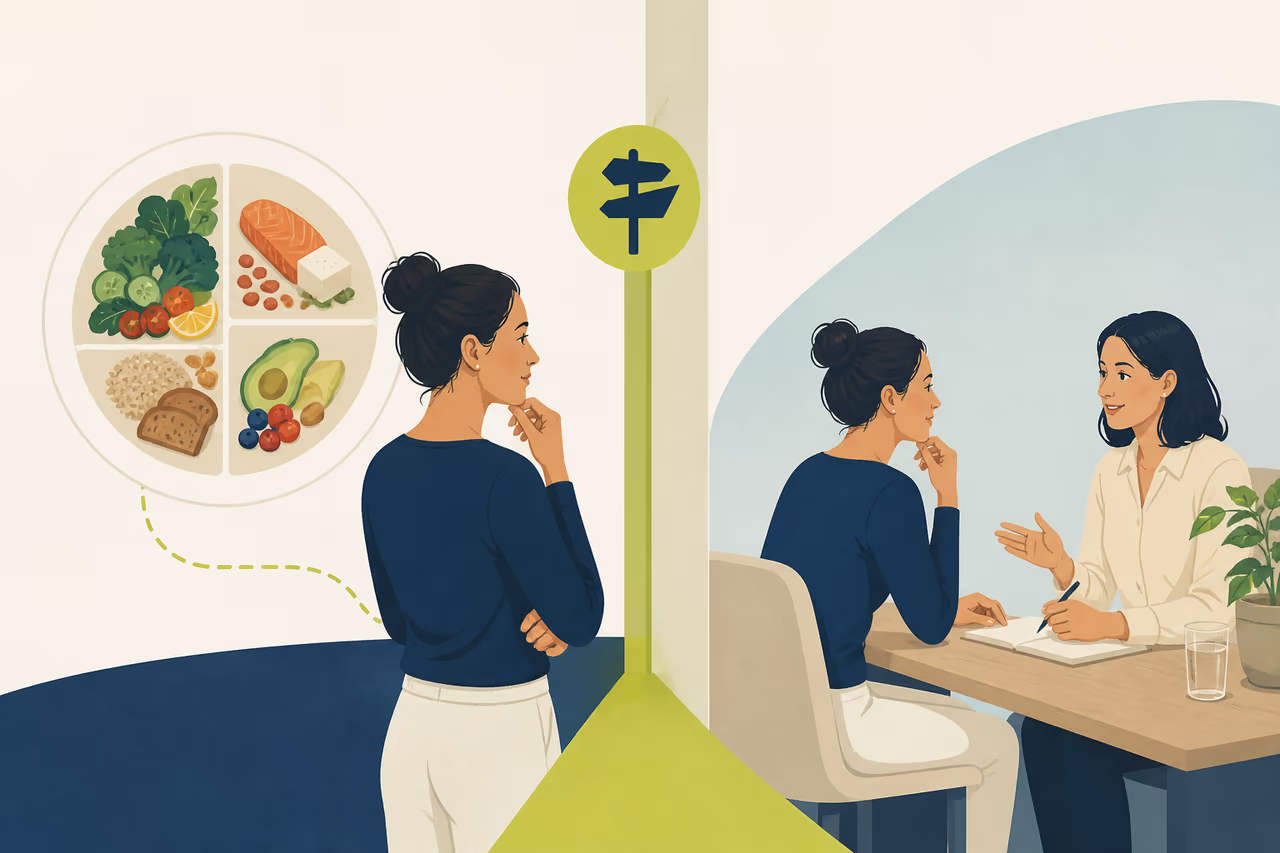
Where General Guidelines Hit Their Limits
Standard healthy eating tips often fall short because daily life is messy, variable, and deeply personal. A generic meal template might assume a predictable schedule, consistent access to specific ingredients, or a uniform energy output that does not match your reality. When an article or public health brochure suggests a rigid routine, it frequently ignores cultural foods, work shifts, financial constraints, or the physical demands of your movement practice.
A common failure mode is abandoning all practical habits because a generic meal template does not fit your schedule or culture. If an educational suggestion tells you to eat specific items at exact times, and your workday makes that impossible, it is easy to feel like you are failing at wellness. In truth, the advice is simply uncalibrated to your life. Real habits require flexibility, and general education must be adapted rather than followed as an absolute law.
Recognizing When You Need Professional Care
Useful self-care can support health and well-being, but it does not replace an appropriate health system or professional care. Treating general wellness articles as tailored medical nutrition therapy or a clinical diagnosis is a frequent trap. Educational content can never diagnose a deficiency, manage a chronic condition, or replace the targeted guidance of a clinician.
When general food advice leaves you feeling stuck or confused about your health needs, step back from rigid rules and consult an appropriate healthcare professional or qualified specialist. If you experience persistent fatigue, digestive distress, or specific symptoms related to food, generic tips are no longer enough. Professional clinical care offers personalized evaluation that public health frameworks cannot provide.
Choosing Your Next Step
When general advice stops working, the solution is not to look for a stricter set of rules. Instead, evaluate your current routines with honesty and curiosity.
Action Artifact: When to Look Beyond General Nutrition Guidelines
Review whether your current food habits genuinely support your daily energy and movement. Acknowledge where generic rules fail to respect your cultural foods or lifestyle schedule. Identify any persistent symptoms or specific goals that require professional clinical support.
This reflection helps you separate general wellness exploration from clinical necessity. If you want to pair your food awareness with supportive movement or mindful routines, Find guidance that fits your practice to explore trainer-led formats. You can also read more about Everyday Food Habits or learn How to Read Wellness Food Claims Critically to evaluate future guidance with confidence.
Sources
- Healthy diet (opens in a new tab) - World Health Organization
- Self-care for health and well-being (opens in a new tab) - World Health Organization
Watch alongside this guide
Building a balanced plate
This plate example offers a visual companion to the article's flexible, non-prescriptive food guidance. Source: Harvard T.H. Chan School of Public Health. This optional video is context, not evidence or personal instruction.
The YouTube player stays unloaded until you choose to watch. Loading it connects to YouTube and may allow that service to process usage data.