What to Expect From Beginner Dance Cardio
Discover what to expect in beginner dance cardio, how to manage intensity, and why consistency matters more than technical perfection.
https://primetempr.com/blog/what-to-expect-from-beginner-dance-cardio
Beginner dance cardio allows you to move your body to music without needing technical perfection. If you feel intimidated by high-energy stereotypes, remember that the primary goal is simply to keep moving. Any amount of physical activity is better than none, and all activity counts toward your health goals. You do not need prior dance experience, nor must you match the instructor’s speed or energy level during your first session.
The reality of beginner dance cardio
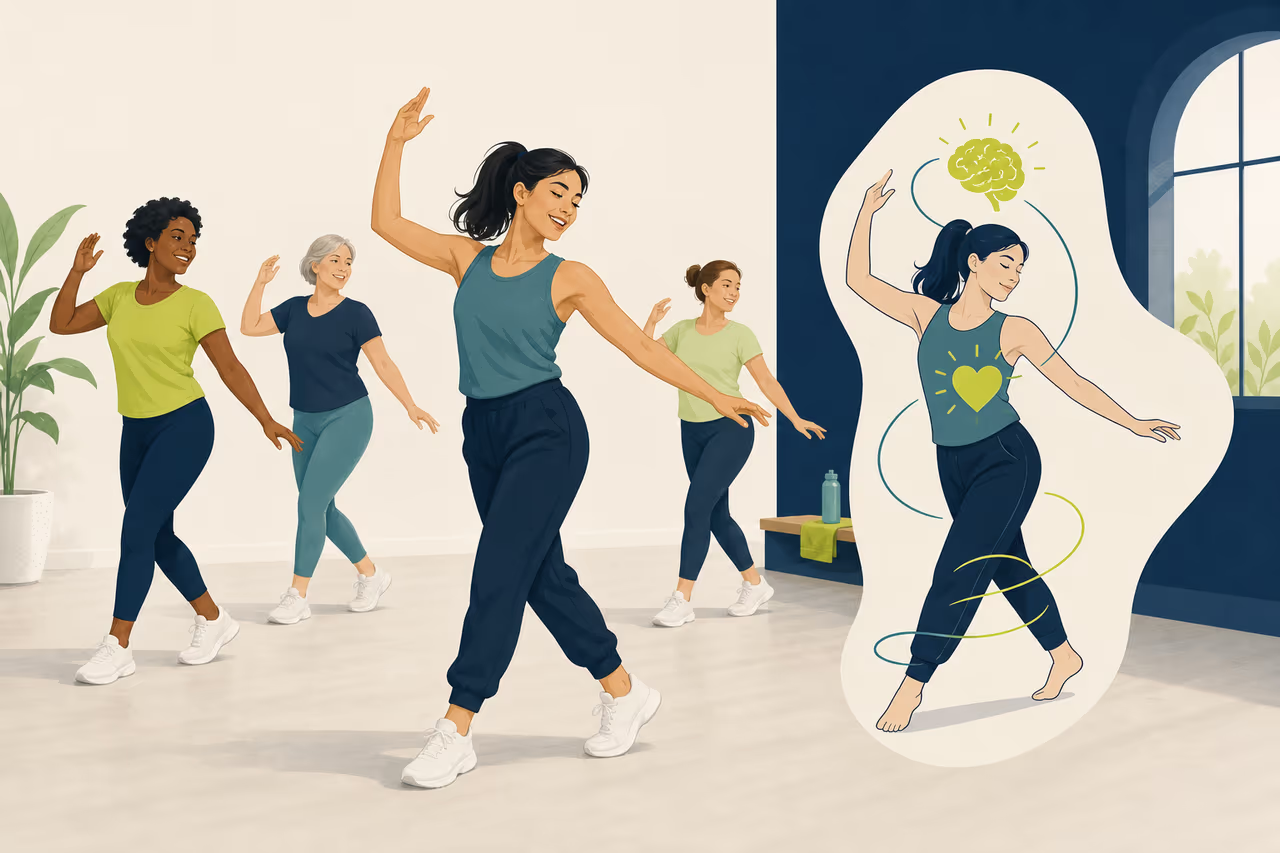
When you walk into a beginner dance cardio class, you will likely find a mix of people at different fitness levels. The environment is generally designed to be inclusive, though it can feel overwhelming if you focus too much on the choreography.
The most common failure mode for beginners is the urge to "perform" rather than "participate." You may feel pressure to mirror the instructor’s exact movements or maintain their intensity. However, the reality is that you are there to build aerobic capacity at your own pace. If the choreography feels too fast, simplify your movements. If the music feels too loud or the room too crowded, remember that you are in control of your own effort.
If you find yourself feeling self-conscious, focus on the "talk test." This is a simple, effective way to gauge your intensity: if you cannot speak comfortably while moving, you are working harder than necessary for a beginner session. Slow down your movements until you can hold a conversation. This ensures you are staying within a sustainable aerobic range.
Why movement variety matters
Dance cardio is most effective when viewed as a tool for movement variety rather than a high-intensity performance. While it is excellent for cardiovascular health, it is only one piece of a larger puzzle.
Adults can work toward 150 to 300 weekly minutes of moderate aerobic activity and muscle strengthening on at least two days. Dance cardio helps meet those aerobic targets, though it lacks the specific muscle-strengthening focus found in resistance training or certain yoga styles. Rotating dance cardio with other forms of movement helps prevent overuse injuries and keeps your routine engaging.
Think of your weekly movement as a balanced diet. If dance cardio provides the aerobic "cardio" component, yoga might provide the mobility and mindfulness, while strength training provides the structural support for your joints. Prime Tempr helps readers connect broad activity guidance with trainers and yoga businesses that can provide a balanced, repeatable programme and human accountability, ensuring that your dance cardio sessions complement your other activities rather than competing with them.
How to integrate dance cardio into your week
Integrating a new activity requires planning for recovery. A common mistake is attempting to jump into high-frequency sessions immediately. Instead, treat your first few weeks as a period of exploration.
- Start small: Begin with one or two sessions per week.
- Prioritize recovery: Do not schedule back-to-back high-intensity days. If you do dance cardio on Monday, consider a gentle yoga session or a recovery walk on Tuesday.
- Listen to your body: If you feel persistent soreness or fatigue, take an extra rest day. Consistency over the long term is far more valuable than a "perfect" streak of back-to-back workouts.
If group classes do not suit your personality or current fitness level, consider working with a private trainer. A trainer can teach foundational dance cardio movements individually, letting you ask questions and receive personalized alignment cues often missed in larger groups.
Your First Dance Cardio Session: A Low-Pressure Checklist
Use this checklist to keep your focus on the experience rather than the outcome:
- Wear supportive shoes: Ensure your footwear is designed for lateral movement to protect your ankles and knees.
- Choose your spot: Find a position in the room where you can see the instructor clearly but feel comfortable moving without bumping into others.
- Prioritize 'moving' over 'matching': If you miss a step, keep moving your feet or swaying to the rhythm. The goal is to keep your heart rate up, not to perform a routine.
- Use the talk test: Keep your effort at a level where you could hold a conversation.
- Plan a 5-minute cool-down: After the session, take a short, slow-paced walk to help your heart rate return to resting levels gradually.
Frequently Asked Questions
Do I need to be coordinated to start? No. Coordination is a skill that develops with practice. Most instructors expect beginners to be "off-beat" or to miss steps. The benefit comes from the sustained movement, not the accuracy of the dance.
What should I wear? Wear breathable, comfortable clothing that allows a full range of motion. Choose athletic shoes that provide lateral support for side-to-side movements, which standard running shoes may lack.
What if I feel overwhelmed in a group? Feeling self-conscious in a new environment is normal. If a group setting poses a barrier, try smaller studio classes or private sessions. A mentor or trainer can provide guidance and accountability to build your confidence before you join a larger class.
Continue with guidance
Use this article as orientation, then Build a balanced practice when you want responsive guidance or a practice format matched to you.
Sources
- Physical activity (opens in a new tab), World Health Organization.
- Top 10 Things to Know About the Physical Activity Guidelines (opens in a new tab), Office of Disease Prevention and Health Promotion.
Watch alongside this guide
Just walk
This short walking overview reinforces the guide's focus on accessible, repeatable movement rather than elaborate equipment. Source: American Heart Association. This optional video is context, not evidence or personal instruction.
The YouTube player stays unloaded until you choose to watch. Loading it connects to YouTube and may allow that service to process usage data.