What to Expect From a Recovery Yoga Class
Learn how recovery yoga supports nervous system regulation, recognize its practical limits, and match these sessions to your energy levels.
https://primetempr.com/blog/what-to-expect-from-a-recovery-yoga-class
A recovery yoga class supports the body and its natural rest processes through low-intensity movement and breathwork. Unlike standard flow or power classes that emphasize building heat, raising heart rates, or refining complex postures, a recovery session prioritizes stillness, steady breathing, and the release of physical tension.
While these sessions help manage stress and support wellbeing, they supplement rest and professional medical care rather than replacing them. Prime Tempr connects readers with restorative yoga, meditation, and trainer-led support while maintaining a clear boundary between educational content and medical care or personalized diagnosis.
What Actually Happens During a Recovery Yoga Session?
If you are accustomed to high-intensity workouts, a recovery yoga class may feel surprisingly slow. These sessions are intentionally paced to help shift the body from a "fight-or-flight" state toward a more regulated, parasympathetic nervous system response.
Common elements you might encounter include:
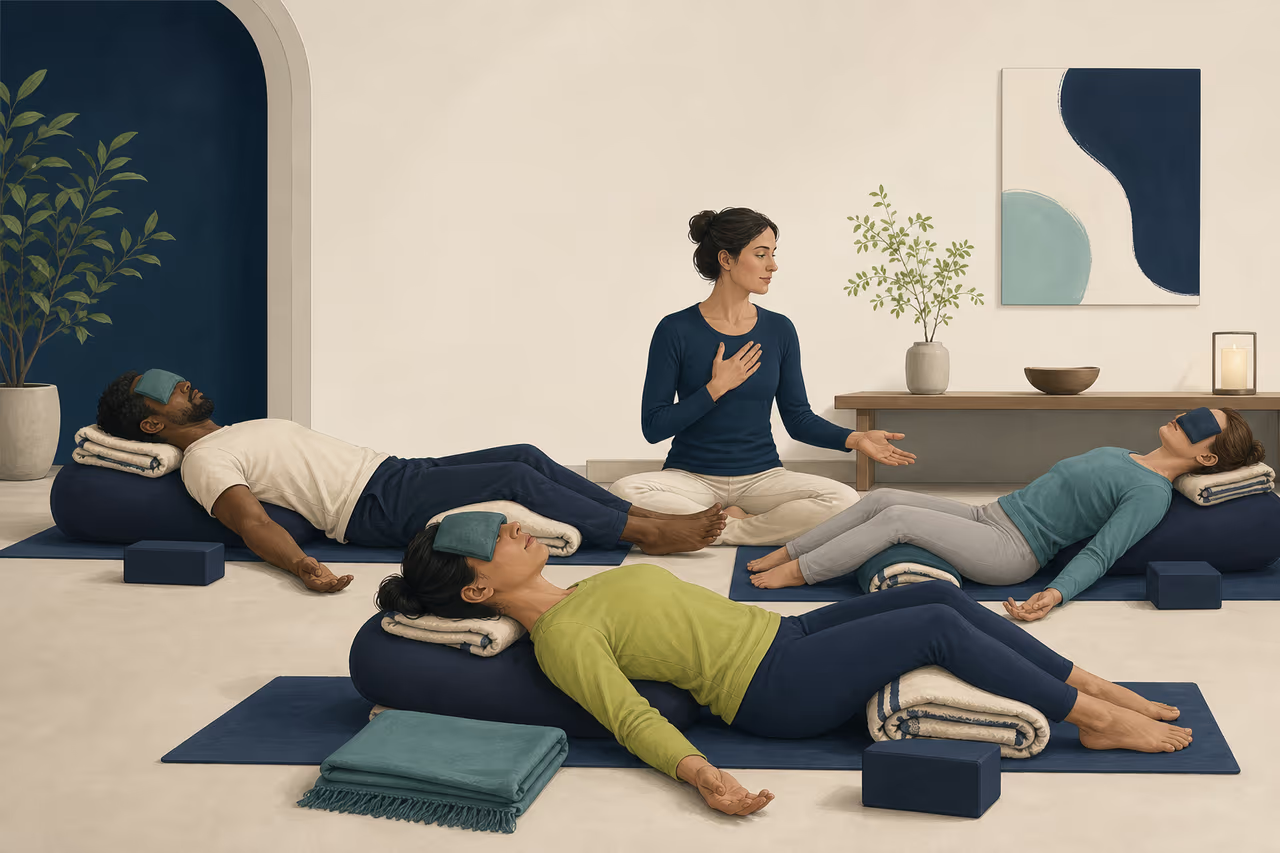
- Extended Holds: You may hold a pose for several minutes. This is often done with the support of props like blankets, bolsters, or blocks to ensure the body feels fully supported rather than strained.
- Breathwork (Pranayama): Instructors often guide you through specific breathing patterns,such as lengthening the exhale,to encourage a sense of calm.
- Minimal Transitions: Unlike a "flow" class where you move quickly between postures, recovery sessions typically involve slow, deliberate transitions.
- Guided Stillness: Many sessions conclude with a prolonged period of guided relaxation, allowing the body to integrate the movement without the pressure to perform.
How Does This Differ From a Standard Flow or Power Yoga Class?
The primary difference lies in the objective. A power yoga class often aims to build strength, stamina, and flexibility through repetitive, heat-generating movement. In contrast, a recovery-focused class aims to lower the "volume" of your physical and mental activity.
| Feature | Power/Flow Yoga | Recovery/Restorative Yoga |
|---|---|---|
| Primary Goal | Strength, endurance, heat | Relaxation, nervous system regulation |
| Pace | Moderate to fast | Slow to static |
| Physical Effort | High | Low to moderate |
| Use of Props | Optional/Minimal | Highly encouraged for support |
| Focus | Alignment and performance | Sensation and ease |
The Limits of Recovery Yoga
Approach these classes with realistic expectations. Recovery yoga is not a quick fix for overtraining, nor is it a medical intervention for an injury or chronic pain.
Relaxation approaches, including breathing and guided movement, can support wellbeing but should not replace conventional medical care. If you are experiencing persistent pain or have a specific injury, these classes should not be used as a substitute for a consultation with a healthcare professional. The benefits of these sessions are often subtle and cumulative. You may not feel a dramatic "reset" after a single hour. Instead, the practice is most effective when viewed as one small part of a broader approach to health that includes adequate sleep and proper nutrition. You can explore restorative guidance to see how different trainers approach these sessions, or learn more about the broader concept of active recovery to see how it fits into your routine.
Failure Modes: When Recovery Yoga Isn't the Answer
Even with the best intentions, you might misuse a recovery class. Common pitfalls include:
- The "No Pain, No Gain" Mindset: If you find yourself pushing into discomfort or forcing a stretch because you feel you "should" be working harder, you are likely working against the goal of the class. Recovery yoga is about finding ease, not testing your limits.
- Expecting a Workout: If you arrive at a class expecting to sweat or burn calories, you may feel frustrated by the slow pace. If you feel this way, it is often better to pivot to a different style of movement or prioritize passive rest, such as sleep or quiet time, rather than forcing yourself through a class that doesn't meet your current needs.
- Ignoring Physical Signals: If you are feeling physically depleted or are recovering from an illness, even "gentle" movement might be too much. Listen to your body; sometimes the most effective "recovery" is complete stillness.
Is Today a Recovery Yoga Day?
Before signing up for a class, use this checklist to determine if it suits your current state:
- Check your energy: Are you feeling "tired-but-wired" (mentally stressed but physically restless) or truly physically depleted? If you are just tired-but-wired, a gentle recovery class can be very effective. If you are physically depleted, prioritize rest.
- Assess your goal: Are you looking for gentle movement to ease tension, or are you looking for complete stillness? If you want stillness, look for "Restorative" or "Yin" specifically.
- Review the class description: Does it mention "restorative," "yin," or "slow flow"? Avoid classes labeled "power," "vinyasa," or "sculpt" if your goal is recovery.
- Set your boundary: Commit to staying within 50% of your usual physical effort. If a pose feels like a struggle, use more props or come out of the pose entirely.
The goal of a recovery session is to leave feeling more regulated than when you arrived. If a class feels too slow or misses the mark, pivot to a different style of restorative practice or prioritize passive rest.
Sources
- Relaxation Techniques: What You Need To Know (opens in a new tab), National Center for Complementary and Integrative Health.
- Heart-Healthy Living: Get Enough Good-Quality Sleep (opens in a new tab), National Heart, Lung, and Blood Institute.
Watch alongside this guide
Stress management
Use this concise Mayo Clinic explainer alongside the article's practical steps for stress, sleep, and recovery. Source: Mayo Clinic. This optional video is context, not evidence or personal instruction.
The YouTube player stays unloaded until you choose to watch. Loading it connects to YouTube and may allow that service to process usage data.