What to Do When Your Mind Wanders in Meditation: A Practical Guide
Master the reset process for a wandering mind during meditation and learn when to seek trainer-led guidance.
https://primetempr.com/blog/what-to-do-when-your-mind-wanders-in-meditation-a-practical-
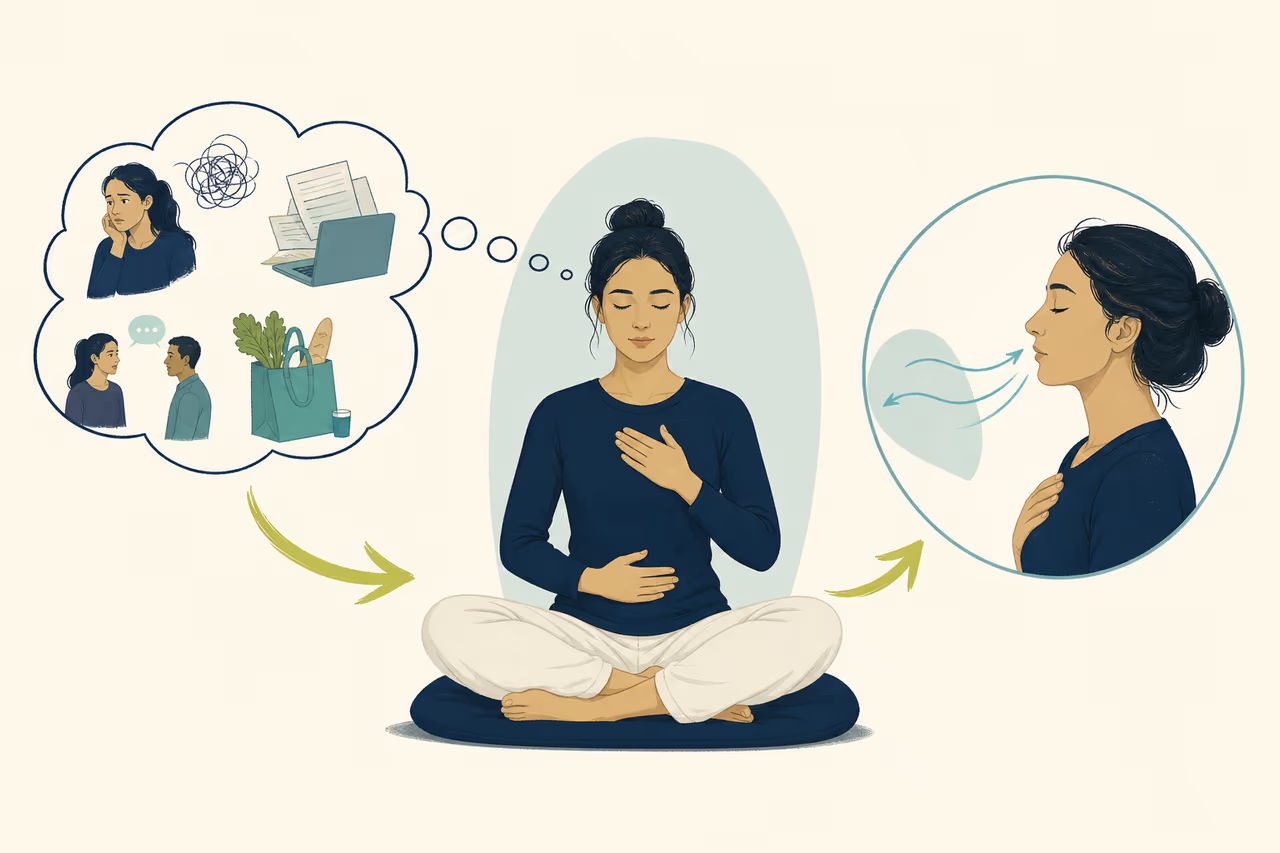
When you sit down to meditate, a peculiar frustration often arises. Within seconds, your attention slips away from your breath and drifts toward a work email, a forgotten errand, or an awkward conversation from three days ago. For many beginners, this mental drift triggers an instant wave of self-criticism: I am doing this wrong, my mind is too busy, or I am bad at meditation.
A wandering mind does not mean you are failing at meditation. In fact, noticing that your mind has wandered is not a sign of failure. It is the core mechanism of the practice.
Why Your Mind Wanders the Moment You Sit Down
The human brain naturally scans for information, solves problems, and anticipates future challenges. When you close your eyes and attempt to sit in stillness, you strip away external distractions, which often makes internal chatter feel even louder and more persistent.
Meditation practices vary widely, and expectations around quiet focus do not always match reality. Clinical and institutional research shows that meditation practices vary in style and outcome, and a minority of participants can even report unexpected negative experiences or heightened distress when sitting quietly in isolation. If silent self-guided sitting consistently frustrates you or brings up intense mental strain, it is entirely normal to find unstructured solitude difficult.
Treating meditation as a rigid performance metric or a streak to maintain on an app often turns a restful practice into a source of pressure. Instead of trying to forcibly suppress your thoughts, which usually makes them louder, you can view distraction as a neutral, recurring event.
The Core Step: Notice, Name, and Return
When you catch yourself drifting, you do not need to fight your thoughts or judge yourself for having them. Instead, use a simple, repeatable sequence to guide your attention back home.
Here is the exact physical and mental step to take when your mind wanders:
- Acknowledge the thought without self-criticism: The split-second you realize you are no longer focused on your anchor, pause. Do not sigh, tense your shoulders, or scold yourself.
- Name the distraction neutrally: Label the nature of the thought in a single, uncharged word,such as "planning," "remembering," "worrying," or "hearing." This creates a healthy psychological distance between you and the mental content.
- Gently return your focus to your anchor: Direct your attention back to your chosen physical anchor, such as the natural rise and fall of your breath, or the sensation of your feet resting on the floor.
- Accept the repetition: Expect to repeat this loop ten, twenty, or even fifty times in a single ten-minute session. Each time you notice the drift and return, you are completing the core repetition of the practice.
Relaxation approaches include breathing, guided imagery, and progressive relaxation, but they are tools for well-being and should not replace conventional medical or psychological care. If a practice brings up overwhelming feelings, stop immediately.
The Mind-Wandering Reset Checklist
To help anchor your practice without unnecessary pressure, keep this practical checklist in mind during your next session:
- Acknowledge the thought without self-criticism the moment you notice it.
- Name the distraction neutrally (e.g., 'planning', 'remembering').
- Gently return your focus to your chosen anchor, such as the breath.
- Accept that repeating this loop dozens of times in a session is completely normal.
- Stop if you feel overwhelmed or distressed, and consider reaching out to a qualified professional.
Honest Limits and When to Seek Guidance
Self-guided meditation is accessible, inexpensive, and easy to try at home, but it has distinct limitations. Because solo practice lacks real-time feedback or personalized adjustments, it is easy to get stuck in loops of frustration or physical discomfort.
If you find that quiet isolation consistently aggravates your stress rather than relieving it, you do not have to figure it out alone. Prime Tempr helps readers find trainers who can explain breathing and meditation in context, so an introductory article becomes a starting point rather than a substitute for responsive guidance. Exploring Breath Awareness Meditation for Beginners: What to Expect and How to Start can give you additional structural context before your next session. When you are ready for individualized support, you can Find guided breath and meditation support to connect with qualified professionals who can tailor the practice to your specific needs.
Sources
Watch alongside this guide
Breathing meditation
This short guided meditation lets you follow the basic attention and breathing ideas described in the article. Source: UCLA Health. This optional video is context, not evidence or personal instruction.
The YouTube player stays unloaded until you choose to watch. Loading it connects to YouTube and may allow that service to process usage data.