What to Do When Yoga Motivation Disappears
When yoga motivation vanishes, waiting for inspiration rarely works. Lower the barrier, adjust expectations, and find external structure instead.
https://primetempr.com/blog/what-to-do-when-yoga-motivation-disappears
When your self-directed yoga routine stops cold and motivation completely vanishes, waiting around to "feel like it" is the fastest way to stay stuck. Treating a dip in energy as a personal failure or demanding a rigid daily streak to make up for lost time usually deepens the resistance. Instead, you can lower the barrier to any movement or borrow external accountability to break the cycle.
Why Yoga Motivation Disappears
Motivation is naturally cyclical, yet many practitioners treat it as a permanent state. When a solo habit relies entirely on daily willpower, it eventually hits friction due to changing schedules, fatigue, or the quiet burnout of practicing in isolation.
Treating a drop in drive as a personal character flaw misses the point. It simply signals that your current structure, or lack thereof, no longer serves your routine. Understanding this normal fluctuation lets you stop fighting your mindset and focus on practical adjustments.
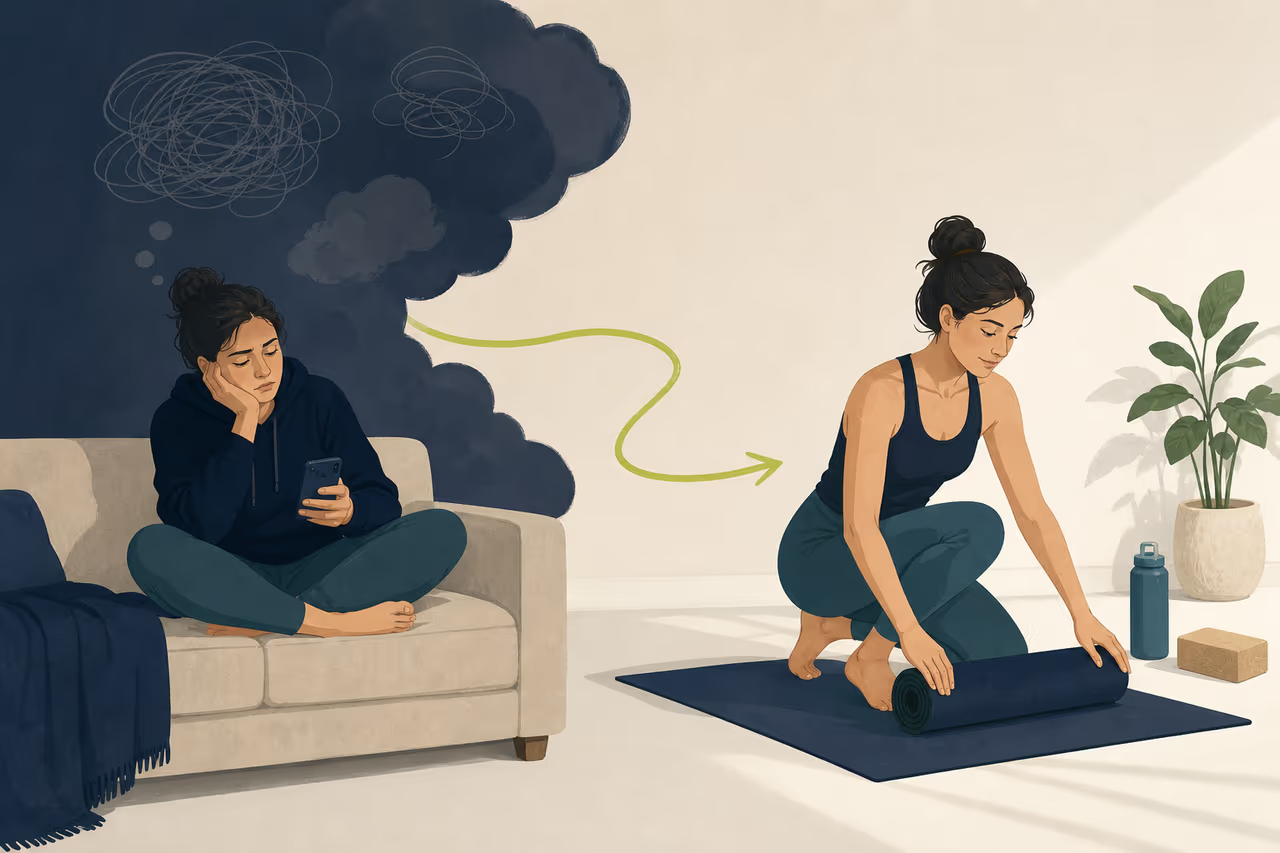
Shift From Streaks to Minimums
When motivation drops, the urge to execute a flawless practice often creates an insurmountable mental wall. You might feel that if you cannot commit to a full sixty-minute flow, it is not worth doing at all. This all-or-nothing mindset is a primary failure mode for home practitioners.
Physical activity guidelines remind us that any amount of movement counts. Any amount of physical activity is better than none, all activity counts, and muscle strengthening benefits everyone. Rather than abandoning the mat entirely, shrink your scope:
- Drop the duration: Give yourself permission to move for ten minutes instead of an hour.
- Lower the intensity: Swap a complex vinyasa sequence for a few restorative shapes or basic mobility drills.
- Focus on frequency over volume: Touching your mat for a brief moment maintains the neural pathway of the habit without demanding high energy.
Adults can work toward 150 to 300 weekly minutes of moderate aerobic activity and muscle strengthening on at least two days, but that volume does not need to arrive in intimidating, unbroken blocks when you are restarting a stalled routine.
When Self-Direction Is No Longer Enough
Self-guided home practice offers incredible flexibility, but it comes with a distinct trade-off: zero external friction. When no one else expects you on the mat, it is remarkably easy to let days turn into weeks.
If lowering your session length or resetting your mindset no longer reignites your solo habit, self-direction may simply have reached its limit for this season. Relying purely on willpower is unsustainable over years. At this stage, trying to force another solo restart often leads straight back to frustration. Recognizing this boundary is a strategic advantage, not a surrender.
Finding External Structure and Support
When solo discipline fails, the most efficient recovery path is to borrow structure from the outside world. External classes and trainers cost money and require scheduling, but they provide the vital accountability that self-direction lacks when motivation fades.
Stepping into a local studio, booking a session with a teacher, or following a guided programme removes the daily burden of deciding what to do, when to do it, and whether you feel like starting. Prime Tempr helps readers find a trainer, studio or trainer-shared programme that can add structure and accountability after a self-directed routine stops being enough.
The Low-Motivation Decision Guide
Use this simple framework the next time your yoga routine stalls out completely:
- Acknowledge the drop in motivation without self-judgment or guilt. Release the expectation of maintaining an unbroken streak.
- Recognize that any small amount of physical activity counts and is better than none. Even a ten-minute stretch counts toward your well-being.
- Choose your next move. Decide whether to drop to a minimal solo practice or browse yoga programmes and local options to reintroduce external structure.
- Take one small step. Find yoga near you or Find a yoga teacher to share the responsibility of your routine.
Frequently Asked Questions
Is it okay to take a complete break from yoga?
Yes. Stepping away from the mat for a short period will not erase your progress. The challenge is ensuring a temporary rest does not accidentally morph into months of inactivity due to guilt about falling behind.
How do I return to practice without starting a grueling streak?
Lower the barrier of entry entirely. Commit to a single movement session lasting five to ten minutes with zero expectations of flexibility, aesthetic perfection, or future streaks.
When should I transition from solo practice to a studio or trainer?
If you have tried resetting your routine multiple times and consistently stall out within a few days, you likely need external accountability. Connecting with a teacher or community provides the structure that solo willpower cannot sustain indefinitely.
Sources
- Physical activity (opens in a new tab), World Health Organization
- Top 10 Things to Know About the Physical Activity Guidelines (opens in a new tab), Office of Disease Prevention and Health Promotion
Watch alongside this guide
A 22-minute home yoga practice
Use the session as a realistic practice option while testing the article's advice on consistency and manageable scope. Source: Yoga With Adriene. This optional video is context, not evidence or personal instruction.
The YouTube player stays unloaded until you choose to watch. Loading it connects to YouTube and may allow that service to process usage data.