What to Check Before Committing to a Monthly Yoga Membership
Evaluate teacher qualifications, logistical fit, and studio policies to ensure your yoga membership supports your actual life.
https://primetempr.com/blog/what-to-check-before-committing-to-a-monthly-yoga-membership
A monthly yoga membership is a significant commitment to a routine, not just a service. Before you sign a contract, evaluate the studio's communication, teacher qualifications, and logistical fit to ensure the practice supports your daily life rather than adding to your stress. Prime Tempr brings trainer profiles, local listings and offerings into one discovery path so readers can compare practical fit before contacting or booking.
Assess the teacher's scope
The most important factor in your practice is the person leading it. Yoga teachers should work within their education, training, and competence and refer needs outside that scope. When you are looking at a studio, do not assume every teacher is equipped to handle specific health histories or injury recovery.
Ask yourself: Does this teacher understand my specific needs? If you are managing an injury or a specific health condition, look for teachers who clearly communicate their training background. A qualified teacher will provide suitable modifications rather than pushing every student toward the same pose. Because yoga styles and demands vary, teacher qualifications and honest class descriptions matter significantly for your long-term consistency and safety.
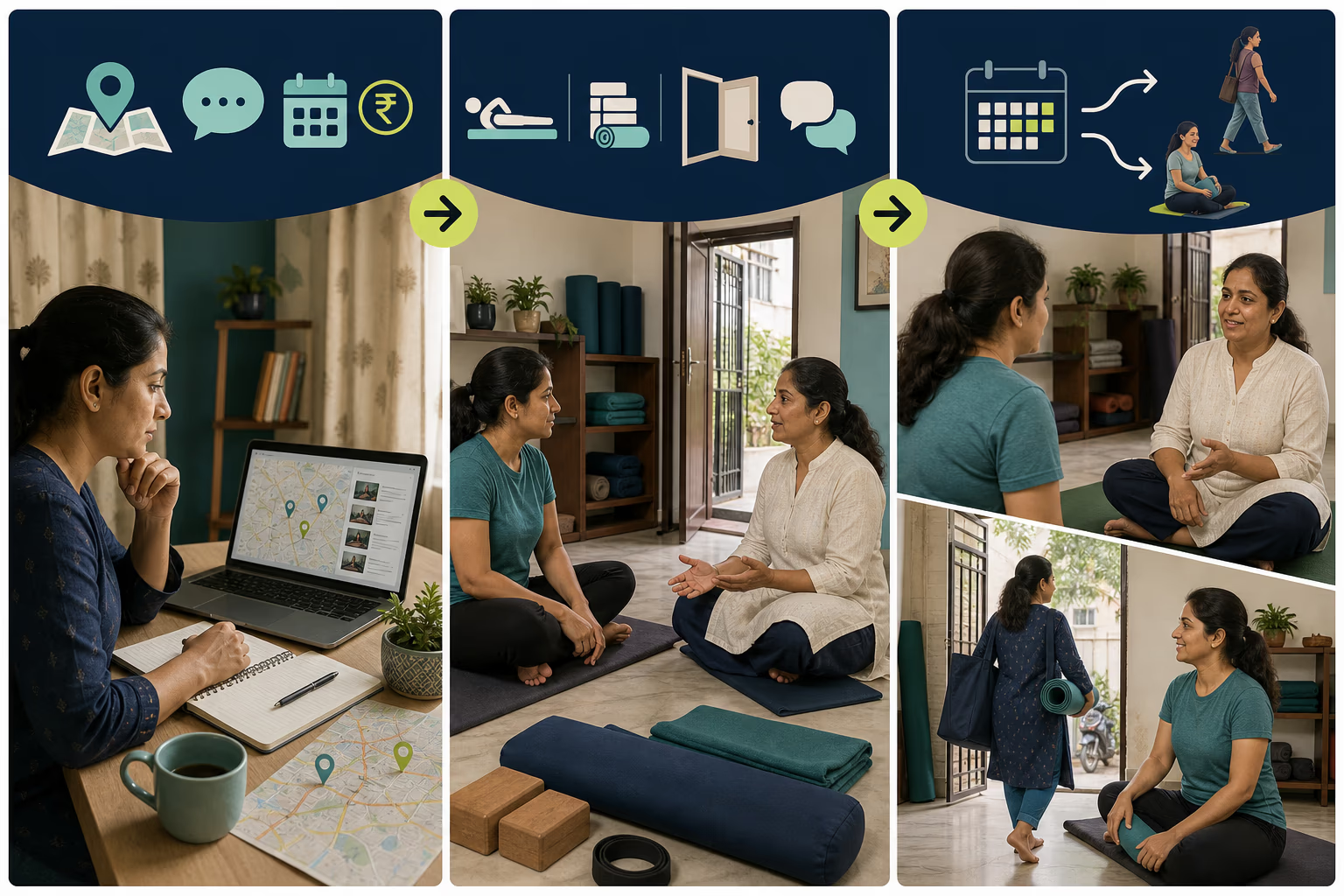
Evaluate logistical fit
A beautiful studio with a world-class teacher is only useful if you can actually get there. Many people fall into the trap of choosing a studio based on reputation alone, ignoring the reality of their commute, work hours, or family obligations.
Consider these logistical constraints:
- Transit accessibility: Is the studio on your way to or from work, or does it require a detour that makes attendance difficult during bad weather or peak traffic?
- Schedule feasibility: Look at the class schedule for a typical week. Are there enough classes at times you can realistically attend, or are you relying on a single, high-pressure time slot?
- Space and environment: Does the studio environment accommodate your lifestyle? For example, if you are balancing a busy household, ensure the studio’s atmosphere is one that helps you decompress rather than one that feels like another high-pressure appointment.
Complete, accurate, and verified local business information helps people assess a nearby service before visiting. Use tools like Compare local teachers and studios to see if the logistical details align with your actual routine.
Look for transparency
A studio’s communication is often a reflection of its culture. Transparent studios provide clear, honest descriptions of class intensity levels, pricing, and administrative policies. If a studio’s website or communication feels vague about what happens if you need to pause your membership, take that as a signal to ask more questions.
When you contact a studio, look for answers to these questions:
- What is the specific policy for pausing or cancelling a membership?
- Are class descriptions accurate regarding intensity and required experience levels?
- How does the studio handle feedback or concerns from students?
If you find a studio that is open about its limitations and clear about its offerings, you are much more likely to have a productive, long-term relationship with that space.
Take a trial class
Never commit to a monthly membership without experiencing the studio in person. A trial class is your opportunity to see if the environment matches your expectations. During your visit, pay attention to how the teacher interacts with the room. Are they offering modifications? Do they check in with students?
Use 3 Questions to Ask During Your Next Yoga Trial Class to help guide your observation. Remember that a single class is just a snapshot, but it should give you enough information to decide if the studio’s teaching style and logistical demands fit your life.
The pre-membership audit
Use this checklist to evaluate your options before finalizing any financial commitment.
- Verify the teacher's scope of practice: Does their training match your health goals?
- Confirm logistical fit: Does the location and transit time fit your daily routine?
- Check the schedule: Are there enough classes at times you can actually attend?
- Assess class descriptions: Are they honest and clear about intensity levels?
- Review the contract: Ask about the cancellation or 'pause' policy before signing.
Managing the trade-offs
Monthly memberships often offer cost savings compared to drop-in rates, but they demand a level of consistency that may conflict with unpredictable work or family schedules. If you find yourself unable to attend, the "savings" disappear quickly.
If a membership doesn't work out, prioritize a review of your cancellation policy, then pivot to a more flexible drop-in or smaller-scale program. High-quality, personalized instruction may be more expensive than large-scale, generic fitness centers, but the value lies in the teacher's ability to support your specific needs. By taking the time to audit these factors, you ensure that your yoga practice remains a source of support rather than a source of logistical frustration.
Sources
Watch alongside this guide
Accessible yoga for every body
This Vancouver Coastal Health class makes choice, support and accessibility visible, giving readers concrete features to look for when comparing local or online teaching.
The YouTube player stays unloaded until you choose to watch. Loading it connects to YouTube and may allow that service to process usage data.