What to Ask an Ayurvedic Practitioner: Tradition, Evidence, and Boundaries
Prepare thoughtful questions for an Ayurvedic practitioner to safely explore traditional lifestyle context alongside your primary healthcare.
https://primetempr.com/blog/what-to-ask-an-ayurvedic-practitioner-tradition-evidence-and
Preparing thoughtful questions for an Ayurvedic practitioner helps you explore traditional lifestyle context respectfully while maintaining clear safety boundaries with your primary healthcare. Ayurveda is a traditional Indian medical system; evidence for many health uses is limited, some preparations may contain harmful metals, and care should be coordinated with a health professional.
When you approach an introductory consultation, knowing what to ask ensures you gain cultural insight without compromising your medical safety. Self-care information should support informed choices and should not be used to delay appropriate professional care. This guide covers traditional scope, practical questions, safety limits, and care coordination so you can navigate your choices with confidence.
Understanding the Scope of Ayurvedic Consultations
Before booking a session, it helps to understand what a traditional consultation can and cannot provide. Ayurveda is a traditional Indian medical system; evidence for many health uses is limited, some preparations may contain harmful metals, and care should be coordinated with a health professional.
Many practitioners focus on lifestyle routines, dietary habits, daily rhythms, and traditional stress reduction techniques. However, a traditional consultation should never replace an evaluation from a licensed physician for acute symptoms or diagnosed medical conditions. Keeping this distinction clear protects your health and helps you use traditional education strictly for cultural and lifestyle exploration.
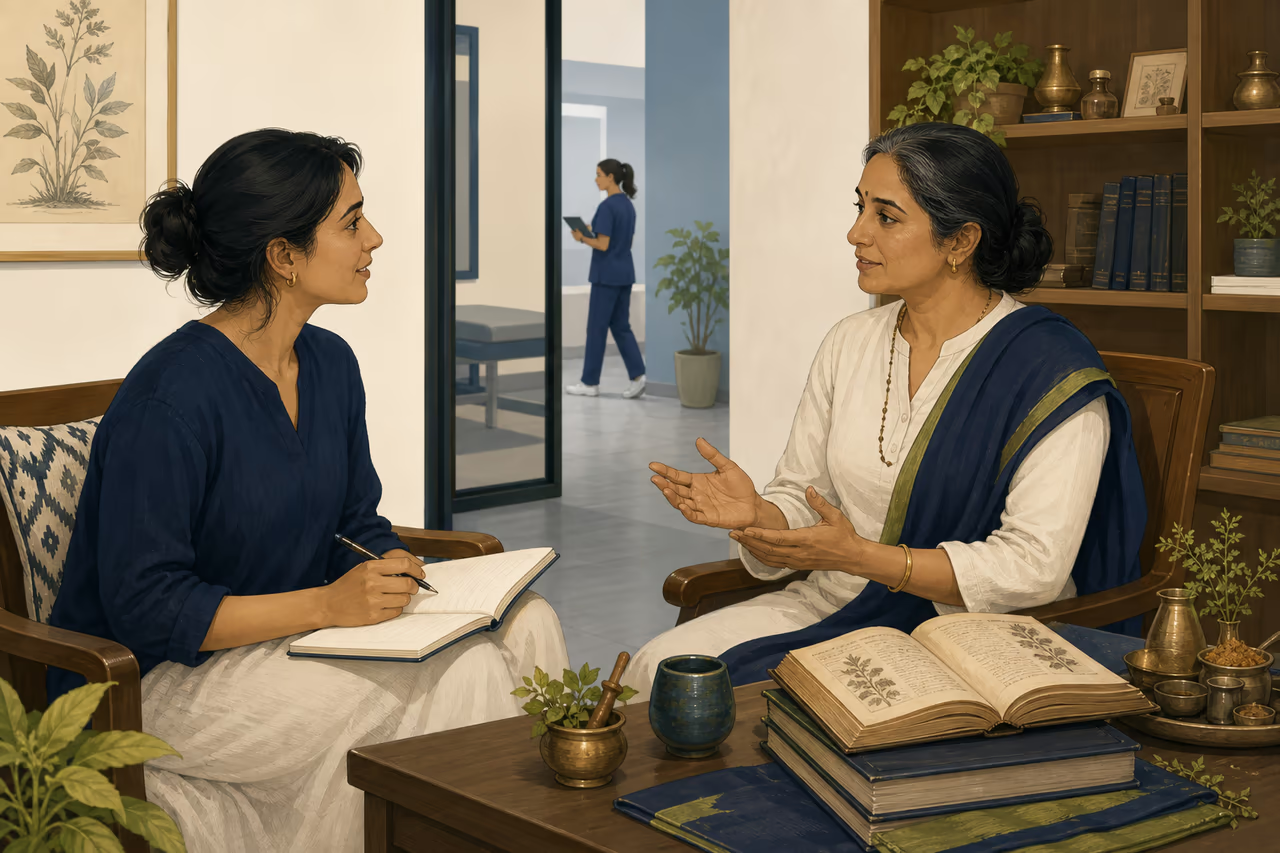
Essential Questions to Ask About Traditional Context and Routines
When you meet with an Ayurvedic practitioner, ask direct questions about the origin of their recommendations and the distinction between cultural lifestyle practices and medical treatments.
Four specific questions can guide your conversation during the initial meeting:
- What is the traditional background and lineage of the daily routines you are suggesting?
- Are these recommendations intended purely for lifestyle support, or do they claim to address specific health conditions?
- How do these daily practices align with my current conventional medical care?
- What are the origins and preparation methods of any traditional herbs or substances you recommend?
Asking these questions establishes transparency. It lets you separate cultural heritage from unverified clinical claims. For deeper background on these practices, explore Ayurveda Foundations or read What Ayurveda Is and Where It Comes From: Origins and Safety Boundaries.
Navigating Safety, Product Claims, and Heavy Metals
A frequent mistake is assuming that natural substances are automatically safe. Ayurveda is a traditional Indian medical system; evidence for many health uses is limited, some preparations may contain harmful metals, and care should be coordinated with a health professional.
Herbal formulations, mineral mixtures, and traditional metal-containing preparations require rigorous quality scrutiny. Some traditional remedies contain lead, mercury, or arsenic. Always ask for independent third-party testing or certification if a practitioner recommends specific herbal products. If a provider discourages you from seeing a medical doctor or suggests stopping prescribed medications, treat that as an immediate warning sign.
Ayurvedic Consultation Preparation Checklist
Use this practical checklist before attending your first consultation to keep your safety boundaries intact and ensure clear communication with all of your providers.
- Write down your primary reasons for seeking an introductory traditional consultation.
- List all current medications, supplements, and conventional treatments to share with both providers.
- Prepare questions regarding the cultural background and traditional scope of any recommended routines.
- Confirm that any lifestyle suggestions will be coordinated with your primary healthcare professional.
Prime Tempr helps readers discover teachers who explain traditional context while the learning library keeps cultural education separate from diagnosis, treatment, and product claims.
Coordinating Care with Your Health Professional
Self-care information should support informed choices and should not be used to delay appropriate professional care. Whenever you introduce new dietary habits, physical routines, or herbal supplements, discuss them with your primary physician first.
Open communication between your medical doctor and your traditional practitioner prevents dangerous interactions, missed diagnoses, or delayed treatments. Ayurveda offers rich historical perspectives on daily living, but your safety relies on keeping conventional medicine at the center of your healthcare team.
Sources
- Ayurvedic Medicine: In Depth (opens in a new tab) - National Center for Complementary and Integrative Health (NCCIH)
- Self-care for health and well-being (opens in a new tab) - World Health Organization (WHO)
Watch alongside this guide
Herbs at a glance: how to check safety
This official safety resource supports the article's boundary between traditional context and medical or product claims. Source: National Center for Complementary and Integrative Health. This optional video is context, not evidence or personal instruction.
The YouTube player stays unloaded until you choose to watch. Loading it connects to YouTube and may allow that service to process usage data.