What Is Walking Yoga? A Guide to Mindful Movement
Discover how walking yoga blends steady movement, breath awareness, and attention, and learn whether the format fits your routine.
https://primetempr.com/blog/what-is-walking-yoga-a-guide-to-mindful-movement
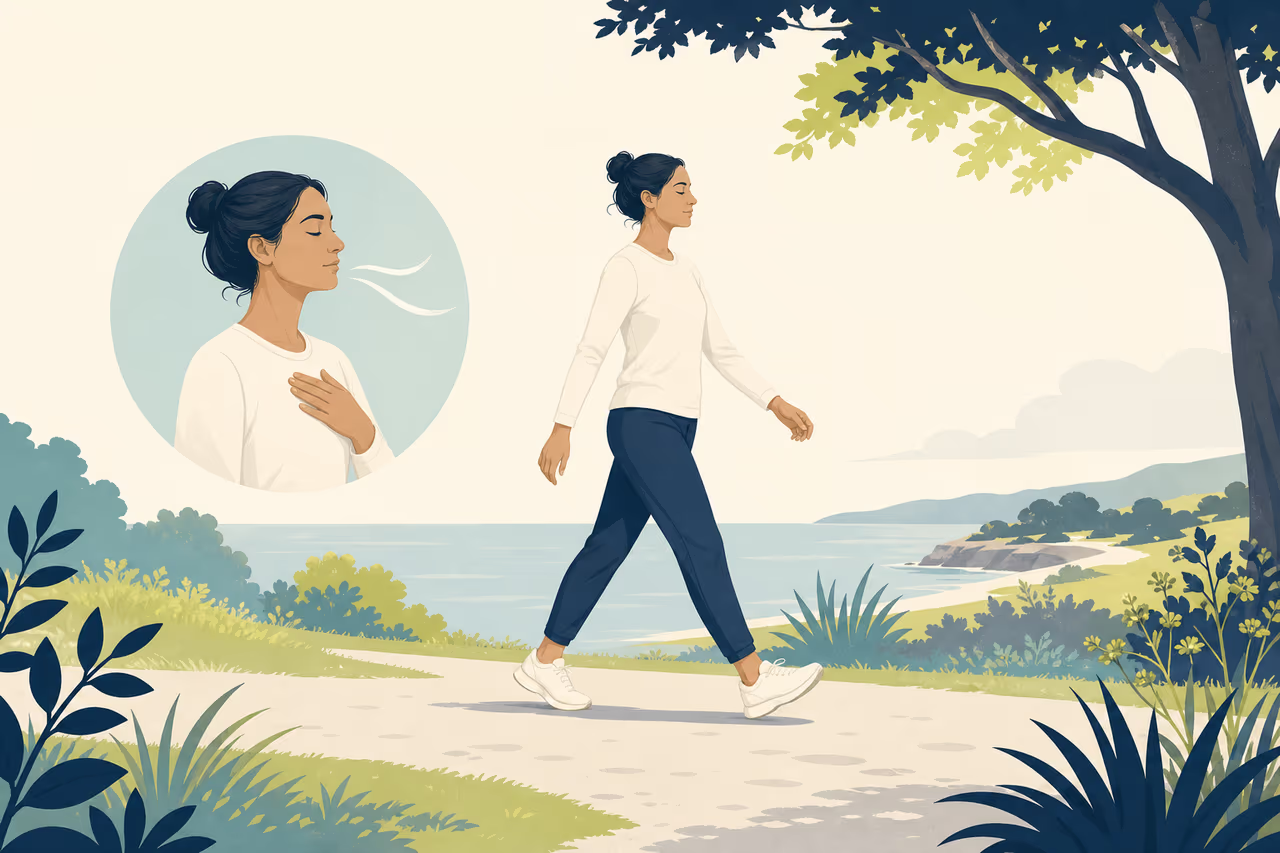
Walking yoga is a mindful movement practice that synchronizes rhythmic walking with breath awareness and intentional posture. Unlike a standard walk, where the primary goal is often to reach a destination or complete a set distance, walking yoga makes the act of walking the focus of a meditative exercise. It connects active recovery with formal, mat-based yoga, allowing you to cultivate presence while in motion.
Defining walking yoga
walking yoga is about shifting your internal focus. While you move through space, you maintain awareness of your body’s alignment and the rhythm of your respiration. You do not need a studio, a mat, or specialized equipment to begin. The practice can be performed anywhere,in a park, on a quiet street, or even in a hallway,making it one of the most accessible forms of movement.
The "yoga" component is not found in complex poses, but in the intentionality of the movement. It involves paying attention to the way your heel strikes the ground, how your weight shifts from one foot to the other, and the subtle engagement of your core muscles to maintain an upright posture.
The role of breath and intention
The primary differentiator between a casual walk and walking yoga is the integration of breathwork. In a standard walk, breathing is often automatic and shallow. In walking yoga, you consciously link your breath to your steps.
A common technique involves rhythmic breathing:
- Inhale: Take a set number of steps (e.g., four steps) while breathing in.
- Exhale: Take an equal number of steps (e.g., four steps) while breathing out.
By focusing on this count, you anchor your mind to the present moment. If your thoughts wander to your to-do list or external stressors, you use the rhythm of your breath and the physical sensation of your feet against the ground to return your focus. This creates a mental "reset" that is difficult to achieve when walking while distracted by phones or music.
Integrating walking yoga into your routine
Walking yoga can bring more attention to an ordinary walk. According to global health guidelines, any amount of physical activity is better than none, and all activity counts toward your overall wellbeing. Adults can work toward 150 to 300 weekly minutes of moderate aerobic activity, and walking yoga can contribute to these totals.
Because it is low-impact, it is an effective way to incorporate movement on days when you might feel too fatigued for a high-intensity workout but still want to keep your body active. It can also function as a warm-up or cool-down for more vigorous exercise. However, remember that muscle strengthening is also a vital part of a balanced routine; aim to include resistance-based activity on at least two days per week to complement your walking practice.
Practical trade-offs and limitations
Start with modest expectations for the practice. Walking yoga is not a substitute for high-intensity cardiovascular training. If your primary goal is to significantly increase your heart rate or build explosive power, this practice will likely feel too slow or disconnected from your needs.
The practice also asks for a shift in attention. Many of us are conditioned to view walking as a functional necessity,a way to get from point A to point B. Transitioning to a mindset of "being present" while moving can feel uncomfortable or even boring at first. If you find that walking yoga leaves you feeling restless, it may be a sign that you would benefit more from a structured indoor walking workout or a traditional, mat-based yoga session that offers more variety in movement.
Your first 10-minute mindful walk
If you are curious to try this, start with a short, manageable session. You do not need to commit to a long duration to experience the benefits of mindful movement.
- Set a timer for 10 minutes.
- Begin walking at a pace where you can comfortably hold a conversation.
- Coordinate your breath: inhale for four steps, exhale for four steps.
- Notice the sensation of your feet connecting with the ground.
- If your mind wanders, gently return your focus to the rhythm of your breath and steps.
Next steps for a balanced practice
While self-guided walking yoga is a great starting point, you may eventually find that you want more structure or personalized guidance to ensure your form is sustainable and your routine is balanced.
Prime Tempr helps readers connect broad activity guidance with trainers and yoga businesses that can provide a balanced, repeatable programme and human accountability. If you find that you enjoy the mindful aspect of walking but want to explore how it fits into a larger fitness plan, consider connecting with a professional.
- Find a yoga teacher who can help you integrate mindfulness into your daily movement.
- Explore Walking & Low-Impact Cardio resources to see how different forms of movement can complement one another.
Frequently asked questions
Do I need special shoes? No, you can practice in any comfortable footwear that provides adequate support for your feet.
Can I listen to music while doing walking yoga? While you can, many practitioners find that silence or the ambient sounds of the environment help maintain focus better than music, which can pull the mind away from the breath.
Who should take extra care? Walking is generally accessible, but if you have specific mobility concerns or chronic pain, consider speaking with a healthcare provider or qualified movement professional before starting a new routine.
Sources
- Physical activity (opens in a new tab), World Health Organization.
- Top 10 Things to Know About the Physical Activity Guidelines (opens in a new tab), Office of Disease Prevention and Health Promotion.
Watch alongside this guide
Just walk
This short walking overview reinforces the guide's focus on accessible, repeatable movement rather than elaborate equipment. Source: American Heart Association. This optional video is context, not evidence or personal instruction.
The YouTube player stays unloaded until you choose to watch. Loading it connects to YouTube and may allow that service to process usage data.