What Is Loving Kindness Meditation? A Clear, Practical Guide
Discover loving kindness meditation mechanics, mixed research findings, emotional trade-offs, and practical safety steps for your daily practice.
https://primetempr.com/blog/what-is-loving-kindness-meditation-a-clear-practical-guide
Loving kindness meditation is a structured mental exercise focused on cultivating goodwill, warmth, and care toward oneself and others. Rather than demanding an empty mind or an immediate emotional fix, the practice uses deliberate phrases or mental imagery to foster positive intentions. Like other mindfulness and relaxation approaches, it requires an honest understanding of its practical limits, because research shows that mental exercises affect individuals in varied ways.
This guide breaks down how the practice is typically structured, what institutional evidence reveals about its outcomes, and why matching self-guided exploration with qualified support matters.
What Is Loving Kindness Meditation?
Loving kindness meditation, often referred to in historical traditions as metta meditation, is a contemplative practice designed to systematically develop benevolent attitudes. Unlike concentration practices that anchor attention on the breath, this approach actively generates feelings of goodwill through silent phrases directed sequentially toward different people.
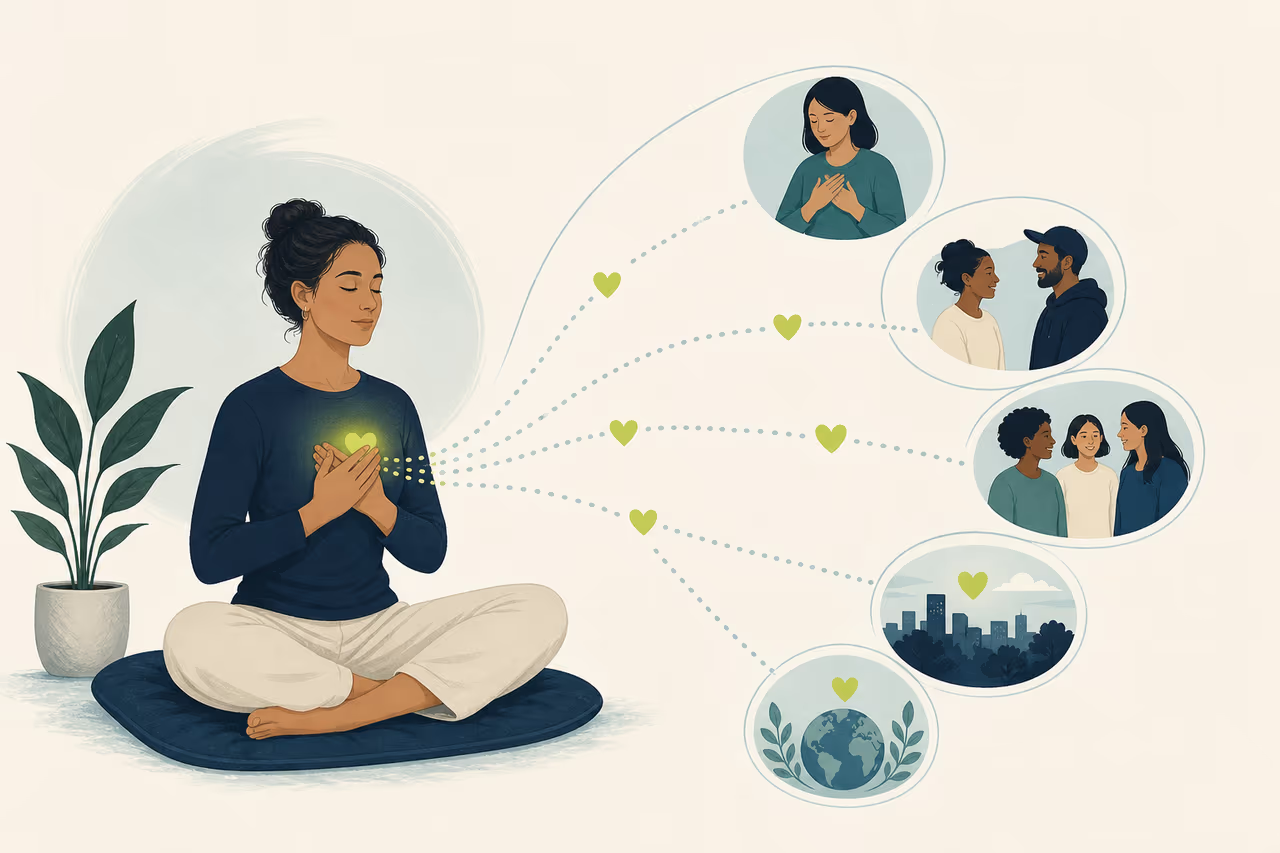
The practice usually starts with directing warmth toward oneself, then moves outward to loved ones, neutral acquaintances, difficult individuals, and eventually all living beings. It functions as gradual mental training rather than a test of instant emotional transformation.
How the Practice Works in Practice
While formats vary across different traditions and modern adaptations, a standard self-guided or instructor-led session typically follows a progressive sequence:
- Cultivating Self-Compassion: The practitioner begins by offering simple phrases of care and safety to themselves, such as "May I be safe," "May I be happy," or "May I be at ease."
- Expanding to Benefactors: Attention shifts to someone who has offered unconditional support, extending similar wishes of well-being to them.
- Engaging Neutral Figures: The focus widens to acquaintances or neutral strangers whom the practitioner encounters in daily life without strong positive or negative feelings.
- Navigating Difficult Relationships: The hardest tier involves bringing to mind someone with whom there is friction, offering them goodwill not to condone past actions, but to loosen internal resentment.
- Universal Extension: The practice concludes by expanding the intention of kindness outward to encompass all living beings everywhere.
For more foundational tips on exploring mental wellness practices, read our guide on How to Start Meditating for Beginners: A Practical Guide.
What the Research and Evidence Show
Institutional research on contemplative exercises highlights that meditation practices vary widely, and evidence is mixed by outcome. While some individuals report feeling more grounded or connected, institutional reviews emphasize that responses are highly individual. Meditation practices are not universally beneficial for every person, and a minority of participants report negative experiences or unexpected emotional discomfort during or after practice. Relaxation approaches, including breathing exercises, guided imagery, and progressive muscle relaxation, should not replace conventional medical or psychological care. Structured mental techniques are tools for well-being and stress reduction, not clinical cures for medical conditions.
Limitations, Trade-Offs, and Safety
Understanding the limitations of loving kindness meditation helps prevent common failure modes, such as forcing artificial positivity during difficult emotional states or expecting an immediate emotional cure.
Common Failure Modes and Trade-Offs
- Forcing Positive Emotions: Trying to override genuine grief, anger, or anxiety with forced cheerfulness can create internal resistance rather than peace. If a phrase feels false or distressing, it is counterproductive to force it.
- Emotional Triggers: Directing goodwill toward difficult individuals can inadvertently stir up unresolved trauma or distress.
- Self-Guided Limitations: Self-guided audio recordings and generic instructions cannot adapt to personal emotional triggers in real time the way an experienced human teacher can.
Recovery Path
If the practice feels uncomfortable, forced, or brings up difficult emotions, pause the meditation immediately, return to simple breath awareness, or stop for the day. For deeper exploration, structured techniques are best paired with professional insight; you can learn more about related practices through Breathwork & Meditation.
Loving Kindness Reflection Checklist
Before starting a self-guided session, use this practical checklist to maintain safety and realistic expectations:
- Choose a quiet, comfortable space where you will not be interrupted for 5 to 10 minutes.
- Begin by directing simple phrases of goodwill inward toward yourself before extending them outward.
- Notice any physical tension or emotional resistance without judging or forcing yourself to feel a specific way.
- Pause or stop immediately if the practice brings up distress, and return to natural breathing.
- Consider connecting with a qualified instructor if you want personalized guidance for your meditation practice.
Finding Responsive Guidance
Introductory articles are useful starting points, but they cannot replace responsive, human guidance. Prime Tempr helps readers find trainers who can explain breathing and meditation in context, ensuring your practice is adapted to your unique physical and emotional needs. To explore qualified professionals who can guide your practice safely, visit our directory to Find guided breath and meditation support.
Sources
- Meditation and Mindfulness: Effectiveness and Safety (opens in a new tab) - National Center for Complementary and Integrative Health (NCCIH)
- Relaxation Techniques: What You Need To Know (opens in a new tab) - National Center for Complementary and Integrative Health (NCCIH)
Watch alongside this guide
Breathing meditation
This short guided meditation lets you follow the basic attention and breathing ideas described in the article. Source: UCLA Health. This optional video is context, not evidence or personal instruction.
The YouTube player stays unloaded until you choose to watch. Loading it connects to YouTube and may allow that service to process usage data.