What Is Chair Yoga? A Practical Guide to Accessible Practice
Chair yoga uses a seat for support, making posture, breath, and movement accessible regardless of your current mobility.
https://primetempr.com/blog/what-is-chair-yoga-a-practical-guide-to-accessible-practice
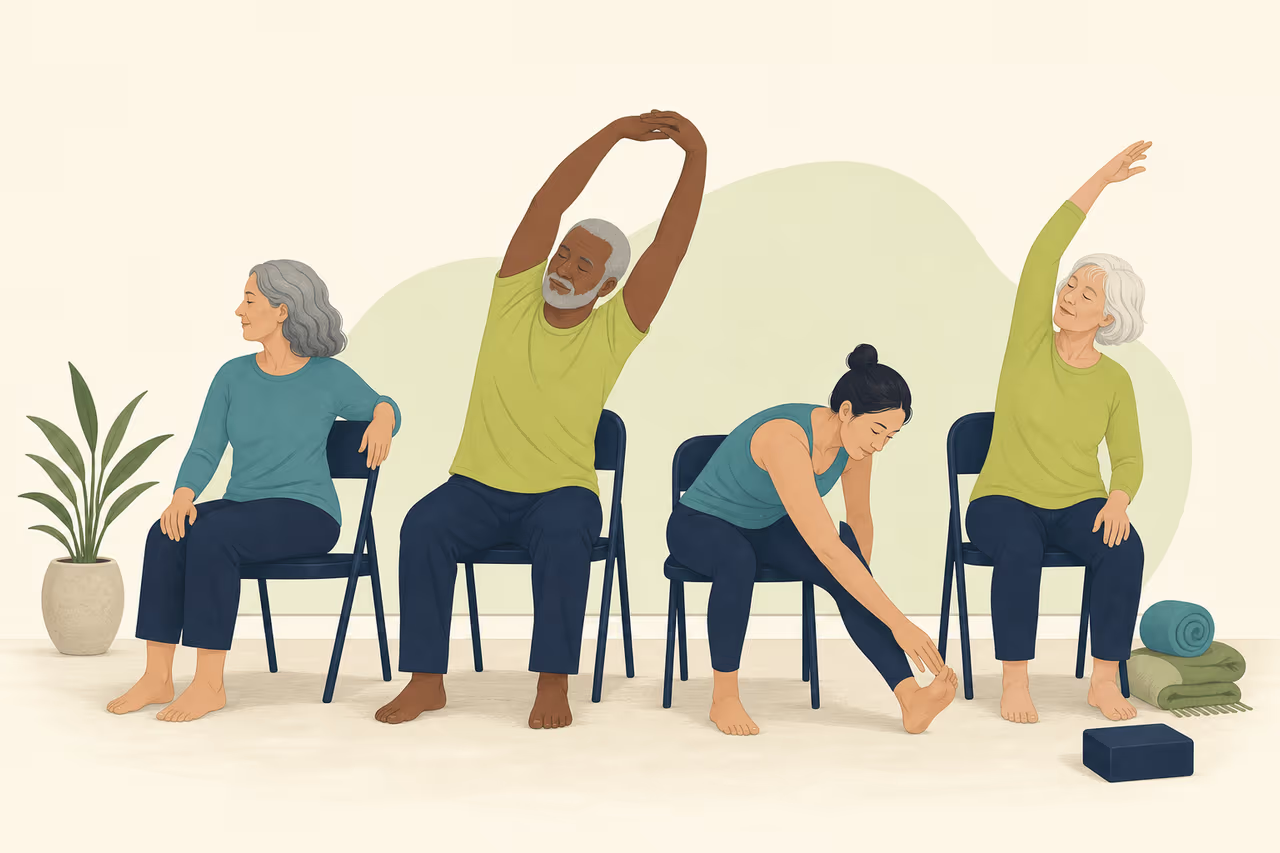
Chair yoga is a specialized form of yoga that uses a chair as a primary prop to support the body during postures, breathing exercises, and meditation. Rather than being a "lesser" version of traditional yoga, it is an intentional approach to movement that removes the barrier of floor-based transitions. By using a stable chair, practitioners can focus on alignment, breath control, and mobility in a way that is accessible regardless of their current standing balance or ability to get down to and up from the floor.
Yoga combines postures, breathing, and meditation. Because styles vary, specific benefits remain uncertain, and injuries can occur if movements are performed improperly.
Why Choose Chair Yoga?
The primary value of chair yoga is accessibility. Getting onto a floor mat and transitioning between standing and kneeling can present a hurdle. Chair yoga eliminates these transitions, enabling a consistent physical practice.
The World Health Organization notes that any physical activity beats none and all activity counts toward health goals. By offering a stable base, chair yoga helps limit sedentary time at a desk, during injury recovery, or while seated.
Who Is It For?
While chair yoga is often associated with seniors, it is a versatile practice suitable for anyone looking for a supportive environment. It is particularly helpful for:
- Office workers: Those who spend long hours at a desk and want to integrate movement and breathwork without leaving their workspace.
- Individuals recovering from injury: People who need to avoid weight-bearing on certain joints or who require extra stability while regaining strength.
- Beginners: Anyone who feels intimidated by the complex, floor-based sequences found in many contemporary yoga classes.
- Those with mobility challenges: Individuals who find traditional floor-based yoga poses difficult due to balance issues or joint restrictions.
Practical Trade-offs and Limitations
Approach chair yoga with realistic expectations. Like any physical practice, it involves distinct trade-offs to consider before you commit to a routine.
1. Range of Motion
Because you are seated, your range of motion for certain traditional poses will be limited. You cannot perform deep lunges or floor-based backbends in the same way you would on a mat. While this makes the practice safer and more accessible, it does mean that certain poses must be modified significantly, which may change the intended effect of the posture.
2. Cardiovascular Intensity
Chair yoga is generally not designed to provide the same level of cardiovascular intensity as Vinyasa or Power yoga. If your primary goal is to elevate your heart rate through rapid movement, you may find the pace of a chair yoga class slower than expected. However, many instructors incorporate breathwork and controlled, rhythmic movements that can still provide a meaningful physical challenge.
3. Dependency on Instruction
The quality of your experience in chair yoga depends heavily on the instructor’s ability to adapt poses to the chair. A skilled teacher will know how to adjust a sequence to accommodate different body types and mobility levels. If you find a class feels too slow or too fast, it is often a sign that the specific class format does not align with your personal goals, rather than a failure of the practice itself.
Is Chair Yoga Right for You?
To determine whether this style fits your needs, use this decision guide to evaluate your current situation and goals.
Decision Guide: Is Chair Yoga Right for You?
- Assess your current mobility: Do you struggle with floor transitions or balance? If so, the chair provides a necessary foundation for safety.
- Define your goal: Are you looking for recovery, stress relief, or gentle movement? If your goal is high-intensity fitness, you may need to supplement your practice with other activities.
- Check your environment: Ensure you have a stable, armless chair for practice. A rolling office chair is generally unsafe for yoga.
Finding the Right Class
If you want to start, the best way to ensure a positive experience is to find an instructor whose focus matches your needs. Prime Tempr lets readers compare trainers by profile, location, and offering, helping you find a suitable class rather than a generic routine.
Instead of choosing a class based solely on the "chair yoga" label, look for instructors who explicitly mention their experience with adaptive movement or specific mobility goals. You can explore trainers and studios in your area to see if their teaching philosophy matches what you are looking for.
If you are still unsure about which path to take, read our guide on How to Choose a Yoga Style That Actually Fits Your Life to help narrow down your preferences before you book your first session. Remember that the "right" yoga style is the one that you can practice consistently and safely.
Sources
- Yoga: Effectiveness and Safety (opens in a new tab), National Center for Complementary and Integrative Health.
- Physical activity (opens in a new tab), World Health Organization.
Watch alongside this guide
A beginner Yin yoga practice
This slower practice gives you a concrete style example to compare with the goals and class formats in the guide. Source: Yoga with Kassandra. This optional video is context, not evidence or personal instruction.
The YouTube player stays unloaded until you choose to watch. Loading it connects to YouTube and may allow that service to process usage data.