What Is Aerial Yoga? A Practical Guide to Hammock-Based Practice
Learn how a suspended fabric hammock supports your practice, understand the trade-offs involved, and decide if this approach fits your goals.
https://primetempr.com/blog/what-is-aerial-yoga-a-practical-guide-to-hammock-based-pract
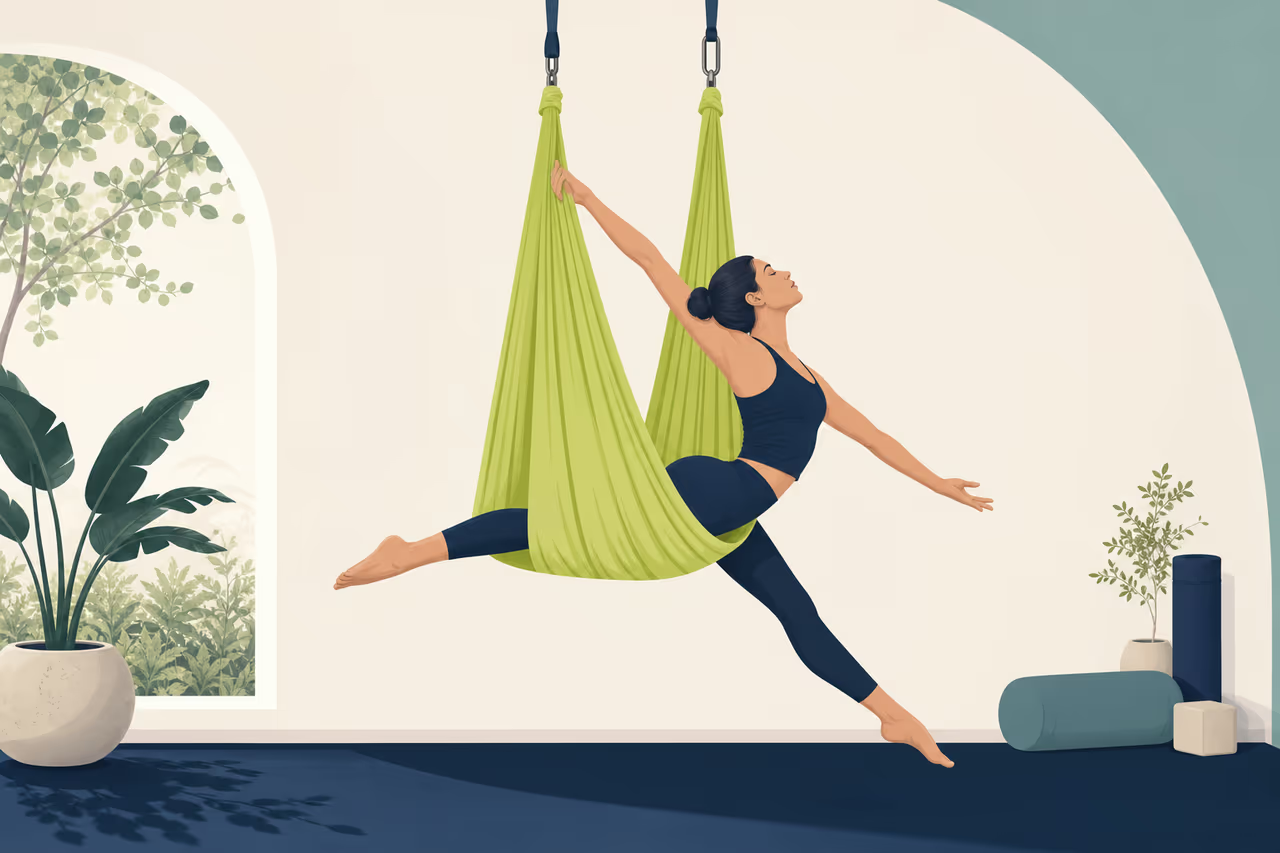
Aerial yoga is a practice that incorporates a fabric hammock,suspended from the ceiling,to support, deepen, or modify traditional yoga postures. While social media often highlights the acrobatic or "circus-like" aspects of the practice, the reality for most students is a focus on using the hammock as a tool for leverage, decompression, and stability.
Yoga combines postures, breathing, and meditation. Styles vary, benefits should be described with uncertainty, and injuries can occur. Aerial yoga shifts your primary point of contact from the floor to a suspended fabric hammock.
How It Differs From Mat-Based Yoga
In a standard mat-based class, your stability comes entirely from the floor. In aerial yoga, the hammock functions as a partner that either supports your weight or creates a dynamic environment that challenges your balance.
The primary differences include:
- Leverage and Support: The hammock can hold your body weight, allowing you to move into postures that might feel inaccessible on the floor. For example, in a supported backbend, the fabric helps distribute your weight, potentially reducing the strain on your spine.
- Inversion Practice: Aerial yoga makes inversions,where your head is below your heart,highly accessible. While this can provide a sense of decompression, it also introduces a different set of physical sensations, such as dizziness or spatial disorientation, which are not typically present in floor-based practice.
- Equipment Dependency: Unlike mat yoga, which requires minimal gear, aerial yoga is entirely dependent on the hammock. You cannot replicate the experience at home without a professional-grade, safely installed suspension system.
Practical Trade-offs and Safety Considerations
Before signing up for your first class, it is useful to understand the specific trade-offs involved. Aerial yoga is not inherently "better" or "worse" than mat-based yoga; it is simply a different modality with its own set of requirements.
The Physical Realities
Because the practice involves being suspended, it requires a different level of trust in the equipment and your own body. If you have a history of vertigo, inner ear issues, or high blood pressure, the inversion aspect of aerial yoga requires extra caution. Always consult with a healthcare professional if you have concerns about how these movements might affect your specific health profile.
The "Acrobatic" Misconception
A common failure mode for beginners is assuming that aerial yoga is only for those who are already highly flexible or strong. While the practice can build strength and mobility over time, most introductory classes are designed to be accessible. However, you should not expect it to be "easy." The instability of the hammock means your core muscles will be engaged differently than they would be on a solid floor.
Accessibility Limitations
Unlike Hatha or Vinyasa yoga, which can be practiced almost anywhere, aerial yoga is limited by geography and facility. Not all studios have the ceiling height, structural integrity, or specialized equipment required to host these classes. This makes it essential to research local offerings carefully.
Is Aerial Yoga Right for You?
To determine if this style fits your needs, consider these questions:
- Are you comfortable with your feet leaving the ground?
- Do you have any history of vertigo, inner ear issues, or high blood pressure that might be affected by inversions?
- Are you looking for a practice that emphasizes support and leverage rather than just floor-based stability?
- Can you commit to finding a trainer-led class to ensure proper equipment setup and safety?
If aerial yoga feels too disorienting or intense, keep in mind that any amount of physical activity is better than none. Starting with mat-based styles like Hatha or Restorative yoga often provides a more comfortable foundation for building strength and mobility.
How to Choose a Class
Because aerial yoga relies on specialized equipment and safety protocols, instruction quality is paramount. Look for a trainer who prioritizes proper rigging, clear communication, and a careful environment.
Prime Tempr lets readers compare trainers and yoga businesses by profile, location, and offering. Instead of relying on generic recommendations, you can research specific studios, read about their teaching style, and ensure they offer the level of support you need.
For more guidance on selecting a practice that fits your specific needs, see our guide on How to Choose a Yoga Style That Actually Fits Your Life. If you are ready to explore options in your area, you can Find yoga near you to see which local studios offer aerial equipment and introductory sessions.
Sources
- Yoga: Effectiveness and Safety (opens in a new tab), National Center for Complementary and Integrative Health.
- Physical activity (opens in a new tab), World Health Organization.
Watch alongside this guide
A beginner Yin yoga practice
This slower practice gives you a concrete style example to compare with the goals and class formats in the guide. Source: Yoga with Kassandra. This optional video is context, not evidence or personal instruction.
The YouTube player stays unloaded until you choose to watch. Loading it connects to YouTube and may allow that service to process usage data.