What Equipment Do Beginners Really Need for Yoga? (Hint: Almost None)
Begin your yoga practice today using just a clear space and comfortable clothing, requiring no special equipment.
https://primetempr.com/blog/what-equipment-do-beginners-really-need-for-yoga-hint-almost
Starting yoga might seem to require specialized gear, but you need almost no equipment to begin. A clear space and comfortable clothing are often sufficient to start moving. Don't let the idea of needing expensive accessories delay your exploration. You can begin your yoga journey immediately without investing in costly accessories.
This guide will help you understand what is truly essential, what remains optional, and how to make the most of what you already own.
The Absolute Essentials: What You Already Have
The most crucial "equipment" for starting yoga isn't something you buy; it's a clear space and comfortable clothing.
- A Clear Space: Find an area in your home where you can move freely without bumping into furniture or objects. Ensure the floor is reasonably clean and safe. This might be a corner of your living room, a bedroom, or even a quiet spot outdoors.
- Comfortable Clothing: Choose clothes that allow for a full range of motion without restricting your breath or movement. Loose-fitting or stretchy athletic wear is ideal. The goal is comfort and practicality, not fashion.
With just these two elements, you have everything required to begin. Consistent practice with basic guidance matters more than specialized gear.
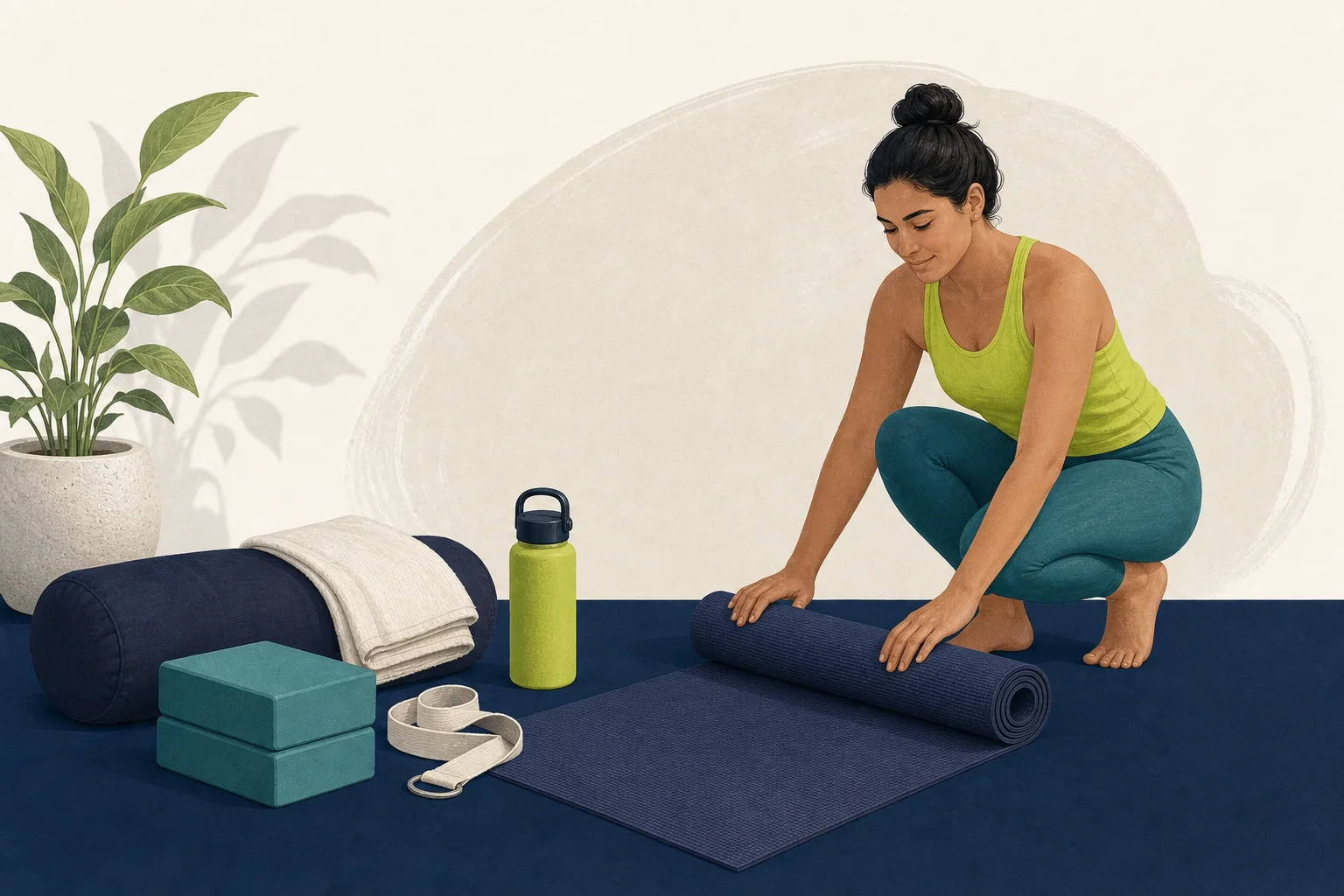
Optional Enhancements: When a Mat Makes Sense
While not strictly necessary to start, a yoga mat can offer practical benefits as you continue your practice.
Benefits of a Yoga Mat:
- Grip: Many yoga poses involve balancing or holding positions where a non-slip surface can prevent hands and feet from sliding, especially on smooth floors.
- Cushioning: A mat provides a layer of padding between you and a hard floor, which can make kneeling, sitting, or lying poses more comfortable.
- Defined Space: A mat can help define your personal practice area, which can be helpful for focus.
Trade-offs of Not Having a Mat: Without a mat, you might experience less grip on smooth surfaces, which can lead to instability. Hard floors can also be uncomfortable for certain poses.
Alternatives to a Yoga Mat: If you lack a mat, consider a large towel, a carpeted area, or practicing on grass outdoors. Find a surface providing stability and comfort.
Props for Support, Not Perfection: Blocks, Straps, and Blankets
Yoga props like blocks, straps, and blankets are supportive tools designed to make poses more accessible and comfortable, not to indicate ability. They serve as enhancements, not prerequisites.
- Yoga Blocks: These can bring the floor closer to you in standing poses, support your head or hips in restorative poses, or provide stability.
- Household Alternatives: Sturdy books, small firm cushions, or even a rolled-up blanket can serve a similar purpose.
- Yoga Straps: Straps help extend your reach, allowing you to grasp your feet or hands in poses where flexibility might be limited. They can also aid in alignment.
- Household Alternatives: A belt, a scarf, or a long towel can function as a strap.
- Blankets: A folded blanket can provide cushioning for knees, support for hips in seated poses, or warmth during relaxation.
- Household Alternatives: Any regular blanket or towel works perfectly.
Props such as blocks and straps support accessibility rather than requiring mandatory purchases. Don't feel intimidated if others use them; they help, and you can improvise with items you already own.
Beyond Gear: The Most Important Equipment
While physical items can enhance your practice, the most important "equipment" for yoga is internal:
- Mindset: Approach your practice with curiosity and patience. Focus on how your body feels, rather than striving for a "perfect" pose.
- Consistency: Short, regular practices are often more beneficial than infrequent, long ones. Any amount of physical activity is better than none, and all activity counts.
- Breath: Yoga deeply integrates breath with movement. Paying attention to your breath is a powerful tool you always carry with you.
- Guidance: Especially for beginners, guidance from a qualified instructor can be invaluable for learning proper form and preventing potential injuries.
Comfortable clothing and a clear floor space are sufficient to begin moving safely. Consistent practice with basic guidance matters more than specialized gear.
When to Consider More: Growing with Your Practice
You don't need to buy equipment until you feel a genuine need. Here are signs it might be time to consider an upgrade or addition:
- Discomfort: If you consistently find yourself uncomfortable on your current surface or struggling with grip, a dedicated yoga mat might be a good investment.
- Seeking Deeper Poses: As your flexibility and strength improve, you might find specific props helpful for exploring more advanced variations or for deeper stretches.
- Regular Practice: If yoga becomes a consistent part of your routine (e.g., 2-3 times a week), investing in durable, purpose-built equipment might enhance your experience.
- Trainer Recommendation: A yoga trainer might suggest specific props to help you achieve better alignment or support in certain poses.
Equipment should serve your practice, not define it. Start simple, and let your needs evolve naturally over time.
Your Minimalist Yoga Starter Checklist
Ready to begin? Here’s a simple checklist to get you started with minimal fuss:
- Find a clear, safe space at home.
- Wear comfortable clothing that allows movement.
- Consider a non-slip surface (yoga mat, large towel, or carpet).
- Identify household items that could serve as props (e.g., books for blocks, a belt for a strap).
- Commit to trying one short practice session.
- Explore beginner-friendly trainers or programs when ready.
Your Next Step: Finding Guidance
Once you've set up your minimalist practice space, the next step is finding guidance that resonates. Consistent practice with basic guidance matters more than specialized gear. Prime Tempr helps you move from general education to guided practice by comparing trainer profiles, local studio listings, and trainer-shared practice content in one place.
- Ready to find a teacher?
- Looking for structured sessions? Browse yoga programmes designed for beginners.
Sources
- National Center for Complementary and Integrative Health. (2020). Yoga: Effectiveness and Safety. https://www.nccih.nih.gov/health/yoga-effectiveness-and-safety (opens in a new tab)
- World Health Organization. (2022). Physical activity. https://www.who.int/news-room/fact-sheets/detail/physical-activity (opens in a new tab)
Watch alongside this guide
Yoga for complete beginners
Use this optional beginner session to see pacing, transitions, and rest choices in a complete home practice. Source: Yoga With Adriene. This optional video is context, not evidence or personal instruction.
The YouTube player stays unloaded until you choose to watch. Loading it connects to YouTube and may allow that service to process usage data.