Two vs. Three Strength Days: A Practical Guide for Beginners
Compare two and three weekly strength sessions to choose a realistic frequency that supports your long-term consistency.
https://primetempr.com/blog/two-vs-three-strength-days-a-practical-guide-for-beginners
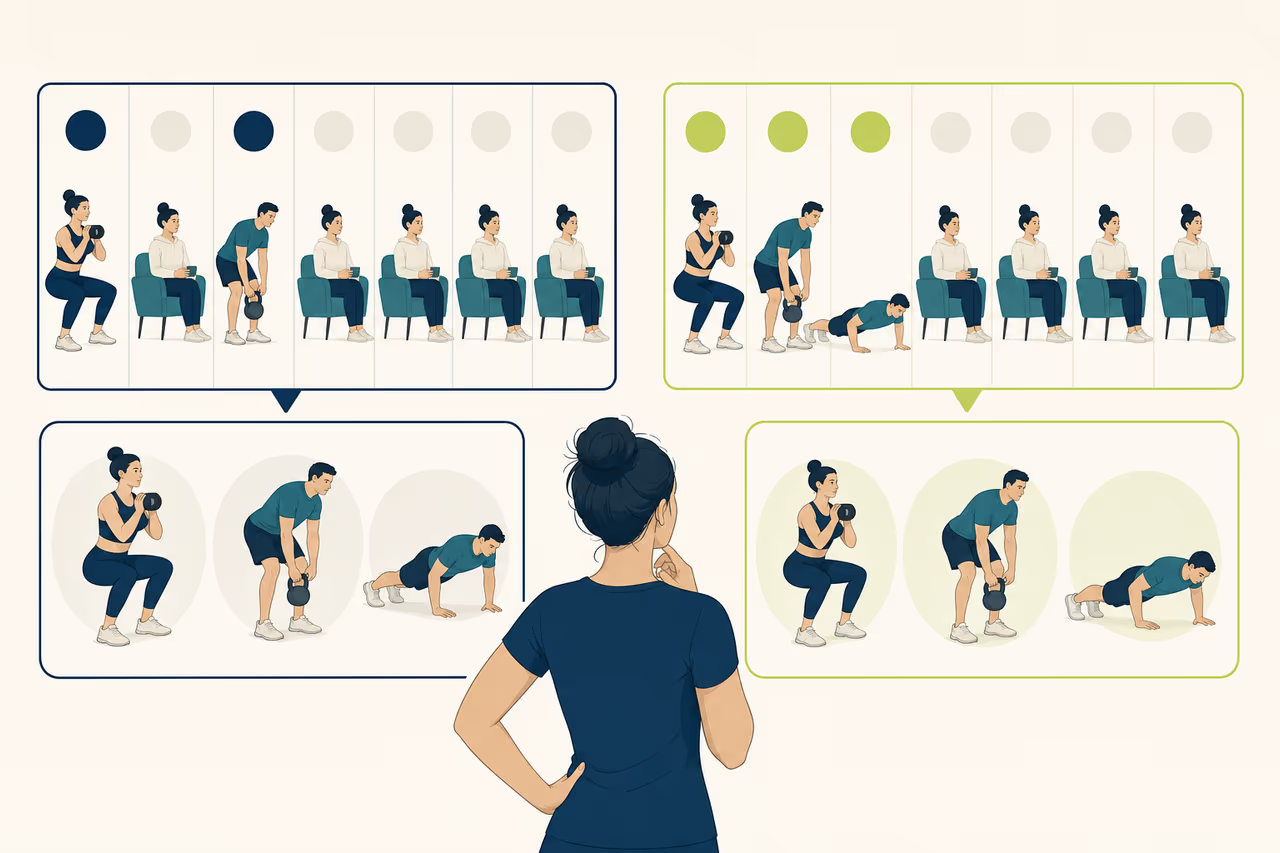
For a beginner, the most effective frequency for strength training is the one you can consistently maintain over time. Both two and three days per week meet recognized health guidelines and provide a solid foundation for long-term strength. The choice between them is less about finding a "perfect" physiological ideal and more about finding a rhythm that fits your current life, recovery capacity, and schedule.
The baseline: why any movement counts
It is common to overthink your schedule, but the most important factor in any movement practice is simply starting and staying the course. According to the World Health Organization, any amount of physical activity is better than none, and muscle strengthening benefits everyone regardless of their starting point.
Current guidelines suggest that adults can work toward 150 to 300 minutes of moderate aerobic activity per week, supplemented by muscle-strengthening activities on at least two days. Whether you choose two days or three, you are already meeting the baseline recommendation for health and functional movement. The "best" schedule is the one that allows you to show up reliably without feeling overwhelmed by your other commitments.
The case for two days
Choosing a two-day schedule is an effective strategy for those with unpredictable calendars or those who are entirely new to structured movement.
Benefits of a two-day approach:
- Flexibility: It is significantly easier to find two hours in a busy week than three. This reduces the likelihood of "all-or-nothing" thinking where missing one session feels like a total failure.
- Recovery: A two-day schedule naturally builds in more rest days. For beginners, this extra time is vital for allowing the body to adapt to new movement patterns without excessive soreness or fatigue.
- Sustainability: It is often easier to maintain a habit when the barrier to entry is lower. You are less likely to experience burnout when your schedule remains manageable.
The trade-off is that your progression in specific skills or total volume may be slower than a three-day approach. However, for the first few months of a new routine, the primary goal is habit formation, not rapid physiological adaptation.
The case for three days
A three-day schedule is a practical choice if you have consistent time and a specific interest in learning complex movement patterns or increasing your total training volume.
The benefits of a three-day approach include skill acquisition, since strength training is a skill that improves with frequent practice leading to better form and body awareness. You also gain volume flexibility, because spreading your total work across three sessions allows for shorter, more focused workouts if your energy wanes during long sessions.
The trade-off is that this schedule requires more robust time management and a higher commitment to recovery. If your life becomes busy, a three-day requirement can cause stress, and missing that third day frequently means it is better to scale back to two days.
Choosing Your Starting Frequency
To help you decide, consider this decision guide while remembering that these schedules are starting points rather than permanent rules.
| Situation | Recommended Starting Point |
|---|---|
| Unpredictable schedule | Two days |
| New to all forms of exercise | Two days |
| Consistent time available | Three days |
| Interested in learning specific movements | Three days |
| High stress or limited recovery time | Two days |
Action Steps for Success:
- Prioritize consistency: For the first 4 to 6 weeks, focus on showing up rather than intensity.
- Use the "two-day rule": Aim to never miss two sessions in a row. If you miss one, prioritize the next one to keep the habit alive.
- Monitor your recovery: If you feel chronically fatigued or your joints feel unusually sore, reduce the frequency or the duration of your sessions.
- Listen to your body: If a schedule feels unsustainable, reduce the frequency to two days or shorten the duration of sessions to maintain the habit without the pressure of high volume.
What happens if I miss a session?
Life happens. Missing a session is not a failure; it is a normal part of a long-term practice. If you miss a workout, do not attempt to "make it up" by doubling your volume the next time, as this can increase your risk of injury. Simply resume your normal schedule when you are able. The long-term health benefits of strength training are cumulative, meaning they depend on what you do over months and years, not what you do in a single week.
When to seek professional guidance
General strength guides are useful starting points, but they have limits because they cannot see your form, adjust to your specific injuries, or provide the accountability needed to progress safely.
Prime Tempr helps readers compare trainer approaches and ongoing programmes, making it easier to add qualified progression when a general strength guide is no longer enough. If you feel stuck, unsure about your form, or want to move beyond the basics, working with a professional provides the structure and feedback necessary to reach your next milestone.
Whether you are looking for a trainer for your goals or trying to figure out how to combine yoga and strength training effectively, remember that the goal is to build a practice that supports your life, not one that adds unnecessary pressure. Start small, stay consistent, and adjust as you learn more about what your body needs.
Sources
- Physical activity (opens in a new tab) - World Health Organization
- Top 10 Things to Know About the Physical Activity Guidelines (opens in a new tab) - Office of Disease Prevention and Health Promotion
Watch alongside this guide
High-intensity functional training explained
This ACE overview shows how functional training is framed so you can compare it with the article's safer progression advice. Source: ACE Fitness. This optional video is context, not evidence or personal instruction.
The YouTube player stays unloaded until you choose to watch. Loading it connects to YouTube and may allow that service to process usage data.